Clothes are the part people panic about, and the part that is easiest to get right once you know what the camera is actually doing with them. This is the whole decision, in the order I work through it with clients: color, neckline, fit, pattern, layers, the small things you are wearing without thinking, and what goes in the bag.

Wear something that fits you properly, in a solid mid to deep color, with a neckline and sleeve length that suit a tight crop. Avoid loud patterns, visible logos, shoulder seams that sit in the wrong place and anything you are still tugging at a minute after you put it on.
Then bring options. Two or three tops plus a jacket gives you a formal look, a friendlier one and something in between, which is what a headshot session is for. The rule underneath all of it: your clothes should lose the argument with your face.
Every wardrobe decision below comes back to a single idea. A headshot is a photograph of your face. Everything else in the frame is competing with it, and your clothes are the largest competitor you brought with you.
So the test for any garment is not whether it is nice. It is whether it lets your face stay the loudest thing in the picture. A beautiful patterned blouse can be the best thing you own and still be wrong here, because at thumbnail size the eye lands on the pattern first and on you second. That is not a judgment about your taste. It is just what happens at that scale.
The second test is comfort, and almost everyone underrates it. If a collar is tight, a waistband digs or a sleeve rides up, your face knows before you do. A stiff garment is behind more stiff expressions than people realize. I would rather you wear the slightly plainer shirt you can forget about than the sharper one you spend the session managing.
This guide stays on clothes. What you do with your chin, your shoulders and your hands is how to pose for photos, and the sessions themselves are on the headshots page.
Color does more work than any other choice you make, and it is the one people most often get backwards.
Solid colors photograph best, and mid to deep tones are the safest ground: navy, charcoal, forest, burgundy, plum, deep teal, a true grey. They hold their shape on a screen, they separate cleanly from most backgrounds, and they leave your skin as the brightest, warmest thing in the frame, which is precisely where you want the attention to land.
Skin tone matters more than any color chart. Warm complexions usually do well in warm neutrals: cream, camel, olive, rust. Cooler complexions hold up beautifully in blue, grey, plum and a true white under a layer. If you are unsure, bring one of each and we will settle it in the first five minutes with the light on.
If your company or your brand has a color, say so early. I can shoot to it, and I can also keep it out of your clothing and put it in the background instead.
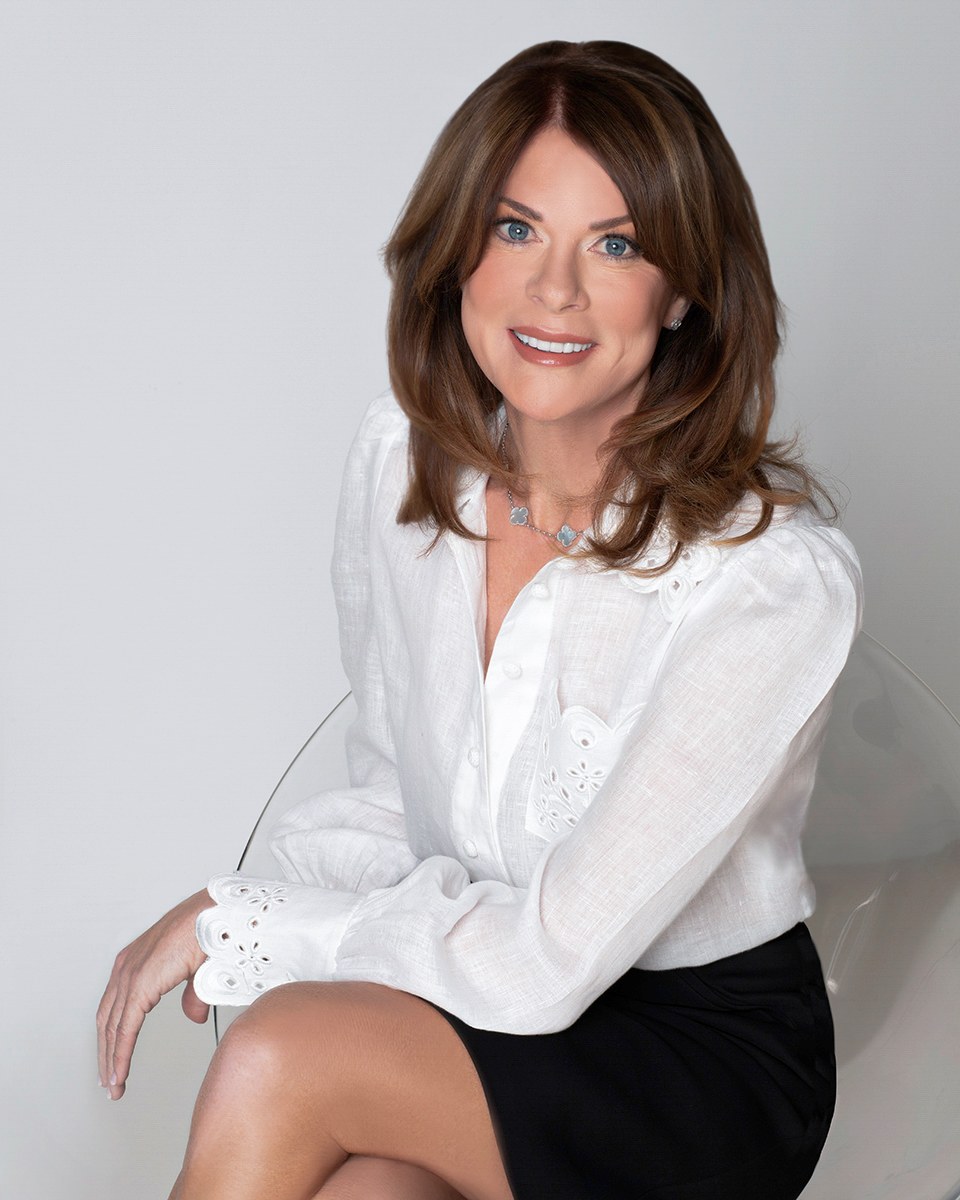
A headshot crop is tighter than most people picture. It often ends somewhere between the collarbone and the chest, which means the only clothing anyone will ever see is the neckline, the shoulders and a few inches of sleeve. That is the entire outfit, as far as the photograph is concerned.
Necklines that work sit close to the body and give your face a clean shape underneath. A collar, a crew, a modest V, a boat neck, a jewel neck. Trouble comes from anything very wide or very low, because a close crop can leave you looking like you are not wearing anything at all, and from anything so high and heavy that it swallows your jaw.
Sleeves matter in the wider frames. Bare arms are bright and pull the eye, so long or three-quarter sleeves are the safer default for a business headshot. Sleeveless can be lovely in a personal brand image, where the frame is wider and the mood is different, but it is rarely the strongest choice for a formal bio.
Shoulders are the part nobody checks. A shoulder seam sitting an inch off your actual shoulder makes the whole garment look borrowed, and the camera is merciless about it. How that same crop behaves once a platform squeezes it into a circle is its own subject, in the LinkedIn profile photo guide.
Fit beats brand and newness every time. A modest shirt that fits you now will always photograph better than an expensive one that fit you two sizes ago.
The camera either adds structure or removes it. Clothing that skims the body reads as tailored. Clothing that is loose reads as larger, not smaller, because fabric pooling at the waist or under the arm adds volume exactly where you did not want any. Clothing that is tight reads as strained, because every pull line shows. Skimming is the target.
If you are between sizes at the moment, dress for today. Nobody looking at your headshot can tell how old the jacket is. They can tell whether it fits.
Patterns are not banned. They are simply expensive, in the sense that they spend attention you probably wanted to keep.
Small, tight patterns are the real problem, because of what a sensor does with them. Fine checks, narrow stripes, herringbone and tight houndstooth can shimmer or ripple on a screen, and the effect cannot always be fixed afterward. That is why photographers keep asking you to leave the pinstripe shirt at home.
If you want pattern, go larger and quieter: a broad plaid, a subtle texture, a woven check with real space in it. Keep it away from your face where you can. A patterned jacket over a solid shell is far safer than a patterned collar directly under your chin.
Logos are a separate question. A visible brand mark dates the photograph, competes with your face and occasionally causes awkwardness if you change jobs. Your own company logo is a different matter. If your firm wants it, bring the branded piece, but bring an unbranded look as well, so you own a version of yourself that outlives the job.
Here is the trick that turns a small bag into a whole session. A jacket is a costume change that takes four seconds.
Start with a solid top in a good color. Put a jacket, a blazer or a cardigan over it. Take the jacket off. You now have two genuinely different impressions from one outfit: buttoned up and credible, then relaxed and approachable. Swap the top underneath and you have a third. That is how several looks fit into one sitting without anybody carrying a rolling suitcase through the door.
Layers also solve the physics. A jacket frames your face, draws a clean vertical line down both sides of the picture and gives your shoulders a structure the camera reads as confidence. It flatters very nearly everyone, which is exactly why it turns up in almost every headshot you have ever admired.
One caution. A jacket that gapes, pulls at the button or slides off your shoulders when you move undoes all of that. Try the layers on together before the day, sitting and standing.
You are wearing more than clothes, and the small items are where sessions quietly get slowed down.
Wear them if you wear them. Your photo should look like the face people meet. Anti-glare lenses photograph best. Heavy reflective coatings and transition lenses are the hard cases, because transitions can darken under studio light and leave you looking like you are hiding behind your own eyewear. If your optician gave you a spare set of empty frames, bring them. If not, we work the angles, and I will tell you exactly how far to tip your chin.
Simple, and not shiny enough to flare. Studs or small drops rather than large hoops, one necklace rather than three, nothing that swings when you turn your head. The question for any piece is whether it says something about you or simply moves around in the frame. A signature piece you always wear can be a genuinely good idea, because people recognize it before they recognize your name.
Undershirts should be invisible under a light shirt. Straps are worth a check in the mirror with your arms raised. Tags get tucked. A watch is fine. Sunglasses on your head are not. And if you carry a phone in a shirt pocket, take it out, because the outline shows up every single time.
Grooming is not a separate subject from wardrobe. It is the final layer of it, and it is the one you cannot change once we start.
For men, a haircut about a week out rather than the day before, and facial hair trimmed the way you actually keep it. Clean nails, because hands appear in a good share of the frames. For women, hair and makeup the way you wear it on a day you feel good, and slightly stronger than daily if you usually go light, because studio light softens everything it touches. I work with several professional stylists who can be arranged for hair and makeup before the shoot, for an added fee, and plenty of people happily do their own.
Skin is worth a thought too. Do not try anything new on your face in the week before a sitting. Retouching is done by hand and it is kind, but it cannot undo an experiment.
The night before: press everything, lay it out, and get some sleep, because tired eyes are the one thing retouching handles least convincingly. The rest of the run-up, including the parts that have nothing to do with clothes, is in how to prepare for a photoshoot.
The packing list itself is short.
Bring the clothes on hangers rather than folded into a bag, and that matters more the further you drive. If you are coming in from Ave Maria, about 45 to 50 minutes, or down from Bonita Springs, about 20 minutes, a car does things to linen that no amount of hanging in the studio will undo.
A few quick notes by field, because the same rules land differently. For financial advisors and attorneys, a jacket is close to mandatory and darker tones do the work. In clinical settings, keep it simple and calm, then decide whether the coat belongs in the frame. Creative and hospitality work has room for color and texture. In the trades, wear the clean version of what you actually wear on a job, because that is what makes the picture believable.
One last note, because the rules change with the session. Personal brand work wants more wardrobe rather than less: several outfits, clothes you would genuinely be seen working in. That is how I plan a personal brand sitting, including for clients driving over for personal brand photography from Marco Island. And for something personal, like boudoir for Bonita Springs clients, there is no wardrobe rule beyond bringing pieces of your own that make you feel like yourself. What a session covers, from the wardrobe consultation onward, is on the investment page.
The wardrobe consultation exists so that you are not standing in front of your closet the night before, arguing with a navy shirt. Tell me where these pictures are going and what you already own, and we will choose your looks together before you pack a single thing. Call me at (239) 319-6171 or send the form.
Book a Session Call (239) 319-6171Tell me a little about what you have in mind and I will be in touch personally. Pricing is personal, so the best way to plan is a quick call.
Share a few details and Annie will be in touch personally.