Glasses raise four separate questions that people usually mix into one worry: whether to wear them at all, what happens with glare, which frames photograph well, and whether contacts are worth the trouble for one sitting. Taken one at a time, none of the four is hard.

Wear your glasses if you wear them most days. A headshot should match the face you show up with, and pulling them off for one photograph creates a picture that looks like someone else. Glare is a lighting and angle problem, not a reason to go without them: it gets handled by where the light sits and a small tilt of the frames, worked out together before the shutter goes.
Frames should be clean, current and sitting the way they actually sit on your face day to day. Contacts are a real option if you already wear them sometimes, never a requirement, and never worth buying for the first time the week of a shoot.
Start here, because it settles most of what follows. If glasses are part of your daily face, a headshot without them is a headshot of someone your colleagues, clients or connections will not immediately recognize. That mismatch matters more than people expect: a LinkedIn photo or a bio picture exists so a stranger can find you in a lobby, and glasses are often the fastest thing they will match.
The exception is genuine occasional wear: reading glasses you put on only for a screen, or a pair you switch in and out of through the day. If glasses are not really part of the face people see, leaving them off for the photo is honest, not a trick.
If you are torn, the safest plan is not a choice at all. Bring the glasses and plan on both: a look with them on and a look without, inside the same sitting. Several looks in one session is normal, and this is exactly the kind of decision that is easier to make once you can compare two real frames side by side rather than guess in advance.
Glare is the worry that keeps people from wearing glasses at all, and it deserves a straight answer: it is handled with light and angle, and it is one of the most ordinary problems a portrait session solves.
Reflections happen when a light source bounces straight back into the lens toward the camera. Move the light off that direct line, or tip the frames a few degrees down the nose or to one side, and the reflection moves with it, off the lens and out of the shot. That is craft, not a promise: some frames and some lens coatings behave more easily than others, and a small adjustment usually finds the angle that keeps your eyes visible without you feeling like you are posing strangely.
None of this needs to be solved by you in advance. Bring the glasses you actually wear, and the angle gets worked out together once the light is on.
Frames matter less for their style than for two practical things: whether they currently fit, and whether the lenses are clean and current.
A pair that has slid down slightly at the temples, or that you are used to pushing back up with a finger, will do exactly that in front of a camera, over and over, because habits do not pause for a photograph. If your glasses need an adjustment, a quick visit to wherever you bought them beforehand solves more of this than anything done in the studio. Smudged lenses are the other easy miss: they photograph as a soft haze across the eyes that is nearly invisible in a mirror and very visible on a screen. Clean them right before, not the night before.
As for the frame itself, wear the one you actually wear. A bold frame is not a liability if it is the one people already associate with you, and a thin frame is not automatically safer if it slides constantly. What matters is not the frame's style but whether you can forget you are wearing it for the length of a sitting.
Transition lenses are the one real complication, because studio lighting is bright enough that some transition coatings begin to darken, the same reaction they have outdoors. That can leave a lens looking tinted in a photograph even though it looked completely clear a minute earlier in a normal room.
If your everyday glasses are transitions, mention it before the session starts rather than partway through, so the lighting and the timing can account for it from the first frame rather than the last. If you own a second pair without the coating, even an older prescription, bring it as a backup. If you do not, we simply plan around it: more frames taken early, before any darkening sets in, and a check that your eyes are reading clearly.
Fully tinted or sunglasses-style lenses are a different matter and are not a headshot look at all. Save those for a personal or lifestyle image where hiding the eyes is the point, not the accident.
If you own an older pair of glasses in a working prescription, it is worth bringing along even if you never wear it day to day, purely as insurance against transitions, an unexpected reflection issue, or the frames simply needing a break for a look without them.
Contacts are worth mentioning as a real option, not the default. If you already wear them sometimes, for exercise or a night out, wearing them for part of a session is a fine way to get a mix of looks with and without glasses in one sitting. What is not worth doing is buying contacts for the first time specifically for a photo. New contacts take adjustment, from the fit to how your eyes feel by the end of a day, and a session is not the place to discover any of that. If you have never worn them, wear your glasses and trust the angle work to handle the rest.
Either way, the decision belongs to you, not to a rule. The goal is a photograph that looks like you, glasses included, because that is who is going to walk into the meeting the picture was taken for.
Glasses interact with a few other decisions worth knowing about in advance. The angle of your chin and the direction of your gaze do real work here too, since a slight lift of the chin changes how a lens catches light independent of anything the glasses themselves are doing. The full mechanics of that adjustment are in jawline and chin posing, and the broader question of posture and direction generally is in how to pose for photos, part of what every headshots session is built around.
Frames also interact with the rest of the outfit more than people expect: a heavier frame can want a slightly simpler collar underneath it, and a bold color in the frame is worth coordinating with, or deliberately separating from, whatever you are wearing. That broader wardrobe picture, including color and the rest of the outfit, is in the what to wear guide, and if your look is meant to echo a brand palette, the dressing in brand colors guide covers how that pairs with an accessory like frames.
If your glasses are part of a look built around several outfit changes, layering explains how one small kit becomes multiple finished looks, and glasses on for some of those looks and off for others is one more variation that takes nothing extra to plan.
This all falls under a wider category of prep worth doing the week before rather than the morning of, covered in how to prepare for a photoshoot.
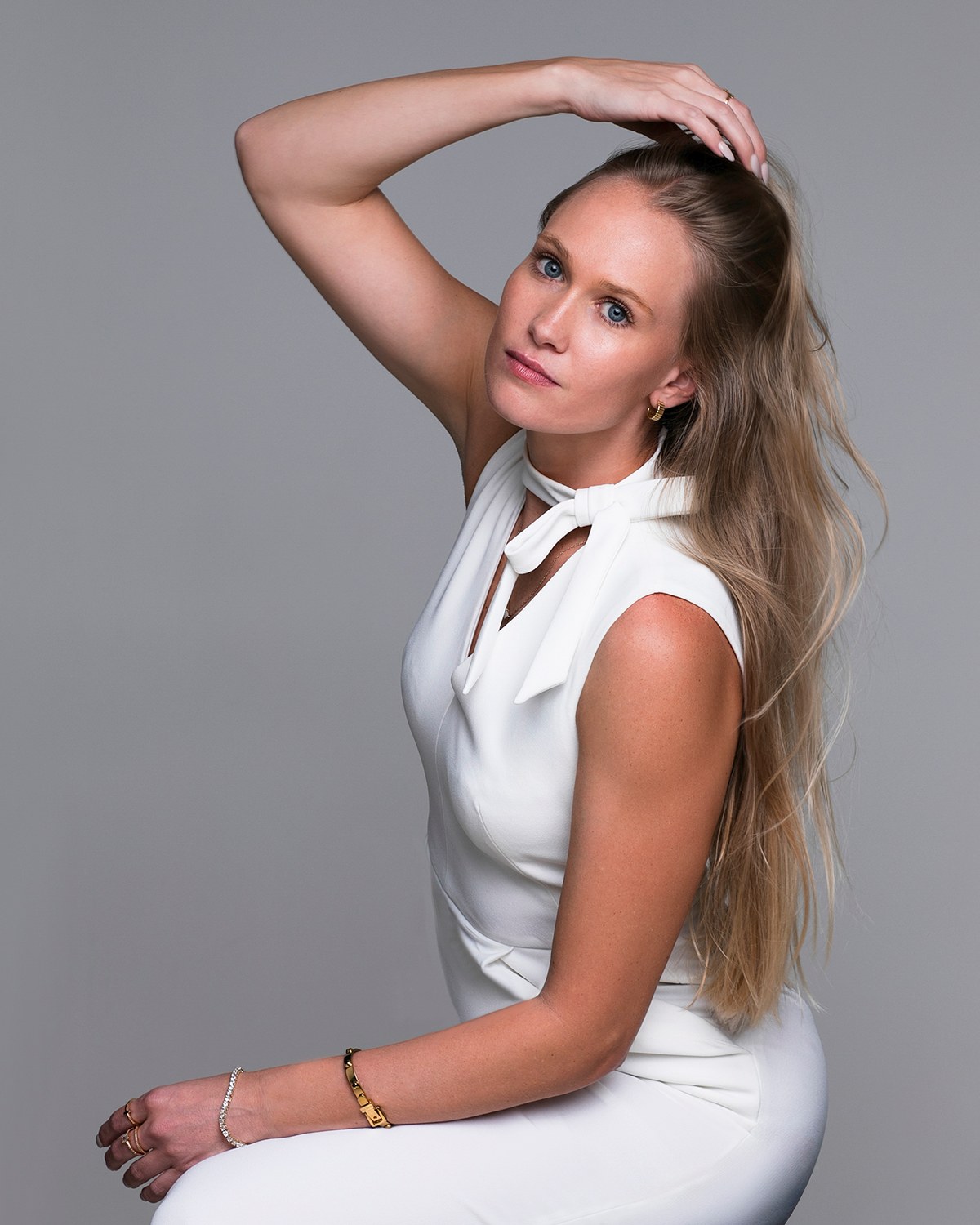
Glasses belong naturally in a clinical or medical headshot, because a white coat, simple styling and glasses together read as exactly the kind of calm, competent image a patient wants to see before a first appointment. There is nothing to work around here beyond the same glare and fit questions above.
If that is the session you are planning, the medical professional headshots page covers what that sitting is built for, white coat, scrubs and all.
Whatever pair you reach for on an ordinary morning is the right one to bring, transitions, an old scratch, a slightly loose temple and all. We will find the angle together once the light is on. Call (239) 319-6171 or send the form and mention the frames so I can plan around them.
Book a Session Call (239) 319-6171Tell me a little about what you have in mind and I will be in touch personally. Pricing is personal, so the best way to plan is a quick call.
Share a few details and Annie will be in touch personally.