Portfolio
Headshots Boudoir Personal Brand
More
Guides Investment Guided Posing About Book a Session
Home  /  Guides  /  Necklines That Flatter in Headshots
Wardrobe

Necklines that flatter in headshots.

A headshot crop ends at the chest, sometimes higher, so the neckline is not one detail among many. It is most of the outfit the camera can actually see. This guide walks the shapes one at a time: what each one does to your face and shoulders, and where each one goes wrong.

By Annie Watson · Naples, Florida · Updated September 2026
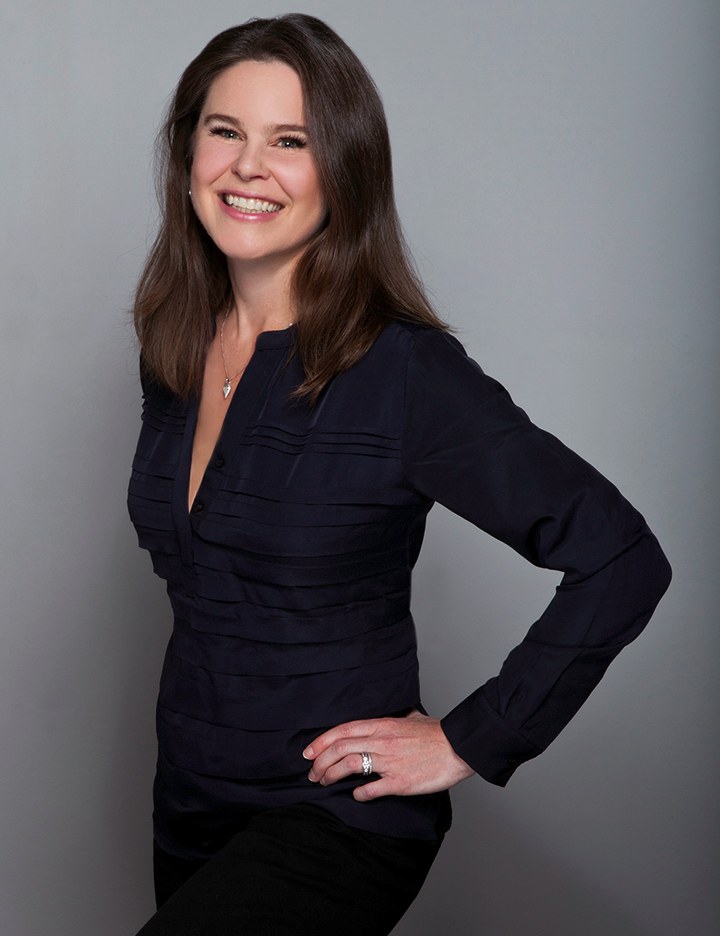
Woman with long brown hair in a navy top, hand on hip, dark backdrop, photographed by Annie Watson in her Naples studio
The Short Answer

A neckline that sits close to the collarbone and leaves a clean, simple line under the jaw reads best in a tight headshot crop: a crew, a collar, a modest V or a jewel neck. Necklines that are very wide, very low or heavily embellished compete with the crop or, worse, disappear inside it, leaving you looking like the photo cut off more than clothing.

The shape rule is simple even when the wardrobe is not: the neckline should point at your face, not away from it, and it should end well before the frame does.

Why the neckline carries more than you think.

A full-body photo gives a neckline plenty of company: sleeves, a waistband, shoes, posture. A headshot gives it almost none. Once the crop tightens to the chest or the collarbone, the neckline is doing the job an entire outfit does everywhere else. It is the frame around your face, and frames matter.

That is also why a neckline choice that works beautifully at a party can go wrong in a headshot. A dress cut for a room full of people is built to be seen at a distance, from several angles, in motion. A headshot is one angle, one distance, one still moment, magnified. Detail that reads as texture across a room reads as clutter at six inches from your chin.

The good news is that the fix is not about owning fancier clothes. It is about picking the shape that sits closest to the two or three that already work for nearly everyone, and knowing which ones need a small adjustment before the camera, not after.

The shapes that work without a second thought.

A handful of necklines do the job reliably, across ages, builds and professions, because they all share one habit: they sit close to the body and end in a simple line.

  • A crew or jewel neck sits at the base of the throat and gives a clean horizontal line that frames the jaw without competing with it.
  • A collar, buttoned or open one button, reads as put-together in almost any field and gives the eye a sharp edge to rest on before it moves up to your face.
  • A modest V, ending above the collarbone, elongates the neck slightly and is the most forgiving shape for a wide range of chin and jaw shapes.
  • A boat neck sits wide but flat against the collarbone, so it widens the shoulders in a controlled way rather than opening a gap the crop cannot explain.
  • A mock neck or a soft turtleneck gives a clean vertical column, which works well when the rest of the outfit is simple and the face is doing most of the talking.

None of these need special handling. Iron the collar, check that it sits flat when you look slightly left and right, and it will carry the frame without you thinking about it again.

Where necklines go wrong.

Trouble comes from two directions, and they are opposites of each other.

Too wide or too low

A scoop neck, an off-the-shoulder cut or a plunging V can leave a tight crop with no visible garment edge at all, because the frame simply does not reach far enough down to show where the neckline ends. That is not a moral judgment, it is geometry: the camera cannot show fabric it never gets to. If a neckline you love sits low, plan on a jacket, a scarf or a second layer over it for the headshot frames, and save the original for a wider brand shot where the crop shows more of the outfit.

Too high or too heavy

A turtleneck in a bulky knit, a high ruffled collar or a stiff mandarin collar can do the opposite: it climbs up the neck and starts to compete with the jaw and chin, especially on a shorter neck. A structured collar you cannot fold down, a bow or a large collar pin at the throat pulls the eye down at the exact moment you want it staying on your eyes. If you love the piece, wear it, but keep the accessories at the collar to none.

Both problems share a fix: hold the garment up in a mirror, cover everything below the collarbone with your hand, and look at what remains. If what is left still looks complete and calm, it will survive the crop.
Collars, ties and the men's version of the same problem.

For a shirt and jacket, the neckline question becomes a collar and a knot, and the same rule applies: closer to the neck, cleaner, wins.

A spread or point collar that sits flat against the neck, with a tie knotted snugly, not loose or crooked, gives the same clean frame a V-neck gives a blouse. A loosened tie or an open top button reads as relaxed in person and can read as unfinished in a still photograph, because a photograph freezes the moment you would otherwise be about to fix it. If the look is meant to be open-collar and casual, commit to it fully rather than landing in between: top button undone and collar laid flat is a deliberate choice, a half-loosened tie is not.

Check the collar points sit even before the shutter goes, since a collar that has ridden up on one side under a jacket only shows once the picture is already framed tight.

What actually disappears below the frame.

It helps to know, in advance, how much of you the camera is going to show, because it changes what is worth worrying about.

A true headshot crop typically ends somewhere between the collarbone and mid-chest. That means a belt, a waistband, most jewelry below the collar and an entire skirt or trouser choice are simply never in the picture. Spend your planning energy on what will actually appear: the collar, the shoulder seam, the first few inches of sleeve, and the neckline itself. A wider brand portrait or a personal brand session shows more of the outfit, so a piece that would be wasted in a tight headshot earns its place there instead.

This is also why one neckline rarely has to do all the work in a session. If your first look has a scoop neck you love for a wider shot, bring a second, higher-necked piece for the tight crops. Planning that split in advance, rather than discovering the crop mid-session, is part of what a wardrobe consultation ahead of a shoot is for, along with the rest of what a session covers on the headshots page.

A quick decision for the morning of.

If you are standing in front of a closet with no time left, use this order.

  • Start with a crew, jewel neck, collar or modest V. If the piece you are drawn to is one of these, you are done.
  • If it is low or wide, ask whether you have a jacket, cardigan or blazer that closes over it. If yes, wear it open for the wider shots and closed for the tight ones.
  • If it is a heavy turtleneck or a high stiff collar, remove any pin, brooch or scarf at the throat and let the neckline stand alone.
  • If you are still unsure, bring two options: one close and simple, one with more presence. We will settle it together once the light is on you.

This is one piece of a larger decision. Color, fit and pattern shape the rest of the outfit the same way the neckline shapes the top of it, and the full picture is in the what to wear guide, alongside the best colors to build around and how layering turns one neckline choice into several finished looks.

Neighboring questions, answered elsewhere.

A few related questions belong to their own guides rather than this one, so I will point rather than repeat.

If the question is which colors carry a neckline best against your skin tone, that decision lives in the best colors guide, since color and shape are two separate arguments that only look related. If the question is the small mistakes that undo an otherwise good neckline, faded collars, a wrinkled V, a bra strap sitting wrong, that list is in wardrobe mistakes. And if the honest question is simply whether black or white works at the collar at all, that one has its own answer in wearing black or white.

For a LinkedIn photo specifically, the collar sits inside a circle crop rather than a rectangle, which changes the math slightly. The what to wear for a LinkedIn photo guide works that crop through, and the sitting built for it is on the LinkedIn headshots page.

Key Takeaways
  • A headshot crop ends at the chest or the collarbone, so the neckline is most of the outfit the camera will show.
  • A crew, collar, modest V, boat neck or soft turtleneck reads cleanly on nearly everyone.
  • Very low or very wide necklines can vanish inside a tight crop, and a jacket or second layer is the simple fix.
  • Very high or heavily embellished collars pull the eye down toward the throat, right when you want it staying on your face.
  • For a shirt and tie, a flat collar and a snug knot do the same job a clean neckline does for everyone else.
  • Cover everything below the collarbone with your hand in the mirror: if what remains looks complete on its own, it will survive the crop.
Next Step

Do the hand test, then call me.

Stand at a mirror, cover everything below the collarbone with one hand, and look at what is left. If you still cannot tell whether that neckline is too low, too high or just right, that is exactly the kind of question the wardrobe consultation settles before you pack. Call me at (239) 319-6171 or send the form and tell me what you are choosing between.

Book a Session Call (239) 319-6171
Put It to Work

Sessions this guide points to.

Good to Know

Questions, answered.

Is a scoop neck ever okay for a headshot?
It can work in a wider brand portrait where more of the outfit shows, but in a tight headshot crop a scoop often reads as lower than it is, because the frame cuts off before showing where the neckline actually sits. If you love the piece, wear a light jacket or cardigan over it for the close crops and let it stand alone for the wider ones.
Do turtlenecks work in headshots?
A soft, thin turtleneck can work well, especially with simple accessories, because it gives a clean vertical line and keeps the focus on your face. A bulky, ribbed or very high turtleneck can crowd a shorter neck. If you are unsure, bring a lighter-weight version as a backup and we will check both under the light.
What neckline works for most professions?
A modest V, a crew or a collared shirt covers nearly every professional context, from a law office to a clinic to a creative studio, because none of them draw attention to themselves. Build from there: a jacket for something more formal, an open collar for something more relaxed. The neckline rarely needs to change, only what sits over it.
Can one neckline serve a tight crop and a wider frame?
Sometimes, and it is worth deciding before you pack. In a wider frame the neckline has the rest of the outfit around it for context. In a tight crop it stands alone and magnified, with nothing to share the attention. If one top has to do both jobs, choose the one that reads well on its own, and let the wider frames be the easy half of the day.
What if my only nice top has a low neckline?
Wear it, and bring a jacket, blazer or cardigan that closes over it. You get the wider shots in the piece you love and the tight headshot crops in a version that closes the neckline cleanly. That combination is a normal part of planning a session, not a compromise.
Book Your Session

Your best headshot is one session away.

Tell me a little about what you have in mind and I will be in touch personally. Pricing is personal, so the best way to plan is a quick call.

Studio
5400 Yahl St, Naples FL

Prefer to talk? Call (239) 319-6171. I respond personally.