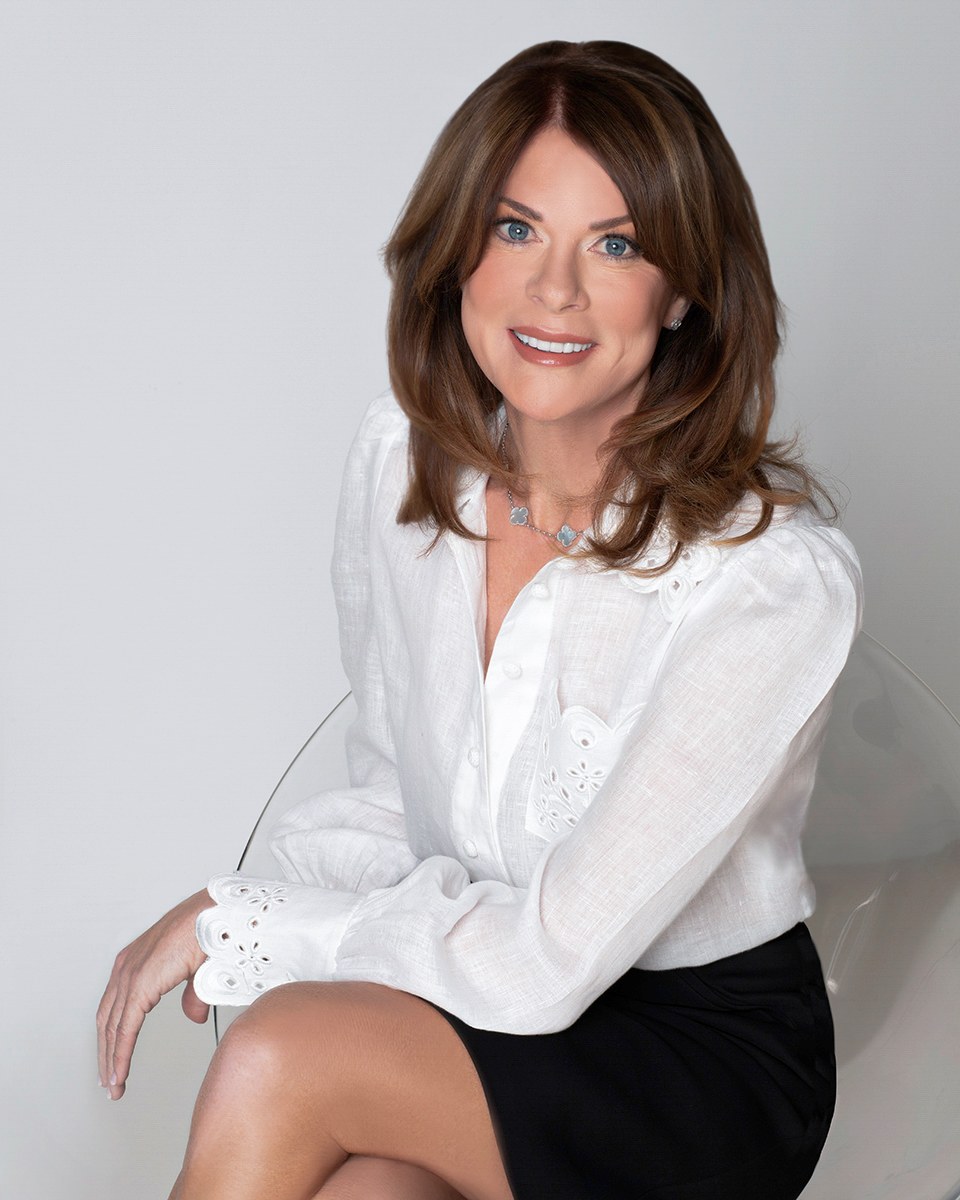
The general guide to what to wear already gives you the trick: a jacket on, a jacket off, a second top underneath. This guide is the machinery behind it, layer by layer, so you know why each piece works, which combinations fail, and how to test the stack before you pack it.

Layering for a headshot means building an outfit in three parts: a base layer against your skin, a mid layer that changes the formality, and an outer layer, usually a jacket, that changes it again. Removing or adding a layer between frames creates a genuinely different look without a second outfit.
The system works because each layer changes the read of the whole outfit on its own. A base and jacket together looks formal. The same base without the jacket looks relaxed. Swap the base underneath and the jacket creates a third look entirely.
Think of an outfit as three parts stacked on top of each other, each with its own job. The base is whatever sits against your skin: a shirt, a blouse, a fine knit. The mid layer sits over that and does most of the formality work: a cardigan, a vest, a lighter jacket. The outer layer is the one that changes a room's read of you the fastest: a structured blazer or a coat.
None of the three has to be complicated or expensive. What matters is that each one can stand on its own if you remove everything above it, and that the whole stack still fits when you put it all back on. A base you love that becomes shapeless once a jacket goes over it is not actually doing its job.
This guide covers the mechanics of that stack. The bigger question of how many outfits to bring and how the changes themselves are paced during a sitting is its own subject, and it is covered fully in the guide to outfit changes and how many to pack.
In a tight headshot crop, the base layer is often the only layer anyone ever sees, because the jacket may only appear in a portion of your frames. That makes it the layer worth choosing most carefully, not the one to treat as an afterthought under something more interesting.
Choose the base as if it were the whole outfit, because for some of your frames, it will be.
The mid layer is the easiest piece to leave out of a plan and the one that quietly does the most work. A cardigan, a vest, a light unstructured jacket, worn over the base and under a heavier outer layer if you have one, softens a look without fully dressing it down.
A mid layer earns its place in the bag by doing something the base and the outer layer cannot do alone. Where a full blazer reads as formal and no layer at all reads as casual, a cardigan or vest sits between the two, and that middle setting is often the one that matches how people actually want to be seen: put together, but approachable.
If you only have room for two pieces beyond the base, choose a mid layer and an outer layer that work both together and separately. A cardigan under a blazer is a different look than either piece alone, which means three items can produce more than three combinations if you plan the pairing before you pack.
A structured jacket changes more about a photograph than any other single garment, and the reason is mechanical rather than stylistic. The shoulder line sets the width of the frame, the lapels make two diagonals that point at your face, and the button closes the shape at the bottom of the crop. Take it off and all three of those lines vanish, which is why the same person reads as a different picture with and without it.
The collar and lapel matter more than people expect, because they sit close to your face and interact directly with your neckline underneath. A wide lapel over a high collar can crowd your neck in a tight crop. A narrow lapel over an open collar can look unfinished. Try the combination on together before the day, not just each piece separately in a mirror.
A jacket that fits badly draws all three of those lines in the wrong place. The seam, the sleeve and the button are their own subject in fit and tailoring on camera, and the seated fit test there is worth doing with the whole stack on, not just the jacket alone.
The general wardrobe guide already gives you the sequence: jacket on, jacket off, a second top under the same jacket. What it does not tell you is which order to shoot them in, or which second top is a waste of space in the bag.
The swap that fails is a second base too close to the first: same color family, same neckline, same weight. Under the same jacket it reads as the same photo with a slightly different shirt. Change at least two of the three (color, neckline, weight) and the jacket will make it look like a different day. That is the range an executive headshots session actually needs: a formal frame, an approachable one, and a second formal option in case the first does not photograph the way you expected.
The studio is air-conditioned, so a three-layer stack behaves the same way indoors on any day of the year. The only layering rule specific to Florida is about the drive: carry the outer layer in rather than wearing it, so it goes on cool and uncreased.
The whole heat problem, fabrics, colors and the change of clothes, is worked out in what to wear for a summer photoshoot in Florida, and this page leaves it there.
Layering multiplies looks. It does not fix a base layer that fits poorly or a color that fights your skin tone, and stacking a jacket over either problem only adds a second layer of the same issue rather than solving it.
It also has a limit. Three thoughtfully chosen pieces genuinely produce three looks. Five pieces you have never tried on together produce guesswork instead, and guesswork is exactly what planning your looks in advance is meant to remove. Bring options by all means, and know which of them combine before you zip the bag.
The full picture of necklines, sleeves and collars underneath all of this, and how they interact with whatever goes over them, has its own guide in necklines that flatter a headshot. Layering is also where a choice of register gets made without anyone noticing: an outer layer on or off is often the fastest way to move between business casual and fully formal, a decision covered on its own in that guide. And any jewelry you are wearing needs to be planned alongside the layer it sits against, since a necklace that reads well over a plain base can vanish or clash once a jacket collar covers half of it, which is the subject of jewelry for headshots.
If you can tell me the two tops and the one jacket you are thinking of, I can tell you on the call whether they make three looks or two, and which one to shoot first. The whole stack can be settled before you ever pack it. Call (239) 319-6171 or send the form.
Book a Session Call (239) 319-6171Tell me a little about what you have in mind and I will be in touch personally. Pricing is personal, so the best way to plan is a quick call.
Share a few details and Annie will be in touch personally.