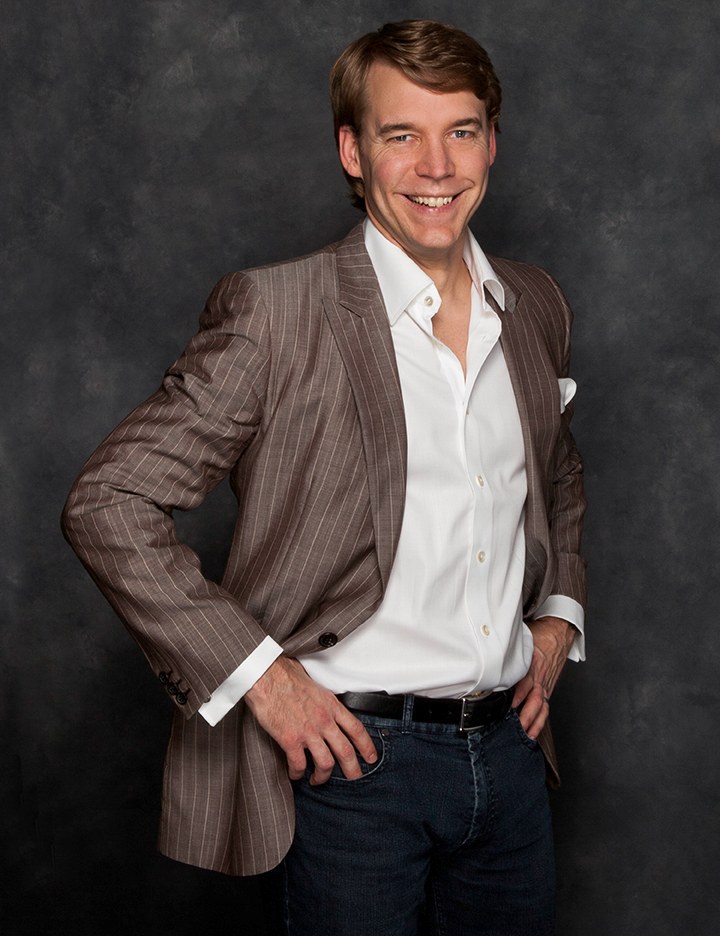
Both can make a beautiful portrait, and they are not interchangeable. One gives you a sense of place and light nobody controls. The other gives you exactly the same light on the first frame and the last. Here is what each one really costs you, and why every session I photograph happens in my private Naples studio.

A studio session gives you controlled light, privacy, several backdrops and wardrobe changes in one sitting, and images that match each other frame to frame and person to person. An outdoor session gives you a sense of place, real depth behind the subject and a background that changes as you move, at the cost of weather, heat, passersby and light that shifts by the minute.
For headshots, for a team that has to match, and for a brand library shot in one visit, a studio is usually the better tool. For a portrait that is genuinely about a place, outdoors wins and nothing in a studio replaces it. I photograph in a private studio in Naples, by choice.
Every version of this argument comes down to one word. Outside, the light is handed to you. You get to choose roughly what time you shoot and which way the subject faces, and after that you take what the sky is offering that day. In a studio there is no light at all until somebody makes some, and then every part of it is a decision: where it comes from, how soft it is, how high it sits, how quickly it falls into shadow.
Control is not automatically better, and anyone who tells you otherwise is selling something. Plenty of wonderful pictures exist precisely because something uncontrollable happened in front of the camera. Weather has made more good photographs than it has ruined.
But a portrait with a job to do is a different proposition from a photograph made for its own sake. A headshot that has to sit in a row beside seven colleagues, or a set of images you will draw from all year, is not the place to gamble on conditions. So the honest question is not which approach is better. It is which one the picture you actually need can afford.
Start with the case for going outdoors, because it is a real one. A room cannot fake distance. Outdoors there is genuine space behind a person, and backgrounds fall away naturally instead of standing a few feet behind their shoulders.
None of that is trivial, and I would never tell you an outdoor portrait is a lesser thing. When the weather cooperates, the light is right and the location means something to the person in it, the result can be gorgeous. Notice how many conditions are in that sentence, though, and how few of them anybody gets to decide.
In a studio, light gets built rather than borrowed. It can be shaped to your face instead of being worked around, which is the difference between light that flatters a particular person and light that happens to be there.
The practical consequences are unglamorous and they are the ones that matter. Nobody squints. Nothing is blowing across your face. The exposure does not drift from one frame to the next. The background stays clean, so nothing bright or moving competes with you for attention. And because the light was deliberate, there is far less to fix afterward, which is how it should be: retouching ought to be finishing work rather than rescue work.
It also means the light can change on purpose rather than by accident. A softer, brighter setup for an approachable profile picture, then something harder and more sculpted for an image that needs more weight, minutes apart in the same sitting. Outside, getting those two looks means two different times of day.
This is the factor people underrate until it happens to them. Outdoors there is always an audience. Somebody on the sidewalk, somebody waiting to get past, a stranger slowing down to work out who is being photographed and whether they should know your face. If you are already uneasy about being in front of a camera, an audience turns ordinary discomfort into paralysis.
Direction suffers too. The instructions I give are specific and physical, and there is a natural limit to how specific anyone wants to be at conversational volume with people standing ten feet away. The result is a quieter, vaguer session at exactly the moment you need the clearest guidance.
In a private studio it is just the two of us. Nothing is overheard, nobody is watching, and you can try something, decide you hate it, and try something else with no witnesses at all. For clients driving over from Estero for boudoir, or for a birthday session that is nobody else's business, privacy is not a preference. It is the whole requirement.
If eight people need portraits that belong together, a controlled room is not a preference, it is the mechanism. Everyone is photographed in the same light, in sequence, with the same direction and the same background, so a leadership page reads as one organization rather than eight separate afternoons with eight different cameras.
The same logic applies to one person over time. Somebody who joins the company later can be photographed to match what already exists. You can come back for an update and sit in the same light you sat in before. And when the images are carrying credibility, as they are for contractors bidding against a competitor whose photo is a cropped snapshot, that consistency is doing real work. The rest of the mechanics are set out in my guide to professional headshots.
A personal brand library needs the same discipline for a slightly different reason. If you are posting from one set of images across a whole year, they have to look like they came from the same person and the same brand, even when the wardrobe changes. That is much easier to promise when the light did not change either.
Southwest Florida is the other half of this argument, and it is not a small half. Heat and humidity are unkind to hair, to makeup, to a pressed shirt and to a person's mood. Time spent outside in it is time spent on touch-ups, and it shows in the frames toward the end regardless of how good the photographer is.
Then there is the sky. An outdoor shoot is built around light and held hostage by weather, which means it moves when the weather moves. A studio session does not move when the weather moves, and the light is the same as it would have been a month earlier.
That matters most to anybody with no slack in their schedule. If you are here for a few days and want headshots while visiting Naples, a plan that depends on cooperative conditions is a bad plan, because there is no second attempt to fall back on. The same is true if you flew somebody in, took a rare day away from work, or need the pictures for something with a real deadline.
Variety is where most people assume outdoors wins outright, and it partly does. Move down the block and the background is different. There is no argument that a single room offers the same range of scenery.
The catch is what that variety costs in time. Travel between spots. Waiting for the light to be usable. Changing clothes somewhere nobody designed for changing clothes, which in practice means most people bring one outfit, get one look, and call it a session. Add heat to that and the second half of the day is rarely as good as the first.
In a studio the variety comes to you instead. Several backdrops and several wardrobe changes in one sitting, plus changes of light and crop, so one visit produces images that look like they came from different days. It is a compact way to work, because nothing is spent driving and nothing is spent waiting. What a backdrop will never give you is a real place, and that is the honest trade you are making.
If you are weighing this up for your own session rather than in the abstract, three questions settle it almost every time.
There is a fourth question that is less practical and more honest: how do you feel about being watched while you do something you are not confident about? If the answer is anything other than completely fine, that alone points indoors, and there is nothing embarrassing about it. Nearly everybody finds it easier to be told exactly what to do when there is nobody else within earshot to hear it.
Answer those four and the decision usually makes itself, whichever way it lands.
So here is my position, stated plainly. Every session I photograph happens in my private studio in North Naples, just off Pine Ridge Road. That is a deliberate choice about how I want to work, not a limitation I am apologizing for.
It is the choice for all the reasons above: light that behaves, a room with no audience, several looks in one sitting, images that match each other, and a day that is never at the mercy of the sky. It also leaves exactly one variable in the room, which is you, and directing you is the part of this job that changes photographs more than any other.
If the picture in your head is you standing in one specific place that means something, that is a different job, and you should hire someone happily for it. If what you need is headshots or a brand set that has to look right, work everywhere and hold up next to your colleagues, the studio in Naples is built for precisely that. What every sitting includes is laid out on the investment page, and the pricing conversation is personal enough that it belongs on the phone rather than in a table.
In the studio the light is the same on the last frame as the first, the room is private, and the only things that change are you and what you are wearing. If that is the kind of portrait you need, the room is built for it, whatever the sky is doing on the day. Pricing is personal, so call (239) 319-6171 or send the form.
Book a Session Call (239) 319-6171Tell me a little about what you have in mind and I will be in touch personally. Pricing is personal, so the best way to plan is a quick call.
Share a few details and Annie will be in touch personally.