Portfolio
Headshots Boudoir Personal Brand
More
Guides Investment Guided Posing About Book a Session
Home  /  Guides  /  Photo Retouching Explained
Knowledge

Retouching, explained without the mystery.

Almost everyone arrives with the same quiet worry, and almost nobody says it out loud: how much of this photograph is going to be me. It is a fair question, and the answer is not complicated once you know what retouching is for. Here is what the finishing pass does, what it should never do, and how to ask for exactly what you want.

By Annie Watson · Naples, Florida · Updated September 2026
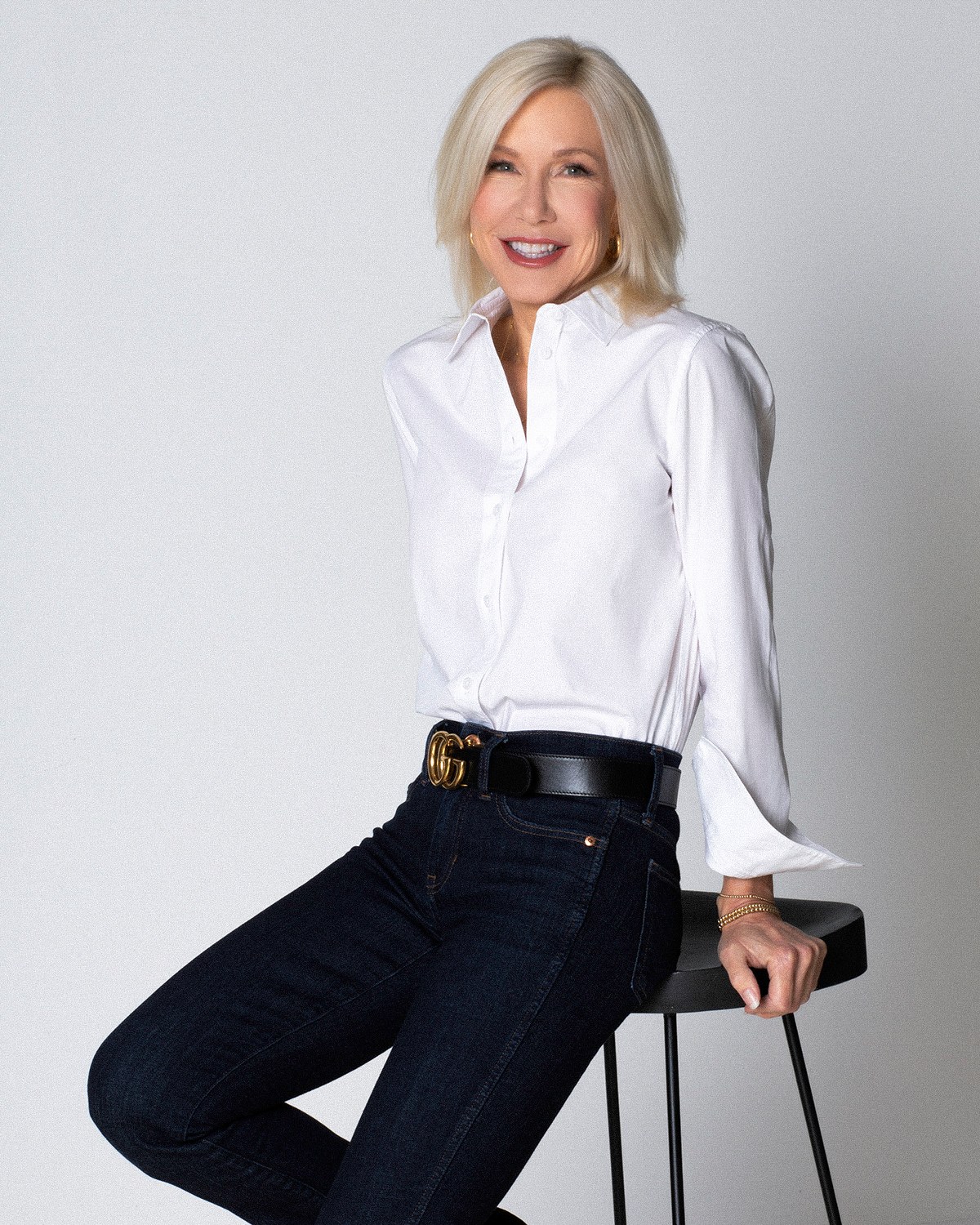
Woman with blonde hair in a white blouse and dark jeans, seated on a stool, light backdrop, photographed by Annie Watson in her Naples studio
The Short Answer

Retouching is the finishing pass on a photograph after the frames are chosen. Done by hand, one image at a time, it typically addresses the temporary and the distracting: a blemish that will be gone in a week anyway, a stray hair across the face, uneven color and tone, a crooked collar, a mark on the background. What it should not do is rebuild your face or your body into someone else's.

The test is simple. Retouching is working when nobody notices it, and people simply think you look like yourself on a good day.

What retouching is, and what it is not.

Three different jobs get called the same thing, and separating them clears up most of the confusion. Editing is the whole finishing process: choosing which frames are worth keeping, setting exposure, balancing color, deciding the crop. Retouching is the smaller, slower part inside that, where a person works on specific details in a specific image. A filter is neither of those. It is a single look poured over the entire picture at once, and it treats your skin, your shirt and the wall behind you as one surface.

The reason the distinction matters is that the three feel completely different to look at. Good editing makes a photograph feel like the room actually felt. Good retouching removes the small things your eye would have snagged on and nothing else. A heavy filter announces itself immediately, and it announces something about you along with it. When I say images are retouched by hand, that is the middle one: each delivered frame worked on individually, rather than a setting applied to a folder and exported.

The ordinary work of a finished frame.

Most of what retouching addresses is stuff that was not really there in the first place, in the sense that it was not there last month and will not be there next month. It is the passing and the accidental. The question behind almost every headshot booking, whether you are across town or driving in from Golden Gate Estates, is some version of can you fix this, and the honest answer is that most of what you are likely pointing at is exactly what the finishing pass is for.

  • Temporary skin things: a blemish that appeared this week, a scratch, a bit of redness from a rushed morning.
  • Stray hairs, the ones lifting off your head or falling across an eye in an otherwise perfect frame.
  • Color and tone: balancing skin tones so one side of the face does not run warm while the other runs cool.
  • Small wardrobe distractions: lint, a twisted strap, a collar that folded under itself when you turned.
  • Background nuisances: a scuff, a stray shadow, a mark on the backdrop that your eye finds every single time.
  • Consistency across a set, so images from the same sitting look like they belong to each other.

That last one is quietly the most valuable and the least discussed. A single portrait can survive a slightly different tone. A set cannot. When several finished images have to sit together on a page, matching them to one another is a real part of the work, and it is the piece people only notice when it has not been done.

Most of the work happens before the shutter.

Here is the part the software conversation always misses. The best retouching is the retouching nobody had to do. Light that falls the right way on a face, an angle chosen for the person actually sitting there, a jaw and a shoulder placed on purpose: those decisions do more for how you look in a photograph than any amount of finishing afterward, and they do it without touching a pixel.

This is why the posing matters so much to me. Direction is not decoration. Where you put your chin, how far you turn, what your hands are doing and where you carry your weight change the geometry of the picture at the moment it is made. Guided posing is simply someone handling that for you so you never have to guess. If you want the mechanics of it, how to pose walks through what the small adjustments actually accomplish.

The practical consequence is worth saying plainly. If a photographer's plan for making you look your best is mostly about what happens afterward, that is a warning sign, not a service. Ask what they do in the room, not just what they do at the computer.

The line a careful retoucher holds.

There is a difference between finishing a photograph and rebuilding a person, and it is not a subtle one once you have seen both. Finishing addresses what was passing through. Rebuilding changes what is permanently, recognizably you: the shape of your face, your proportions, the age you actually are. That crosses a line I hold, and I will tell you so on the phone before you ever book.

The reason is not purely philosophical. It is practical. Your photograph has to survive meeting you. It sits on a profile a client scrolls before a first meeting, then you walk through the door, and those two versions have about a second to reconcile. When they do not, the mismatch does something worse than a plain photo ever could: it plants a small, unspoken doubt about everything else you have said. I want the picture to be the thing that gets you the meeting and then quietly holds up in it.

None of that means a photograph has to be unflattering. It means the flattery belongs in the light, the angle, the expression and the moment you were caught in, all of which are honest tools. What you get back should be you, on your best day, in good light. Not a stranger with your haircut.

Why too much costs you.

Over-retouching is not a matter of taste when the photograph is doing a job. A portrait that has been smoothed until the skin has no texture reads as insecure at exactly the moment you want to read as capable, and the effect is worst in the professions where people are judging your judgment. It also ages badly, because the specific look of heavy retouching dates the way a haircut does, and anyone can place the year within a season or two.

The irony is sharpest for people whose work touches appearance. Med spa owners are the clearest case: a client looking at a plainly overworked portrait is being told, without a word, that the results in the room might not speak for themselves. The same logic runs through every field where trust is the product. Restraint reads as confidence, and confidence is most of what headshots are actually selling.

Screen size hides a great deal of this, which is how it sneaks past people. A portrait that looks smooth and fine on a phone can fall apart the moment it is printed at any real scale, because print shows texture that a small bright screen simply throws away. If your photograph is ever going on a wall, in a program, on a cover or in anything a person holds, it has to be finished for that, and finishing for that means leaving skin looking like skin.

It compounds across a group, too. One overworked portrait in a row of twelve is the one everybody's eye lands on, which is why a consistent, restrained finish matters even more for a company than for an individual. The sequencing and consistency side of that is its own subject, covered in the guide to team headshots, and the broader picture of what a good portrait needs is in the guide to professional headshots.

By hand, in a batch, or by app.

There are really three ways a photograph gets finished, and they cost different amounts of attention.

Hand work, one frame at a time

Someone looks at your specific face in your specific light and decides, detail by detail, what is a distraction and what is you. It is slower, and it is the only approach that can tell the difference between a blemish and a beauty mark, which is not a judgment software is equipped to make.

Batch settings run across a folder

Fast and consistent, and genuinely fine for the color and exposure layer of the work. The trouble starts when skin-level adjustments get applied at that scale, because the same setting that helps one frame flattens the next, and nobody is looking closely enough to catch it.

Filters and generated portraits

A filter is a costume for the whole image. A generated portrait is not a photograph of you at all; it is a plausible guess assembled from other faces, which is why people so often say something is off without being able to name it. For a picture whose entire job is to make a stranger trust you, that vague wrongness is an expensive thing to carry around.

From the sitting to your gallery.

Knowing the order of operations tells you where your opinion is useful, which is most of what people are really asking when they ask about retouching.

First the frames get chosen. This is where most of the quality is decided, and it is worth saying loudly: a genuinely good frame lightly finished will beat a mediocre frame worked on for an hour, every time. Then comes the color and exposure pass, which sets the overall feel and fixes any drift between one setup and the next. Only after that does the hand work begin, image by image, and it goes fastest on the pictures that were made well in the first place. Last comes matching, where the finished images are brought into line with each other so the set holds together.

The practical question at this point, whether you are across town or driving in from Bonita Springs, is how long all of that takes. Your hand retouched images arrive in a private, password protected gallery within the week, ready to download and share, which is generally faster than the page they are waiting on.

The useful moment for your input is before the finishing starts, not after. Tell me at the session what you want left alone and what you would like softened, and the work gets done that way the first time. Waiting until the gallery lands makes it a conversation about undoing something instead of a conversation about doing it right, and the first version is nearly always the one that gets used.

How to say what you actually want.

You are allowed to have opinions about your own face, and you do not need any vocabulary to express them. Point at the thing. Say what you would like less of. Say what you want left completely alone, which is the sentence that matters most and the one people are shyest about. Nobody will think it is a strange request; it is the request I most want to hear.

  • This came up this week and it is not usually there.
  • Please leave my freckles, my gray, my laugh lines and this scar exactly as they are.
  • I would like the skin softer here, but I still want to look like I have skin.
  • These two images are going next to each other, so please make them match.
  • Here is the guideline my company uses, so the finish lines up with everyone else's.

Permanent features are always your call, not mine. Some people want a scar or a birthmark kept because it is part of how they recognize themselves; others feel differently, and either preference is a normal thing to say out loud. What is not fine is a photographer deciding for you and handing back a face you did not agree to.

It matters more, not less, when the pictures are personal. In boudoir work that conversation matters even more, and it belongs up front, before anything is made; the complete boudoir guide covers how those sessions are planned. Across everything I shoot, hand retouching is part of the work rather than an add-on, alongside everything else listed in what the investment includes. If you are still choosing a photographer, ask each one these questions and listen to how quickly they answer; the guide to choosing a photographer in Naples has the rest of the list.

Key Takeaways
  • Retouching is the finishing pass on a chosen photograph, and it is a different craft from editing color or laying a filter over everything.
  • It belongs on the passing and the accidental: a temporary blemish, a stray hair, uneven tone, a twisted collar, a mark on the backdrop.
  • It should not rebuild the permanent, recognizable you, because the photograph has to survive the moment you walk through the door.
  • Most of how good you look was decided by light, angle and posing before the shutter ever moved.
  • Say plainly what you want left alone; permanent features are your call, and a good photographer will ask rather than assume.
Next Step

Ask me the awkward question.

If what has kept you from booking is the worry that you will not recognize yourself afterward, say that out loud on the call. Tell me what you want softened and what you want untouched, and I will tell you honestly what a finished frame will look like. Pricing is personal, and so is this conversation, which is why it starts with a quick call to (239) 319-6171 or the form.

Book a Session Call (239) 319-6171
Put It to Work

Sessions this guide points to.

Good to Know

Questions, answered.

Will I still look like myself?
Yes, and that is the entire point. The finishing pass is for the things that were passing through: a blemish from this week, a stray hair, a fold in a collar, uneven tone across the frame. Your features stay your features. If there is something you are worried about, tell me before we shoot rather than after, because most of it can be handled with light and angle instead.
Can I ask for less retouching, or almost none?
Absolutely, and people do. Some want the lightest possible touch, a clean color pass and nothing else. Just say so, ideally before the session, and be specific about what you want kept. Freckles, gray hair, laugh lines and scars are not distractions to me, so I would rather ask than guess, and nothing gets quietly edited out of a face you like.
What about a scar, a birthmark or something permanent?
That is your decision every time. Some people want those kept because they are part of how they recognize themselves. Others feel differently. Neither answer is wrong and neither needs explaining. Tell me which way you lean when we plan the session, and if you are undecided, say so then, because it is far easier to talk through before the finishing starts than after the gallery has landed.
Is retouching just a filter with a fancier name?
No. A filter is one look applied to the entire image at once, so it treats your skin, your clothes and the background as the same surface. Hand retouching is a person working on specific details in a specific frame, deciding what is a distraction and what is you. The difference is obvious side by side, and it is very obvious at print size.
Do you retouch the images I receive, or do I get untouched files?
The images delivered in your private gallery are retouched by hand. That is part of every sitting rather than something extra, and it is why the set arrives ready to use on a website, a profile or in print instead of needing another round of work on your end. Your gallery is password protected, so you can download and share it on your own terms.
Is a lightly retouched photo going to look unprofessional?
No, and usually the opposite. A finished frame with real skin texture, a clean background and matched tone reads as a person who is comfortable being seen, which is most of what a professional image is for. What reads as unprofessional is the accidental stuff: a stray hair, lint on a lapel, a fold in a collar, one image warmer than the one beside it. Those are what the finishing pass is for. Your face is not what it is for.
Book Your Session

Your best headshot is one session away.

Tell me a little about what you have in mind and I will be in touch personally. Pricing is personal, so the best way to plan is a quick call.

Studio
5400 Yahl St, Naples FL

Prefer to talk? Call (239) 319-6171. I respond personally.