Portfolio
Headshots Boudoir Personal Brand
More
Guides Investment Guided Posing About Book a Session
Home  /  Guides  /  Natural Light vs Studio Light for Portraits
Knowledge

Natural light and studio light, source by source.

This is a comparison of two light sources, not two places to stand. Daylight is one enormous source you can angle yourself against but never move. Studio light is a source you put exactly where you want it. Each has a real cost, and knowing which is which tells you a lot about the portraits you already own.

By Annie Watson · Naples, Florida · Updated September 2026
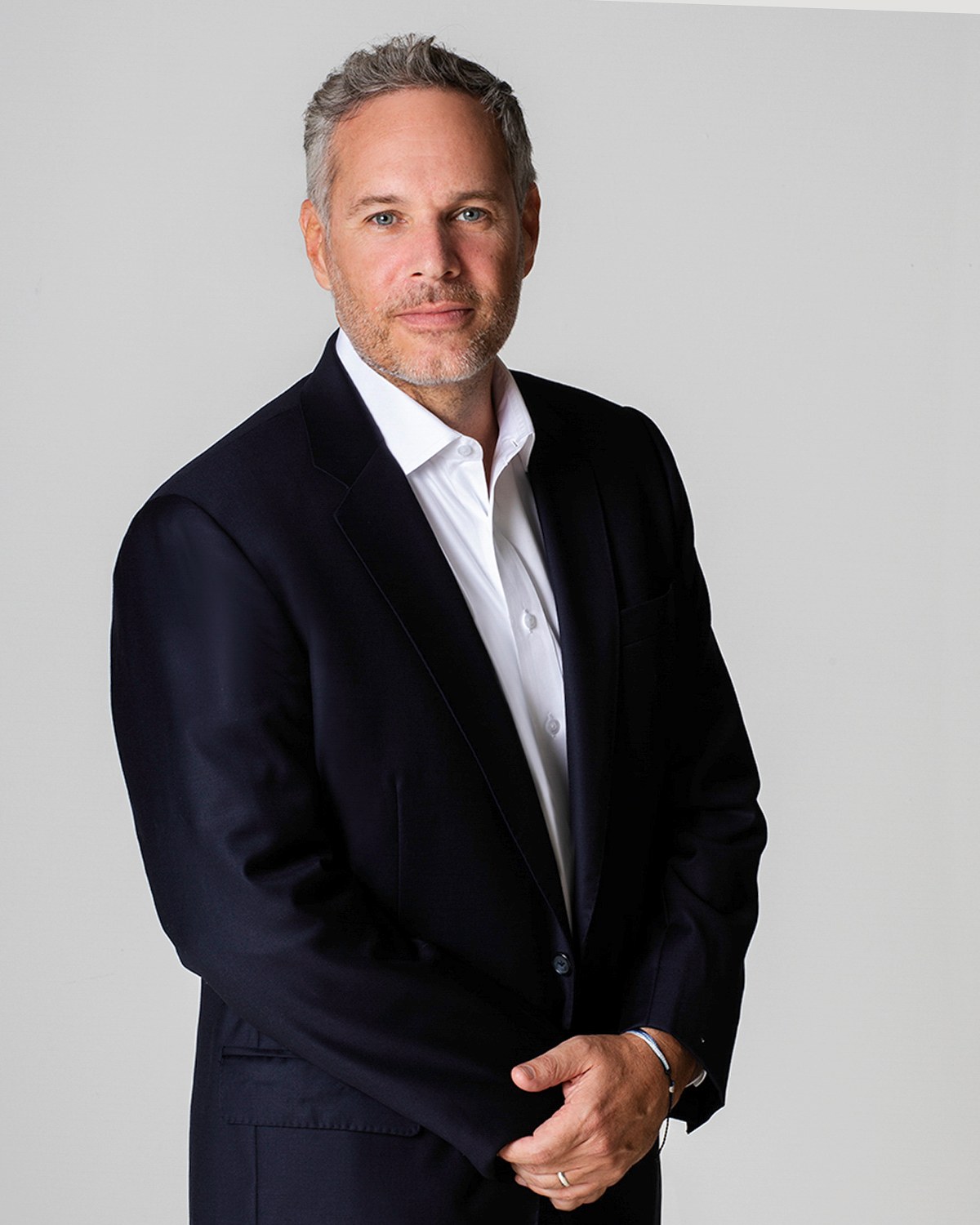
Man in a black suit and open-collar white shirt with hands clasped, gray backdrop, photographed by Annie Watson in her Naples studio
The Short Answer

Natural light is a single source of a fixed size and direction that changes color and intensity through the day and cannot be adjusted, only responded to. Studio light is a source whose position, size, softness and brightness are all chosen, and which is identical on the last frame and the first.

Daylight is soft, familiar and costs nothing to arrange, and it will not hold still. Studio light holds perfectly still and can look sterile in the hands of someone who lights every face the same way. The difference that matters for a portrait with a job to do is repeatability: only a controlled source makes a set of images match.

One source you can move, one you cannot.

Strip away the romance and the two sources differ in exactly one respect: authorship. With daylight, the size, the height, the color and the direction are already decided, and the only variable left to you is which way a face turns and where it stands. With a studio source, none of it is decided until somebody decides it.

That is not a value judgment. A great deal of the finest portraiture ever made was lit by the sky, and there is nothing about a flash tube that is inherently more professional than a window. What it does mean is that the two sources fail in completely different ways. Daylight fails by changing. Studio light fails by being placed badly.

Everything below follows from that one distinction. It is a narrower question than the studio versus outside comparison, which weighs entire sessions against each other. This page is only about the light itself.

Direction is decided for you, or by you.

Light coming through an opening is directional in a way most people underestimate. It arrives from one side, at whatever height the opening sits, and it falls off fast the further you stand into the room. Turn a face toward it and you get a soft, open portrait. Turn a face away and the near cheek goes dim while the far one stays lit, which is why so many casual pictures have one bright ear and a shadowed face.

You have three controls and they are all your own body: how far you stand from the opening, which way you turn, and how high your chin sits. That is genuinely enough to make a lovely portrait, and it is also the entire toolkit.

A placed source starts where daylight ends. Height, angle around the face and distance are set independently, so the shadow can be put exactly where it belongs on a particular face rather than where the room happened to put it. Those positions have names, and they are laid out in the guide to studio lighting styles.

Softness is a question of size, not source.

Here is where the folklore gets it backwards. Daylight is not soft because it is natural. It is soft when it arrives through a large opening close to you, because a large, near source wraps around the curve of a face and draws a gradual shadow edge. The same sun, uninterrupted overhead, is one of the hardest sources there is.

Studio softness runs on identical physics. A large modifier close to your face behaves like the opening. A small one, or a large one pushed far back, behaves like the bare sun. Nothing about the technology changes the rule, and choosing between hard and soft on purpose belongs with the named looks rather than here.

So the honest sentence is this: soft light flatters, and soft light is available from either source. What only one source offers is soft light on demand, at the same softness, in the same place, for as long as the sitting runs.

Color, and the mixed light problem.

Daylight is not one color. It is cool and blue when the sky is doing the work, warm and orange low in the day, and it takes on the color of whatever it bounces off on the way to you. Stand near a green wall and green lands on your jaw. Stand near warm brick and your skin picks that up too.

That is survivable on its own. What is not survivable is mixing. When daylight and room light both fall on one face, they arrive at different colors, and a camera can only be set correct for one of them. The result is a portrait with a warm cheek and a cool forehead, which no amount of careful work fully unpicks, because a single white balance cannot be correct for both at once.

A controlled source solves this by being the only source that matters, set to one known color, so skin renders neutral and every frame in the sitting agrees with every other. That consistency is what makes choosing images a question of expression rather than a hunt for the two frames that happen to match. It also survives the trip to paper, which is its own subject in the guide to how screen and print color differ.

The thing daylight cannot promise.

Repeatability is the whole practical argument and it is deeply unglamorous. A cloud arrives and the exposure shifts. The sun moves and the direction rotates. An hour passes and the color warms. None of that is a problem for one lucky frame. It is a serious problem for anything that has to hold together.

Three cases where it decides the outcome:

  • A team that has to sit in a row. Everyone photographed under the same placed source belongs to the same set. Under changing daylight, the first person and the last were photographed in different light and it shows immediately.
  • A library of images meant to last a year. If the plan is several looks from one sitting, they have to be siblings, not strangers.
  • A pair of deliberately different looks. Bright and open for one purpose, darker and weightier for another, both from the same sitting. With borrowed light that means waiting for a different time of day.

That is the whole reason I work with placed light in a private studio rather than beside a window, and why the headshots that come out of one sitting belong to each other. It is not a claim that daylight is inferior. It is that a portrait with a job to do should not depend on the sky.

Where studio light goes wrong.

Studio light earns its bad reputation honestly, and it is worth naming how, because it is the same three mistakes every time.

The first is frontal fill: a big source parked square in front of the face with everything filled in, so there is no shadow anywhere to describe a cheekbone or a jaw. It is safe, it is clean, and it looks like a document photograph.

The second is over-lighting. Adding a source for the hair, a source for the background and a source for the far side until nothing in the frame has anywhere to fall away. Every surface is lit and nothing has weight.

The third is treating a setup as a recipe. Light that never moves from face to face gets used on a face it does not suit, and the picture is technically flawless and completely uninterested in the person in it.

All three have the same cure, which is a decision: one dominant direction, a shadow allowed to exist, and a ratio chosen for the face in front of the camera. When you choose a photographer, their portfolio answers this faster than any description can, because you can see whether every face was lit the same way.

How to tell which one you are looking at.

Once you can read this, portfolios get much easier to judge, including your own old pictures.

  • Look at the catchlight in the eyes. A tall, soft rectangle usually means an opening or a large panel. A round one means a round modifier. A tiny hard dot means a small, bare source.
  • Look at the falloff. If the far side of a face is noticeably dimmer than the near side, the source was close. Even brightness across the face means it was far away or very large.
  • Look at the shadow edge under the nose. A slow gradient means large and close. A hard line means small or distant.
  • Look at the background. Daylight backgrounds usually carry their own uncontrolled brightness. A placed source lets the background be set to any tone the picture wants.

Run that on the portraits you already have and you will usually find the reason you like one and not the other was never the camera. It was where the light was standing. That is also most of what separates a picture of you from a working photograph, which is the argument the guide to professional headshots makes at length.

Key Takeaways
  • Natural and studio light differ in one thing: whether the size, direction and color were chosen or handed to you.
  • Soft light comes from a large source close to a face, and either kind of light can be soft or hard depending on that size.
  • Daylight changes color through the day and picks up the color of whatever it bounces off before it reaches you.
  • Mixing daylight with room light puts two colors on one face, and a camera can only be correct for one of them.
  • Only a placed source repeats, which is what lets a team or a whole set of looks belong to each other.
  • Studio light looks sterile when it is filled flat, over-lit or used as a recipe rather than chosen for the face.
Next Step

The light should be the reliable part.

If your existing pictures do not match one another, it is almost never the camera. It is that the light was different in every one of them. In my private Naples studio the source is placed, so the last frame agrees with the first. Planning and pricing are personal, so start with a quick call to (239) 319-6171 or the form.

Book a Session Call (239) 319-6171
Put It to Work

Sessions this guide points to.

Good to Know

Questions, answered.

Is natural light more flattering than studio light?
Not by nature. What flatters is a large source close to the face at a sensible height, and daylight through a big opening happens to be exactly that, which is why it has the reputation. A placed source of the same size in the same position renders a face the same way, and it will still be there in the same position for the last frame of the sitting.
Can studio light be made to look like daylight?
Yes, and it is a common thing to ask for. A large soft source set to one side at roughly the height of a standing person, with the shadow side lifted gently rather than crushed, reads as daylight to almost every eye. The difference is that it is repeatable, and you can have it again in the same sitting after a wardrobe change instead of hoping the sky cooperates.
Why does my skin look a different color in every photo I have?
Because the light was a different color in each of them, and probably more than one color in some. Daylight shifts through the day, room light is its own color entirely, and any surface near you bounces its color onto your face. A single controlled source removes the variable, which is why skin tone stays consistent across a set of images made in one sitting.
Is continuous light better than flash for portraits?
They are tools, not tiers. Continuous light lets you see the shadow before the picture is taken, which makes it easy to judge. Flash delivers a large amount of light in a very short burst, so it freezes small movement and lets the source be shaped in ways that continuous light struggles to match. What decides the look of the portrait is where the source is and how big it is, not which of the two made it.
Does a photo made in daylight need less editing?
Usually the reverse. Uncontrolled light leaves you correcting color casts, uneven exposure and shadows that landed where nobody wanted them. Light that was placed on purpose leaves far less to correct, so hand retouching stays about the person instead of the conditions.
My favorite photo of myself was made near a window. Why?
Because you were standing in a large, soft, close source at head height, which is the most flattering geometry there is, and because nobody was watching you at the time. Both halves of that are reproducible. The first is a lighting decision. The second is what a private studio and guided direction are for, and it is usually the half people underestimate.
Book Your Session

Your best headshot is one session away.

Tell me a little about what you have in mind and I will be in touch personally. Pricing is personal, so the best way to plan is a quick call.

Studio
5400 Yahl St, Naples FL

Prefer to talk? Call (239) 319-6171. I respond personally.