It is the thing people get stuck on before anything else about a headshot, and it is usually argued as though one answer were correct everywhere. It is not. The right expression depends on what the picture has to accomplish, who is looking at it and where it will sit. Here is how I decide, and how you can decide for yourself.

Choose your expression by the job the photograph has to do, not by which one you like better in the mirror. A warm smile suits work where somebody has to like you before they will hire you, and it is the safer choice for a profile photo that strangers scroll past with no other information about you. A composed, serious expression suits work where somebody is buying your judgment, and it only works when the eyes stay engaged rather than going blank.
Most of the time the honest answer is both. One sitting can produce a warm frame and a composed frame from the same look, one after the other, and you use whichever the situation in front of you calls for.
Before I can tell you whether to smile, I need to know where the picture is going. A photo beside a phone number on a company page is doing a different job from one attached to a proposal, and both are doing a different job from the one that greets a stranger deciding whether to answer you. Expression is not decoration. It is the part of the photograph that answers the viewer's first silent question, which is always some version of what is this person like.
So start there. Write down, in one sentence, what you want a viewer to conclude. Approachable and easy to talk to. Careful and worth what you charge. Senior enough to be in the room. Each of those has a different face attached to it, and once you have the sentence the expression stops being a matter of taste. The body mechanics underneath it, the weight and the shoulders and the chin, are laid out in how to pose for photos. This page is only about the face on top.
One thing worth saying plainly: the photograph does not have to carry your whole personality. It has to carry one impression, clearly. That is why professional headshots feel simpler than the pictures you like of yourself from a holiday, and why simplicity is the point rather than a limitation.
The question is usually asked as though smiling meant friendly and serious meant competent, so that you have to trade one away to get the other. You do not. Warmth and authority sit on separate dials, and the frames worth keeping have both turned up at once.
Picture a scale with four settings. A full open smile with teeth. A closed-mouth smile, lips together, eyes lifted. A neutral face that is still engaged, mouth soft, attention on the lens. And blank, which is not really a setting, it is the absence of one. Almost every useful headshot lives in the middle two. The ends exist for specific jobs and get chosen on purpose.
Blank is the real failure mode of a serious portrait. A face with nothing happening in it does not read as authoritative. It reads as absent, or as somebody who did not want to be there. Serious done properly means interested, alert, holding something back, and the rest of you has to agree with it, which is the whole subject of body language on camera.
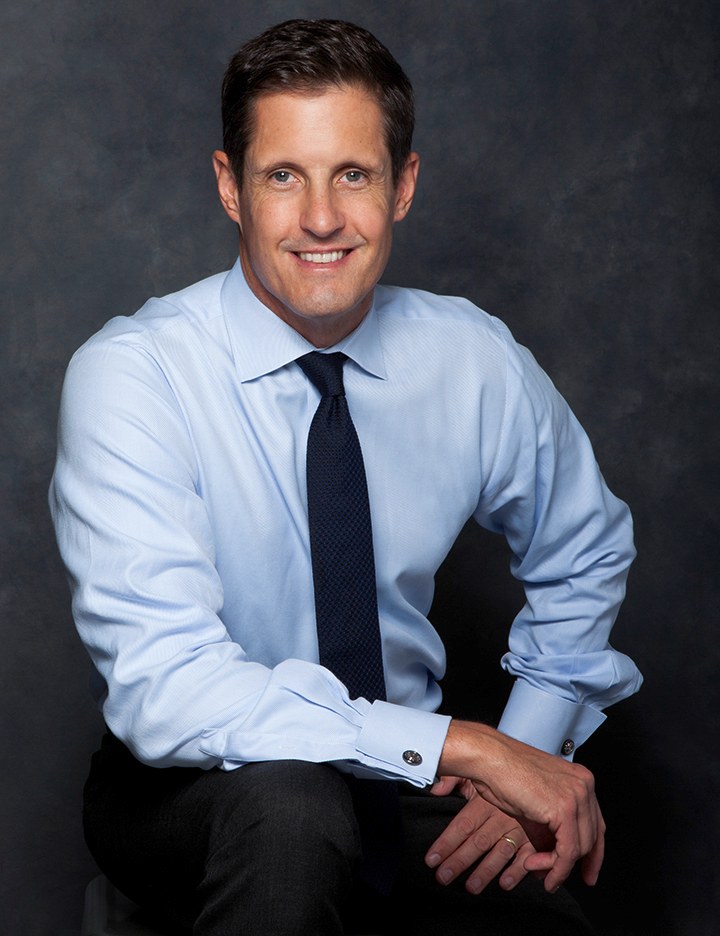
Once you know the job, the answer mostly makes itself. Here is how it falls for the uses that come up most often.
Notice that none of those is about your personality. They are about the surface the picture lands on. Having two versions of yourself in circulation is normal and is not inconsistent, as long as both plainly look like the same person.
If I had to hand one expression to everyone, it would be the closed-mouth smile. Lips together or barely parted, corners lifted a little, and the real work happening in the lower lids. It reads as warm without reading as delighted. It survives a small circular crop. And it ages well on a page you are not going to update for a long time, because it is not tied to a mood.
It is also the hardest one to counterfeit, since there is nothing for the mouth to hide behind. A closed-mouth smile with dead eyes looks like a polite grimace, which is exactly why the version people produce in a bathroom mirror disappoints them. It has to be built from the eyes downward, in that order.
That is a mechanic rather than a decision, and it has a page of its own: how to produce a natural smile on cue covers the exhale, the reset between frames and why say cheese fails.
People want a rule by industry, and there is not an honest one, because the range inside any field is wider than the gap between fields. What there is instead is a test you can run before you book anything.
Find the page your photograph will live on, or the closest equivalent at three organizations you respect. Look at the expressions. You are not copying them, you are calibrating. If every face there is composed and yours is mid-laugh, your picture reads as the odd one out before anyone gets to your name. If every face there is braced and unhappy, a warm frame is an advantage rather than a risk.
Two situations do pull hard in one direction. Leadership portraits tend to sit lower on the smile scale because the picture is being asked to carry steadiness, which is why executive headshots so often end up composed rather than beaming. And when you pose a team, everybody has to agree on one setting in advance and stay there. A page where three faces are laughing and four are not looks accidental, whatever the individual pictures are like.
Here is the part that makes the whole question easier: you rarely have to commit in advance. Inside a single look, the same jacket and the same light, a warm frame and a composed frame can be taken back to back. Nothing changes but the direction and your face.
So plan for both, then choose afterward at the size the picture will actually appear. Shrink each candidate down to a thumbnail on your phone and look again. Expression is the first thing that survives shrinking, which is why the frame you love enormous is sometimes not the one that works small.
And when you genuinely cannot decide, show two people who have no idea which one you prefer and ask them what the person in each picture is like. Do not ask which is better. You will get an opinion about photography instead of an answer about you, and the second one is what you came for.
Whichever way you go, the deciding factor is the same, and it is not the mouth. A smile is read as genuine or manufactured almost entirely by what the lower lids are doing, and a serious face is read as engaged or empty by those same muscles. Cover the mouth in any portrait you admire and you will find the expression is still there.
That is why I direct the eyes first and the mouth second in every sitting, and why the small lift of the lower lids that is not a squint gets its own page: what the eyes in portraits are doing, and how the squinch works.
Get that right and both answers to this question are good ones. Get it wrong and neither of them is.
The warm frame and the composed frame come out of the same jacket and the same light, one after the other, which is why I would rather you left with both than agonized over it beforehand. Tell me where the pictures are going and I will direct the face to match. Pricing and planning are personal, so call (239) 319-6171 or send the form.
Book a Session Call (239) 319-6171Tell me a little about what you have in mind and I will be in touch personally. Pricing is personal, so the best way to plan is a quick call.
Share a few details and Annie will be in touch personally.