A team photo is not one pose repeated twelve times. It is twelve individual frames built from the same cues so they read as a set when they sit next to each other on a page. Here is how each person is posed, and what actually makes a roster match.

Matched team photos come from posing each person to the same short list of cues rather than the same rigid pose. Everyone gets the same camera height, the same rough shoulder angle, the same chin cue and the same instruction for expression, adjusted a few degrees for that person's build. The match is in the consistency of direction, not in forcing different bodies into an identical shape.
In practice that means one photographer, one room, one background and one running order, with each person photographed in sequence at the studio, never scattered across different rooms or setups. A tall person and a short person will not stand identically, but both will be turned the same amount, lit the same way and asked for the same kind of expression, which is what makes the finished wall of faces look like one company instead of a dozen photos stapled together.
The instinct when matching a roster is to find one pose and repeat it exactly: same foot placement, same hand position, same head tilt, on every single person. That instinct produces the opposite of what you want. A pose built for someone five foot four looks cramped on someone six foot two, and a hand placement that flatters a narrow frame can look forced on a broader one. Copying the shape breaks the match it is trying to create.
What actually holds a set together is copying the cue instead of the shape. Turn everyone's body the same rough number of degrees off square to the camera. Ask everyone for the same forward-and-down chin adjustment. Set the camera at the same height for every person, roughly at eye level for the tallest and shortest alike, adjusting the tripod between sittings rather than the angle of direction. Give everyone the same expression brief, whether that is a warm half smile or something more serious. The instruction stays fixed. The body executing it is allowed to be different, and that is exactly why the result reads as consistent rather than identical.
This is the difference between a set that looks planned and a set that looks stiff. A row of people all leaning the same fixed amount, at the same fixed angle, in the same fixed pose looks like a lineup. A row of people who were each given the same direction and allowed to carry it in their own body looks like a team.
A team is rarely made of people the same height, and the mistake is trying to fix that with the pose. Asking a tall person to slouch or a short person to stand on tiptoe reads immediately, and it undoes the natural look you are trying to build. The fix belongs to the camera, not the body.
None of this shows up in the final photograph as anything other than consistency. The viewer never sees the adjustments; they only see a wall of faces that all sit at the same scale and the same angle, which is the entire goal.
Expression is the part of a team set most likely to drift, because left alone people default to wildly different things: a tight professional smile from one person, a broad grin from another, something closer to a mugshot from whoever is having a hard morning. None of it is anyone's fault. Nobody was told what the photo was for.
The fix is a single expression brief, given the same way to every person before the camera comes up. Something like: think of someone you are glad to see walk into a room, breathe out, and let your eyes do most of the work while your mouth stays soft. That one instruction, repeated identically for the whole roster, produces a set with a consistent register even though no two people's faces move the same way. It also gives the photographer something concrete to check between people: not are you smiling enough, but does this expression sit in the same register as the last one.
Letting one person go for a broad open laugh while everyone before them held something quieter breaks the set as surely as a mismatched background would. If a laugh belongs in the roster, it should be requested of everyone, or reserved for a second, clearly different set of frames rather than mixed into the primary matched set.
It is worth saying plainly what a matched team set is not. It is not a single group photograph with everyone arranged shoulder to shoulder, and it is not a session that comes to your company. Every person here is photographed individually, in sequence, at my studio in Naples. The mechanics that make a real group photograph work, staggering height with rows, angling shoulders toward the center, closing gaps between bodies, simply do not apply to a set built from individual frames, because there is no shared frame to arrange.
What does carry over from group photography is the underlying idea: a set only reads as unified when every person was treated the same way. In a physical group that means the same posture rule applied to everyone standing in the row. In a studio set built one person at a time, it means the same camera height, chin cue and expression brief carried from the first person of the day to the last. The mechanism changes, arranging a room full of people at once versus sequencing them one after another, but the goal, one consistent standard applied without exception, is identical.
If your team also wants a single photograph of everyone together for an about page, that is a different kind of image and a different plan, worth raising on the planning call rather than assumed as part of a headshot roster.
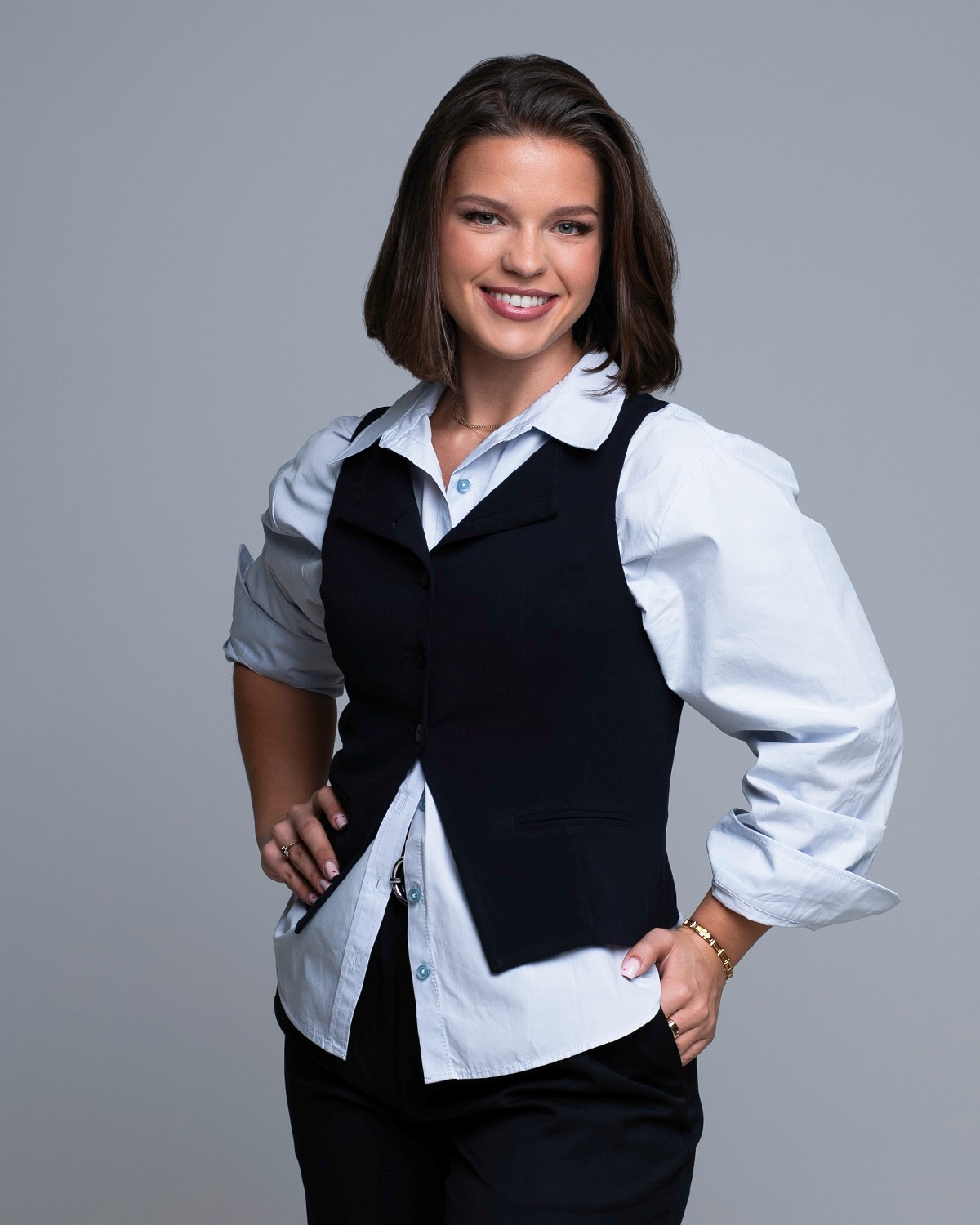
Because everyone is posed individually rather than arranged as a group, the order people are photographed in has more effect on the final set than most people expect. The first person of the day sets the calibration: camera height, framing distance, the exact wording of the expression brief. Every person after them is measured against that first frame rather than against some abstract ideal, which is why the standard has to be fixed before the first frame and then left alone.
Who goes first, who should not go last and where to leave gaps are planning decisions, and they are already worked through in my guide to team headshots for companies. From the posing side, the only thing I ask is that the order be settled in advance, so the cues do not drift while the day is being rearranged around someone's meeting.
If you are one of the people being photographed rather than the one organizing the day, the mechanics above happen to you, not with your input, and that is by design. You will be turned a set amount, given the same chin cue as everyone else on the roster, and asked for the same kind of expression. You do not need to know any of this walking in. Guided posing means every one of those adjustments is called for you, the same way it would be called for the colleague before you and the one after.
The one thing worth doing beforehand is deciding, privately, how you want to come across: warm and easy, or a shade more composed and serious. Say that preference out loud when you arrive. The cue stays consistent across the roster, but there is room inside it for your own register, and naming it early means the direction can lean the right way for you from your very first frame rather than adjusting mid-sitting.
Two individual habits are worth knowing before your slot, because they show up in a matched set more than they would in a solo session. The standing posing fundamentals still apply to your feet and weight even though you are being matched to a group. And if crossed arms is your default when you feel unsure in front of a camera, read crossed arms before your slot, since it is one of the few individual choices that can visibly pull a frame out of register with the rest of the roster.
Every person on your team is photographed individually at my Naples studio, in sequence, to the same cues, which is what makes a roster look like one deliberate set instead of a collage, the same standard I hold for every headshots session. For the planning side, team headshots for companies covers scheduling and wardrobe. Call (239) 319-6171 or send the form to get your roster on the calendar.
Book a Session Call (239) 319-6171Tell me a little about what you have in mind and I will be in touch personally. Pricing is personal, so the best way to plan is a quick call.
Share a few details and Annie will be in touch personally.