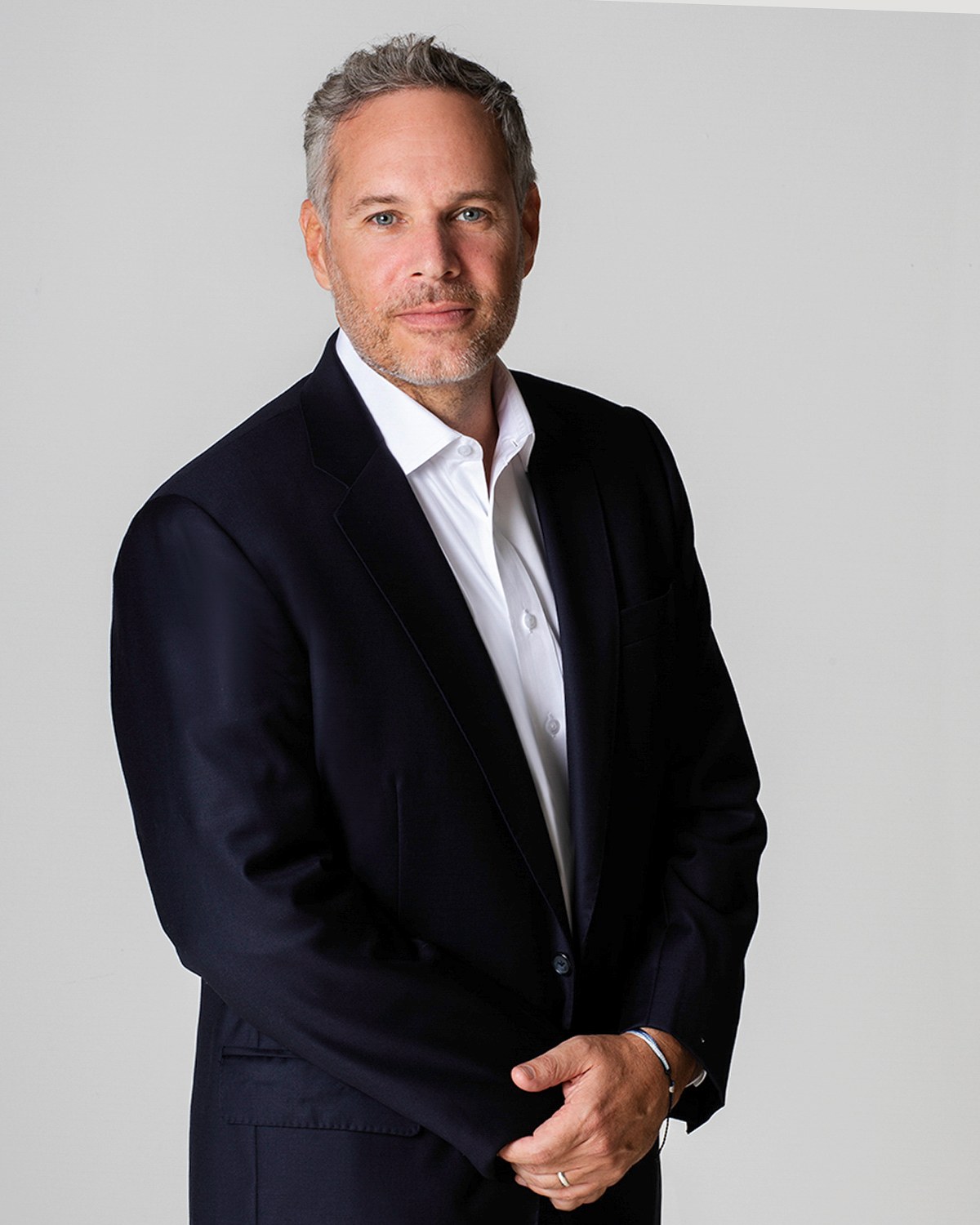
A camera reads a body faster than it reads a face. Before anyone studies your expression, they have already registered whether you look open or closed, at ease or braced. This guide is about that first, silent read, and how a little direction changes what it says.

Body language on camera is the read a viewer gets from your posture, shoulders, hands and eye line before they ever process your expression. Open body language, weight settled, arms away from the ribs, chin level, face turned toward the lens, reads as confident and approachable. Closed body language, arms crossed or pinned flat, shoulders curled forward, eyes ducked away, reads as guarded even when the person behind it feels perfectly friendly.
None of it is fixed. A single adjustment, dropping a shoulder, giving a hand somewhere to rest, turning the face back toward the camera, can flip a frame from closed to open in a second. That is the whole craft: reading what a body is currently saying and changing it on purpose.
Every read in a photograph traces back to one question: does the body look open to the viewer or sealed off from them. Open reads as available, warm, easy to approach. Closed reads as guarded, tense or withdrawn, regardless of what the face is doing at the same time. This is the single most useful thing to know about body language on camera, because almost every other note in this guide is a way of nudging a frame from closed toward open.
Openness is not about standing wide. It is about small gaps: daylight between an arm and the ribs, a hand that has somewhere to be instead of nowhere, a torso angled rather than squared off like a wall. Closed is the opposite, arms sealed against the body, hands hidden, shoulders pulled in as if to take up less room. A camera exaggerates both directions, which is why the fix is usually smaller than people expect.
The read changes by degree, not all at once. A slightly turned body with arms still close to the ribs is more open than standing square, and less open than a body with real air around the arms. Direction works in that middle range constantly, moving a frame a few degrees toward open rather than flipping a switch.
Distance from the lens is its own sentence. Leaning toward the camera, even by an inch, reads as engaged, present, interested in the exchange. Leaning back, or standing with the weight settled onto the back leg away from the lens, reads as reserved or held back, sometimes as reluctant even when the person simply feels calm.
A small forward lean from the waist, not the neck, is one of the most reliable ways to add presence to a frame without changing anything about the expression. It works standing, and it works seated as long as the lean comes from the hips rather than the neck.
The opposite lean has its place too, softening a frame meant to feel thoughtful rather than direct. Either way, the lean is a decision, not an accident, and it changes the read before expression enters the picture.
A viewer reads the shoulder line before almost anything else, which is why it carries so much of the message. Raised, forward shoulders read as tense no matter how relaxed the face looks, and they are also the easiest thing in a frame to correct. Dropped, level shoulders read as calm and settled, which is why a single instruction, roll them up and let them fall, does more for a frame than almost any other single note.
Uneven shoulders, one dropped lower than the other from a slight body turn, actually read as more relaxed than two shoulders held perfectly level and square. Square shoulders read as posed and formal, useful for some frames and wrong for most of them. A small, natural tilt is what a body actually does when it is not thinking about being photographed.
Squared shoulders paired with a direct gaze belong to a bolder, more deliberate kind of frame. Which read a page needs, calm or bold, comes before any shoulder instruction gets given.
Hands read as a signal long before a viewer notices what they are actually doing. A hand pressed flat against the body reads tense. A hand with a soft curve to it, resting somewhere with a small job, reads calm, and the exact job matters less than the fact that it has one. Empty, floating hands read as the most uncertain thing in a frame, because a viewer's eye goes looking for what they mean and finds nothing.
A closed fist reads as tension even in an otherwise relaxed frame. An open, slightly curled hand reads as at ease. This is a small enough detail that most people never notice it consciously, and it is exactly the kind of detail a viewer registers anyway, in the same instant they decide whether a portrait feels natural or stiff.
The full mechanics of what to actually do with your hands, where to place them and how to hold an object, sits in how to pose for photos. What follows here is the read, not the build.
Eye line is the fastest read in the whole frame. Eyes on the lens read as direct and confident. Eyes turned away from the lens, even with the face still angled toward it, read as thoughtful, private or evasive depending on everything else happening in the frame at the same time. Neither is wrong. Each belongs to a different kind of picture.
The trap is a mismatch: a body and face turned fully toward the camera with eyes that drift into the corners rather than committing to the lens or committing away from it. That half-measure reads as uncertain in a way that neither a direct gaze nor a genuine look-away does. Turn the whole head if the eyes are leaving the lens. Never leave the eyes to do it alone.
A lowered gaze reads differently again, calm rather than evasive, but only when the chin and shoulders agree with it. Read alone, a lowered gaze with tense shoulders looks like discomfort. Paired with an open, settled body it looks like quiet confidence. The eyes never read in isolation. They read against everything else in the frame.
There are two kinds of stillness and a camera cannot tell them apart on its own. One is a body that has settled, breathing normally, holding a shape without effort. The other is a body braced against holding still, muscles locked to keep a pose from slipping. Both look motionless. Only one looks calm.
This is one reason a session built entirely around held poses eventually stiffens, and a fuller answer to how motion keeps a body loose lives in movement in posing.
Body language is not a fixed goal. What reads right depends entirely on what the picture has to do. A headshot wants a read that says capable and approachable in the same frame, which usually means a moderate turn, a level gaze and shoulders that are settled but not soft. Too open and it loses authority. Too closed and it loses warmth.
A personal brand library wants a wider range across a whole session, an open, engaged read in one frame and something quieter and more thoughtful in the next, so the finished set has variety instead of one repeated mood. A team of people photographed for a shared page needs their body language matched to each other more than it needs any single read to be perfect, which is the whole subject of learning to pose team members so a set of individuals reads as one group.
Reading the purpose first is what tells a photographer which direction to give. Nobody in front of the camera needs to solve that part. It is simply useful to know it is happening, because it explains why the same instruction that worked in one frame gets reversed in the next.
You can feel tension in your own shoulders, but you cannot see what it looks like from three feet away through a lens, and that gap is the whole reason direction exists. A photographer watching the frame catches a raised shoulder, a locked hand or a mismatched eye line the instant it happens, and can fix it with one sentence before it becomes the picture that gets kept.
None of this requires memorizing anything before a session. Standing posing carries its own set of open and closed reads worth knowing on its own, covered fully in the standing posing guide, and the mechanics behind posture generally, the line of the spine and how it changes a read on its own, live in posture in portraits. Crossed arms deserve their own page too, since it is the closed read most people default to without deciding to, answered in full in crossed arms in headshots.
The short version is the same one that runs through everything I do in a session: you do not have to know what your body is saying. That is the part I watch for, frame by frame, which is the entire idea behind guided posing in the first place.
Nobody can see their own shoulders from three feet away through a lens. I watch every frame for exactly that and adjust before the shutter fires, which is the whole point of a guided session in my private Naples studio. Call (239) 319-6171 or send the form and tell me where the photos will live.
Book a Session Call (239) 319-6171Tell me a little about what you have in mind and I will be in touch personally. Pricing is personal, so the best way to plan is a quick call.
Share a few details and Annie will be in touch personally.