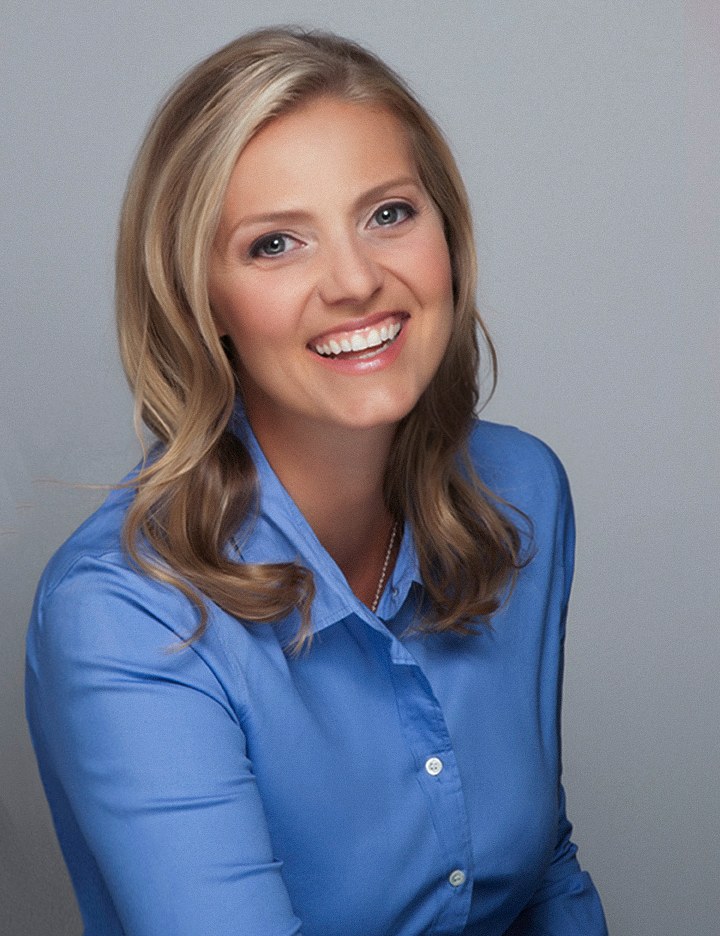
Guided posing means you are never left to figure it out. I direct the whole session, one small instruction at a time, and I keep directing while the camera is running. It is the reason people who have dreaded this for years leave my Naples studio with pictures of themselves they are happy to use.

Guided posing means the photographer tells you exactly what to do, continuously, instead of asking you to be natural and hoping something good happens. In practice it is a steady stream of small instructions: turn this way, drop that shoulder, chin toward me, breathe out, again.
You are not performing and you are not memorizing anything. You follow one instruction at a time while somebody else watches the frame and corrects it. That is the difference between being photographed and being directed, and it is the part almost nobody has ever been given.
The important part of guided posing is that the direction never stops. Plenty of photographers arrange you at the beginning of a look, step back, and then shoot for five minutes while you hold whatever they left you in. That is posing. It is not guiding. By frame three you have drifted, your shoulders have crept up, and nobody has said a word about it.
Guiding means I am talking for most of the session. Small corrections, one at a time, in an order that builds. When something works I say so immediately, so you know what it felt like and can find it again. When something is not working I say that too, and we change it, because being told everything looks wonderful is pleasant and completely useless.
It is not a style of photograph or a genre of session. It is a way of working, and it is in every sitting I do, whether the pictures are for a company profile, a brand library or something entirely personal. Posing is the part most people get wrong on their own, so it is the part I refuse to leave to chance.
Here is how an undirected session usually goes. You arrive nervous. The photographer sets the light, points at a spot, and says something like relax, be yourself, just act natural. So you stand there doing arithmetic: what do I do with my arms, is this smile too much, why is nobody saying anything, how long has it been. Every few seconds the shutter fires and you have no idea whether the last thing you did helped or hurt.
That silence is the whole problem. It hands you a job you have never been trained for and gives you no feedback while you do it. Nervousness needs spare attention to grow in, and an undirected session gives it plenty. Worse, the pictures that come out of it get blamed on the face in them rather than on the process, so people walk away with one more piece of evidence that they are not photogenic.
A directed session inverts all of it. You are given a small physical task. You do the task. You are told it worked. Then you are given the next one. Your attention points outward at me instead of inward at yourself, which is precisely why the self-consciousness runs out of room. The point in a sitting where you stop thinking about how you look is usually where the frames I keep begin.
There is an order to it, and the order matters more than any individual instruction. The light and the background are decided before you are standing in front of them, so nothing about the room is being improvised. Then we build you from the ground upward: feet and weight first, then the line of the body, then the arms and hands, then the head and the chin, and only then the face.
Expression goes last on purpose. Nobody can hold a genuine expression while still assembling their own posture, which is why so many photographs look like a person concentrating. By the time I ask anything of your face, everything below it is already handled and you have nothing left to think about.
Then I shoot and keep talking at the same time. The camera does not stop while I adjust, because the frames between the instructions are often the honest ones. I am also watching a dozen things you physically cannot see from where you are standing: a collar riding up, hair falling across the light, a strap, a hand that has gone flat, the highlight in the eye nearest the camera. The mechanics behind all of that, the chin and the hands and the weight, are laid out in detail in how to pose for photos if you want to understand what I am asking for.
Most people believe they are not photogenic. They are almost always wrong. What they are is undirected, and they have concluded from a lifetime of bad candid photos that the problem is their face.
Two things are working against you before you ever step in front of a lens. The first is that you have mostly seen yourself in a mirror, reversed and moving, so the still, un-reversed version always looks slightly like a stranger. The second is that nobody has ever told you what to do with your body, so in every photo you have ever been in, your body was guessing.
Direction fixes the second problem and quietly softens the first. It replaces guessing with instructions, and instructions are easy. It also removes the decisions, and decisions are what make you self-conscious. You cannot simultaneously worry about whether you look ridiculous and concentrate on shifting your weight onto your back foot, and I would much rather you were busy.
There is less going on in the room than you are picturing. My studio is private, there is no audience, and it is just the two of us for the whole sitting. Nobody is waiting behind you. Nothing is on a clock in a way you can feel. That matters more than any piece of equipment in the room, because it is very hard to be embarrassed when there is nobody to be embarrassed in front of.
The first few frames are warm-up and I say so out loud. They are not a test and they are not the pictures. They exist so your face can stop bracing, and I have never met anyone whose first frame was their best one.
From there the session moves through the looks we planned. Several backgrounds and wardrobe changes in one sitting, and the direction resets with each one, because a change of clothes changes what works. The pace is unhurried by design. If you need a minute, you take a minute. If something feels awkward, say so, and we do something else.
Direction needs somewhere to go, and that comes from a conversation before the day. We plan your looks together in advance, so nothing about your wardrobe is being decided in the room while the light waits. Clothes decide a surprising amount of what is possible: a structured jacket poses differently from a soft knit, and I would rather know which one is coming.
Knowing where the pictures are going matters just as much. A single profile photo that has to survive a small circular crop needs different direction from a whole personal brand photography library where you need range across dozens of posts. Tell me the purpose and the direction organizes itself around it.
Everything else about the day, the sleep and the steaming and what to put in the bag, is logistics rather than method, and I have written the whole countdown out in how to prepare for a photoshoot. Do that part and you can arrive knowing nothing about posing at all, which is the intended outcome.
The question photographers get asked most is what they shoot with, and it is the wrong question by a wide margin. An excellent camera pointed at somebody who has been told nothing produces a very sharp photograph of a person who does not know what to do with their hands. Equipment decides how a picture gets recorded. Direction decides whether there is anything worth recording.
Light is the same story. Gorgeous light falling on a braced, square-shouldered, chin-raised subject is gorgeous light on a stiff picture. Posing sits at the top of my list because it is the one variable that changes the person, and the person is the entire subject. Everything else is support.
It is also the variable that cannot be dealt with afterward. An exposure can be corrected. A background can be swapped for the next look. Posture, tension and expression are baked into the frame at the instant the shutter opens, and no amount of care later will take them out again. That is why I spend a session talking instead of adjusting settings.
It gets confused with a few other things, so here is the boundary.
And it is not something you have to prepare for. Reading about posing is genuinely interesting, and it makes the day feel familiar, but nobody has ever arrived under-qualified. The entire value of the thing is that the hard part is not yours.
For headshots, the direction is small and precise, because a headshot lives or dies on a few millimeters of chin and a specific expression that reads as both capable and approachable. Teams are photographed in sequence, in the same light with the same direction, so the portraits belong together on the page. It is the same for architects and builders who need to look like the person a client trusts with a project.
For a personal brand session the direction is broader and looser, because the point is range: standing, sitting, working, laughing, thinking, in several looks, so you leave with a library instead of one good picture. Clients drive in from Estero and around Southwest Florida for exactly that.
And for boudoir, direction is not a nice extra, it is the entire reason the experience works. You are guided head to toe from the first frame, so at no point are you standing in an unfamiliar space wondering what you are supposed to be doing with yourself. The method never changes. Only the purpose does.
The whole promise of guided posing is that the difficult half is not yours. You bring the looks we planned together, and I will handle every angle, every hand and every frame from the first warm-up to the last change of clothes. Pricing and planning are personal, so call (239) 319-6171 or send the form and tell me what the pictures are for.
Book a Session Call (239) 319-6171Tell me a little about what you have in mind and I will be in touch personally. Pricing is personal, so the best way to plan is a quick call.
Share a few details and Annie will be in touch personally.