Crossed arms in a headshot can read as guarded, defensive, closed off. It can also read as grounded, capable and entirely at ease. The difference has nothing to do with willpower and everything to do with a handful of small adjustments: how tightly the arms grip, whether the shoulders have dropped, and whether the body underneath has softened into a lean.
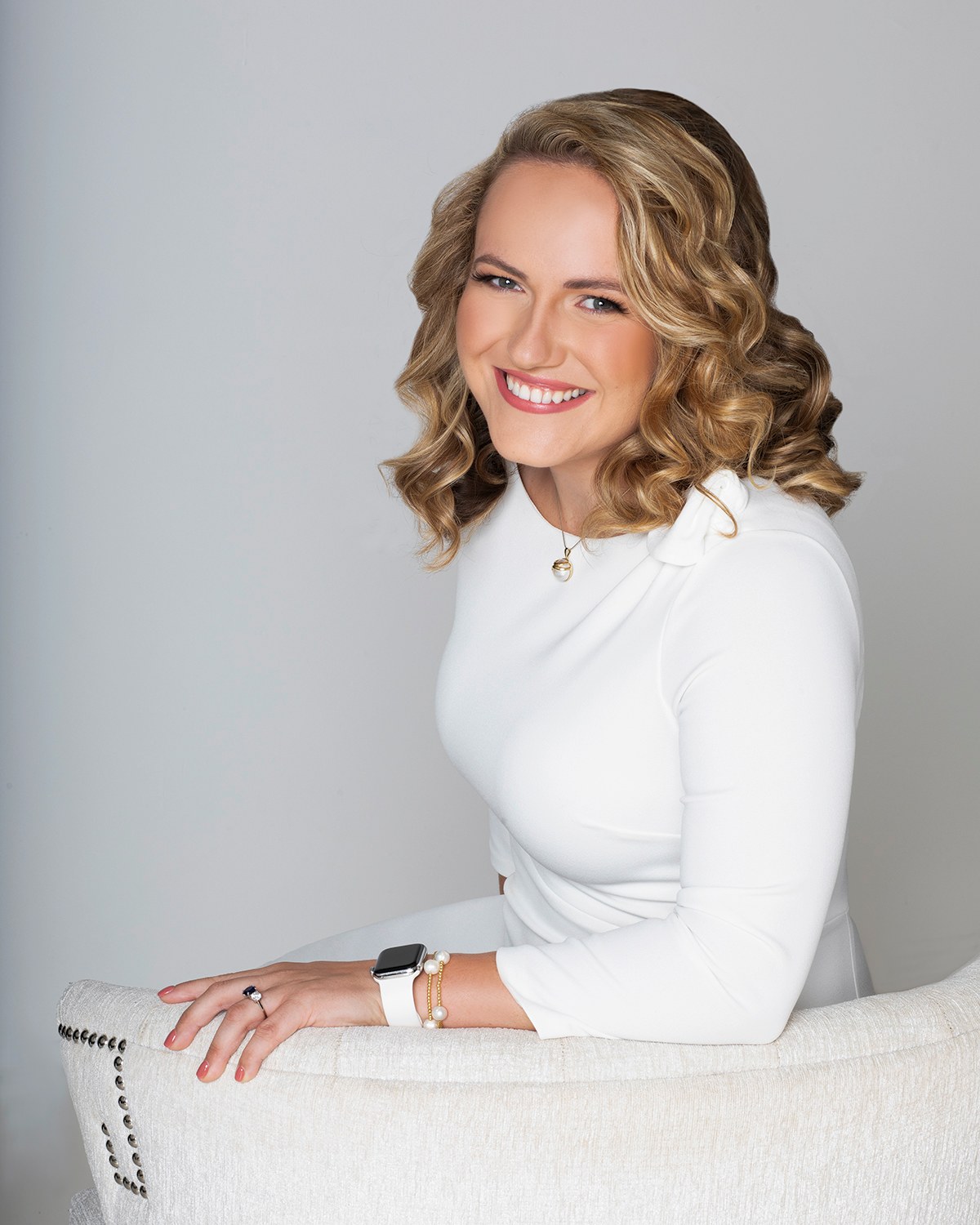
Crossed arms work in a headshot when the grip is loose rather than clamped, the shoulders sit down and back instead of hunched up around the ears, and the body carries a slight lean rather than standing bolt upright and square. Skip a hard, gripping cross where the fingers dig into the opposite arm, and skip a perfectly squared, weight-even stance underneath it, both of which produce the closed-off, bouncer read the pose is known for.
Done with those adjustments, crossed arms read as settled and confident rather than defensive, and they work especially well for a portrait that wants to feel capable without smiling.
Crossed arms have a reputation for closing a person off, and a camera picks up the same cues a person across the table would. A hard grip, shoulders pulled up toward the ears, a chin tucked down and a body squared flat to the lens together produce exactly the guarded read the pose is famous for, sometimes called the bouncer look for good reason. That combination is also, unfortunately, close to what an undirected body does by default when it is asked to cross its arms and hold still.
None of those four elements is required by the pose itself. Crossed arms and a defensive read are not the same thing, and separating them is the entire subject of this guide.
Rest the forearms across each other rather than gripping them. Fingers that dig into the opposite bicep or forearm show visible tension even in a still photograph, and that tension reads through to the whole face above it. A loose, resting cross, where the hands lie flat or lightly curled rather than clenched, is the single biggest difference between the guarded version of this pose and the confident one.
Check the fingers specifically. A hand at rest has some natural curve to it. A hand under real tension flattens and presses, and it shows from behind the camera even when the rest of the pose looks settled.
Crossing the arms pulls the shoulders forward and up for almost everyone by reflex, the same way nerves do on their own. Roll the shoulders up toward the ears once, then let them drop and settle, the same reset I ask for at the start of nearly every look regardless of the pose. With crossed arms specifically, dropped shoulders open the chest slightly even while the arms stay closed, and that small opening is what keeps the whole gesture from reading as hunched.
This single adjustment does more to fix a stiff crossed-arms photo than any change to the arms themselves. Get the shoulders right and a merely acceptable pose becomes a strong one.
A body standing perfectly square, feet even, weight centered, with the arms crossed on top of it reads as a wall. The same crossed arms on a body that has turned slightly and shifted its weight onto the back foot, the standard turn from how to pose, reads as settled rather than braced. Add a small forward lean from the waist and the whole pose tips from defensive toward engaged, because a lean toward the lens always reads as more present than a stance leaning away from it.
This is the adjustment most people skip entirely on their own, because crossed arms feel like a stance you plant and hold rather than one you build from the feet upward. Treat it exactly like any other pose: feet and weight first, then the arms.
A crossed-arm pose reads most cleanly when the hands make one clear choice: visible, resting lightly on the forearms where the viewer can see them, or fully tucked underneath, out of sight. A hand caught halfway, a couple of fingers peeking out while the rest disappears into a sleeve, reads as accidental and pulls the eye toward exactly the spot you would rather it skip past.
Which choice to make depends on the sleeve and the shot. A short sleeve or bare forearm generally looks better with the hands visible and resting. A jacket or long sleeve often looks cleaner fully tucked. The broader question of what hands do across every pose, not just this one, is covered in what to do with your hands, and it is worth reading if hands are a recurring worry rather than a one-pose problem.
Crossed arms, done with the adjustments above, suit a portrait that wants to read as capable and self-possessed without a smile carrying the whole expression, which is why it turns up often in executive headshots and other headshots where the tone is authority rather than warmth. It is a strong choice for one look in a sitting, less so for every look, since a full session of crossed arms starts to feel repetitive rather than varied.
It tends to work less well for a warm, approachable brand image, where an open chest and visible hands usually read as more inviting, and the full range of how posing shifts for that purpose is in how to pose for personal brand photos. It also asks more of posture than most poses do, so if the shoulders and spine are not settled yet, my guide to posture in portraits is worth reading alongside this one.
Crossed arms are sometimes assumed to require a serious expression, as if the pose and the face have to match in intensity. They do not. A loose cross with dropped shoulders pairs perfectly well with a genuine, closed-mouth smile, and the pose stays confident rather than defensive either way, because the tension that causes the bouncer read comes from the grip and the shoulders, not from whether the mouth is smiling. Choosing between the two expressions for a given headshot is really a separate decision, covered fully in smiling versus serious headshots.
In a session I usually shoot both on the same look, since the arm mechanics stay identical between them and the choice of expression is easy to make afterward from the gallery rather than in the moment.
If you want one frame in your set that reads as capable without a smile doing the work, say so on the call and I will plan a look around it: a sleeve that suits the hands tucked or showing, and a backdrop with enough room for the lean. Call (239) 319-6171 or send the form and tell me which of your photos needs to carry authority.
Book a Session Call (239) 319-6171Tell me a little about what you have in mind and I will be in touch personally. Pricing is personal, so the best way to plan is a quick call.
Share a few details and Annie will be in touch personally.