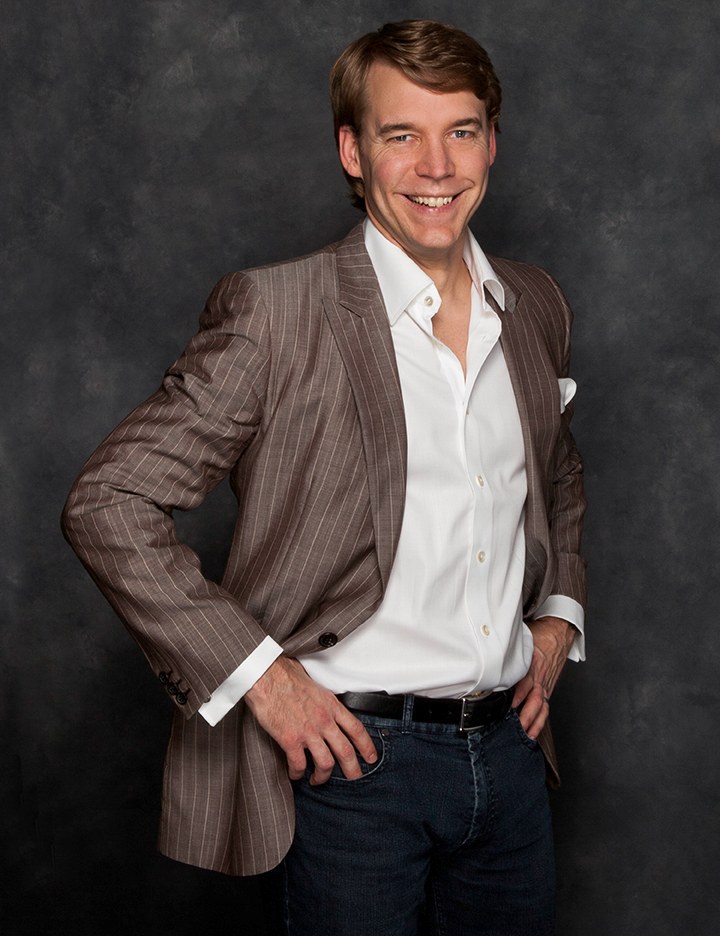
A lot of posing advice aimed at women collapses into a single tilted-head pageant smile, which is exactly the pose that stops working the moment you need to look like the person running the meeting. Here is the fuller range: angle, hands, hair and expression, built for more than one register.

Women's headshots benefit most from a slight turn of the body with the near shoulder dropped, weight on the back foot, and a chin brought forward and down rather than lifted. Hair gets treated as a frame for the face rather than an afterthought, since a loose strand or a shadow across the eyes spoils a frame the pose got right.
The expression range matters more here than the exact angle. A single soft, tilted, closed-mouth smile can look sweet in isolation and read as one-note across a whole gallery, or simply wrong for a leadership photo. Planning for a range from warm to more level and authoritative, rather than one default pose repeated in every frame, is what actually makes a session worth the sitting.
Start the same way anyone does: body turned a modest amount off square to the camera, weight shifted to the back foot, face brought back toward the lens. From there, the detail that matters most for a lot of women's headshots is the near shoulder, the one closer to the camera after the turn.
Drop that near shoulder slightly, more than you would think necessary, and let the far shoulder sit a little higher. That small difference in shoulder height creates a diagonal line through the frame instead of a flat horizontal one, and a diagonal reads as more dynamic and less static than two level shoulders squared to the lens. It also naturally lengthens the neck, which a level, squared pair of shoulders tends to shorten.
How far to drop the shoulder depends partly on what is on it. A structured blazer holds its own line, so a small drop is enough and a large one makes the shoulder seam sit oddly. A soft knit or a sleeveless top shows the whole line of the shoulder, so the drop can go further and reads as ease rather than slump. Check it once in the mirror in each outfit you plan to bring, because the right amount is different for each.
Hair is not a fixed backdrop to the pose, it is part of it, and treating it that way solves problems before they show up in the gallery. A strand falling across the forehead or cheek casts a small shadow and pulls the eye away from the face, so a quick check before each new setup, tucking, smoothing, or a small shake to reset volume, does more for the final photo than almost any adjustment to the pose itself.
None of this needs to be decided alone. I check hair between every setup the same way I check a jacket collar or a stray shirt tag, since it is simply part of getting the frame right. If styling and cut are on your mind before the sitting rather than during it, hair styling covers that groundwork separately.
The core rule for hands does not change from one person to the next: give them a job, keep the fingers soft, and leave daylight between the elbow and the ribs. Where the range widens for a lot of women's headshots is in the variety of tasks a hand can be given, since jewelry, longer sleeves and softer fabrics all interact with hand placement differently than a plain shirt sleeve does.
A hand resting at the collarbone, fingers loose rather than splayed, reads as thoughtful and works well for a seated, more personal frame. A hand at the hip with the elbow bent creates the same narrowing effect the shoulder drop does, and pairs naturally with the turned stance. If jewelry, a ring, a bracelet, a watch, is part of the look, a hand position that lets it catch the light without drawing the eye away from the face is worth planning rather than leaving to chance.
The one hand habit worth naming directly: crossed arms. It works no better here than anywhere else at looking approachable, and it is covered in full, including the narrow cases where it does work, in crossed arms rather than repeated here.
The mechanics of sitting well, the front third of the seat and the lean forward from the hips, are the same for everyone and are laid out in how to pose for any photo. What is worth adding here is what that lean does for a women's headshot in particular.
For women's headshots specifically, the seated lean pairs well with the same near-shoulder drop used standing, and it opens up more natural hand placements, one hand over the other in the lap, a forearm resting along the arm of the chair, a hand brought to the collarbone, than a standing pose typically allows. It is worth treating as a genuinely different tool rather than a fallback for anyone who does not want to stand, since a seated frame and a standing frame from the same sitting can look meaningfully different from each other, which is exactly the variety a gallery benefits from.
The default most posing advice steers women toward, usually without naming it, is some version of the soft, head-tilted, closed-mouth smile that has become shorthand for a certain kind of professional women's headshot. It photographs pleasantly, and it also tends to read as softer and less decisive than it should for anyone whose job involves being taken seriously in a room.
The fix is not abandoning warmth, it is adding a second register alongside it. A level head, a more direct gaze and a composed, closed or barely parted mouth produces something more authoritative, useful for a leadership bio, a board profile or any photo meant to signal decision-making rather than approachability. Planning for both within one sitting, rather than defaulting to whichever comes naturally, means the gallery actually has an option for both kinds of use the photo might be put to.
A head tilt is not banned, it is simply worth using on purpose rather than by default. Head tilt covers exactly how much reads as warm versus how much starts to look performed, which is the difference between the pose working for you and becoming the one thing a viewer notices. The eyes carry more of both registers than the mouth does, and the small mechanic behind that is its own subject in eyes in portraits.
Everything above describes a held pose, checked and adjusted before the shutter fires. A different, looser approach uses small movement between frames, a shift of weight, a slow turn of the head, a hand moving toward the hair, which produces a more candid-feeling result than any single still pose can. It suits a personal brand gallery or social content more than a formal headshot meant to be one fixed frame forever.
The two are not competing techniques, they are different tools for different photos, and movement in posing covers when to reach for the second one. A single headshots session at my studio can include both: still, directed frames for the profile photo, and a looser, moving sequence for everything else your marketing needs.
Two registers in one sitting is the plan, and directing it is my job, not yours: the shoulder drop, the hair reset between setups, and the shift from warm to level as the looks change. The still frames go to LinkedIn headshots and the leadership bio; the looser ones cover the rest. Call (239) 319-6171 or send the form and tell me which register your work actually asks for.
Book a Session Call (239) 319-6171Tell me a little about what you have in mind and I will be in touch personally. Pricing is personal, so the best way to plan is a quick call.
Share a few details and Annie will be in touch personally.