If you have been reading about boudoir late at night with the lights off, this page is for you. What a session actually is, who books one and why, what to bring, how privacy works, and how being guided head to toe changes the whole thing. No pressure and no pitch. Just the answers, in the order people actually ask them.

Boudoir photography is intimate portraiture of one person, made in a private studio, built around confidence and artistry rather than anything explicit. A session is planned with you in advance, shot with guided posing so you are directed head to toe, and delivered as hand retouched images in a private, password protected gallery within the week.
People book it before a wedding, for a milestone, as a gift, or simply to have one honest picture of themselves as they are right now. You decide how covered you are before anything starts, and no prior experience in front of a camera is assumed.
Boudoir is a portrait session. That is the plain version, and it is worth saying first, because the word carries a lot of noise around it. It happens in a private studio, it is about one person, and the whole aim is an image of you that is confident, artful and unmistakably yours. My own boudoir work leans toward fine art: honest light, real expression, a good amount of black and white. The gallery on this site sits behind an eighteen and over entry gate for that reason, not because anything shocking is waiting on the other side.
It is just as useful to say what boudoir is not. It is not a performance you have to be good at. It is not something you have to look a certain way to deserve. And it is not a separate operation tucked away somewhere discreet: sessions happen in the same working portrait studio where people drive in from Cape Coral for headshots and where I shoot personal brand photography for interior designers. Same room, same light, same person behind the camera, guiding you exactly the same way. If you are a first timer, that single fact may do more to settle the nerves than anything else on this page.
There is no one type of person who books boudoir, which is usually the first thing people are relieved to hear. The reasons do repeat, though, and they tend to be one of these.
What almost all of them share is the part before the booking. Very few people arrive at this feeling certain. Most sit with the idea for a while, open a page like this one, close it, mention it to nobody, and eventually call anyway. If that is where you are, you are not an unusual case. You are the standard case.
The reason matters more than it sounds like it should, because it shapes the session. An album meant for one person is planned differently from a set of images made for you and nobody else. A milestone session tends to want something you will still recognize yourself in a long time from now. When we talk before the shoot, that is really what I am asking about: not a style you saw somewhere, but what this is for. Everything else, the looks, the order, the light, follows from the answer.
Quieter than you are imagining. You arrive, you hang up what you brought, and we talk for a while before the camera comes out at all. There is no audience: it is the two of us and a plan we already made together, and nobody wanders through. Nothing is rushed, and there is no next appointment breathing down the door, because sessions here are personal and are planned that way.
The session itself has a shape to it. We start with the look you are most comfortable in, not the boldest one, because the first frames are where you find out that this is survivable. Then we build. Backdrops change, the light changes, you change, and somewhere in the middle of that the aim is for you to stop thinking about being photographed and start just being in the room. The moment itself is hard to notice. It tends to show up later, in the pictures, as the point where your shoulders come down.
The studio is private, in North Naples off Pine Ridge Road, with several backdrops and room for wardrobe changes. People drive in from all over the region for it, and about twenty minutes from Bonita Springs is a very ordinary trip for a session like this one. The drive matters more than people expect, actually. By the time you arrive you have had a while to talk yourself into it, and walking in the door turns out to be the last hard part of the day.
The wardrobe is yours. Bring things you already own and already like, because clothes you feel like yourself in photograph better than anything bought in a panic the day before. Two or three options is plenty, and we plan the order together in your wardrobe consultation beforehand, so nothing has to be decided while you are standing there in front of a backdrop.
What to skip is shorter. Skip anything that only fits on a good day, anything with a tight elastic band that will leave marks, and anything you are bringing because you think it is what a session like this is supposed to look like. That last one is the most common mistake, and it is the easiest to avoid: if you would not choose it for yourself, leave it home.
Guided posing is the single reason most people get through a first session and enjoy it. I direct you head to toe, all the way through: where your weight goes, what your hands do, where to look, when to breathe out. You will never be left standing in silence trying to invent something. If you have no experience and no confidence in front of a camera, that is genuinely fine, and it describes most of the people who come through that door.
In boudoir the direction is simply more constant. The frames are closer, the light is doing more work, and small adjustments matter more, so I talk more and I keep talking. You will hear the same running commentary the whole time: chin down a touch, hand stays soft, look just past me, hold that. It removes the guessing, and once the guessing is gone, the self consciousness usually goes with it. What is left is a person being photographed by someone who has a plan, which is a much easier thing to be.
It also means you are never being evaluated. That is the fear underneath the nerves, I think: that someone is standing behind a camera silently deciding how you measure up. What is actually happening is technical and constant, and it sounds like it. I am watching the light on your jaw and the angle of a wrist and whether your weight is on the wrong foot, and I say so out loud as we go. There is no silence for you to fill in with your worst assumptions.
Your images are retouched by hand and delivered in a private, password protected online gallery within the week, ready to download and share as you choose. The password is yours, and so is every decision about who ever gets it. If you want something to hold, custom albums, fine prints and gallery canvases are available, and an album suits this kind of work particularly well.
What you do with them afterward is entirely your decision, whether that is an album for one person, a gallery nobody else ever sees, or a single framed print. You are not obliged to decide before the session which of those you will be.
Retouching is the part people worry about most, in both directions. Some want to know it happens at all; others are afraid of being smoothed into a stranger. My answer is the same either way: it is done by hand, and the aim is you on a very good day rather than someone else entirely. If you want the longer version, I wrote a whole guide on retouching and what it should and should not do to a face.
These are the ones that come out quietly, usually at the end of a call, usually prefaced with sorry. None of them need an apology.
Only whoever you send the link to. The gallery is private and password protected, and what happens to that password is entirely your call.
All three are allowed, sometimes in one session. Freezing is the easiest to fix, because it is what the guiding is for. Laughing tends to produce the frame you end up loving.
Nearly everyone believes this about themselves, and nearly everyone is comparing a bad angle in a phone camera against other people's best frames. A lens at the right distance, light placed properly and someone telling you what to do with your body is a completely different exercise.
People have been waiting on that for a long time, and the day rarely arrives on schedule. This is the whole argument of boudoir for every body, so I will leave it there and just say: the version of you that exists right now is the one worth photographing.
The other question, the one about how covered you can stay, is answered plainly further down the page. It deserves a plain answer rather than a coy one.
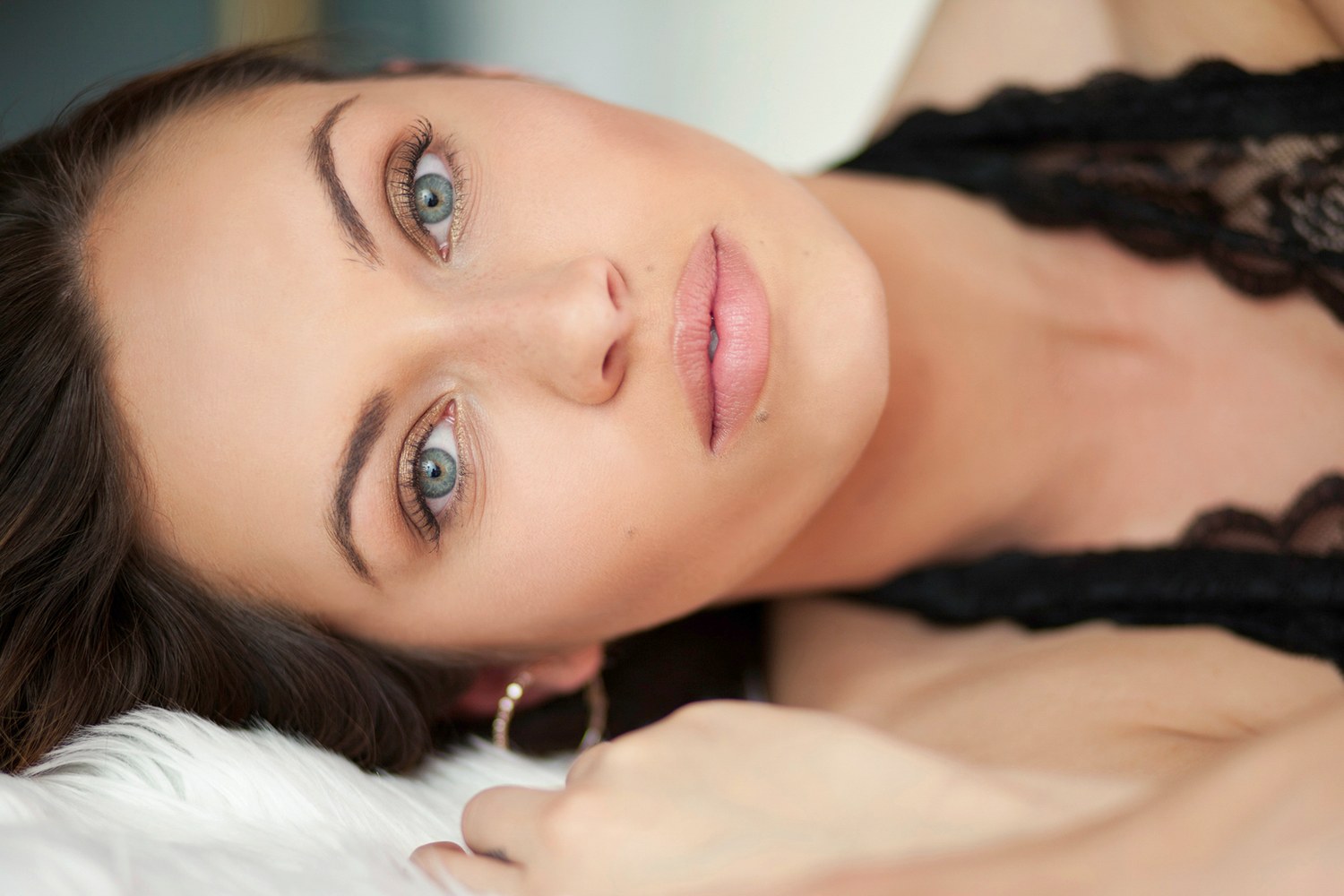
Very little of the preparation is dramatic. Sleep, water, and eating something before you come do more for how you photograph than any product on a shelf. Skip anything new on your skin in the days beforehand, and be careful with anything that leaves a line or a mark. My general guide to how to prepare for a photoshoot covers the practical list, and all of it applies here.
On hair and makeup: I work with several professional stylists who can be arranged for hair and makeup before the shoot, for an added fee. Some do that for the head start it gives them. Others do their own and look exactly like themselves, which is also the point. Either is a fine answer, and it is worth deciding early rather than the night before, because it changes how the day is planned. Beyond that, the last useful piece of advice is to stop researching. You have now read more than enough.
The deciding is the hard part, and the session is not. If you have read this far, you have already done most of that work. Planning a boudoir session is personal, and so is the investment, so the honest next step is a quick call to (239) 319-6171, or the form below. I answer it myself.
Book a Session Call (239) 319-6171Tell me a little about what you have in mind and I will be in touch personally. Pricing is personal, so the best way to plan is a quick call.
Share a few details and Annie will be in touch personally.