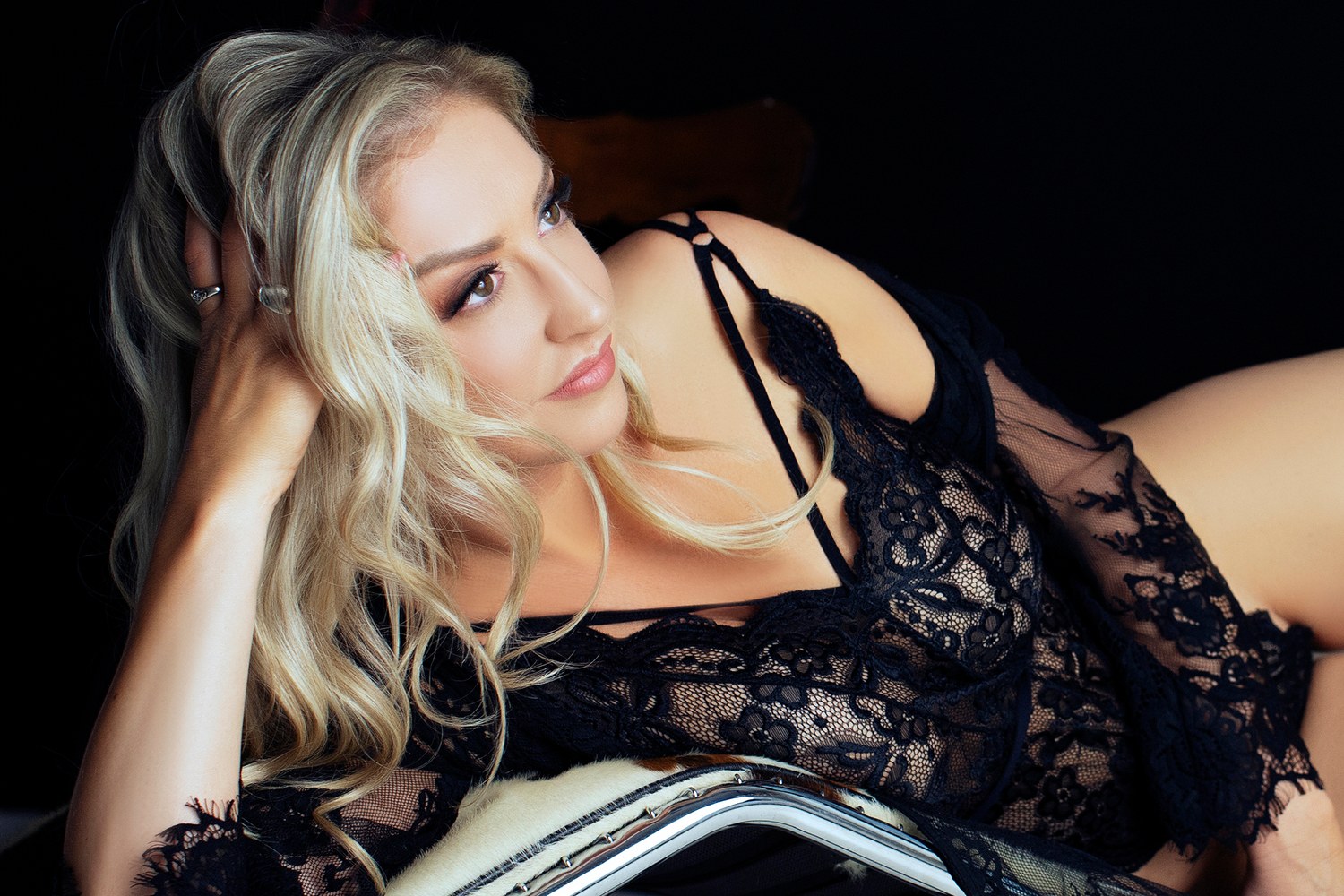
The preparation for this is far less dramatic than the deciding was. A planning call, a few things you already own, a light hand with anything new on your skin, and a calm arrival. That is close to the whole list. Here it is properly, in the order it actually happens, so nothing is left to the last minute.

To prepare for a boudoir session, start with the planning call, where the looks and how covered you want to be are decided together in advance. In the days before, change nothing about your skincare, avoid anything that leaves a mark or a line, sleep, and drink water.
Pack what you already own and already like wearing, carried on hangers rather than folded into a bag. Decide early whether you want hair and makeup arranged for you. Then arrive with nothing scheduled behind you. Your images come back retouched by hand in a private, password-protected gallery within the week.
Everything on this page is downstream of one conversation. Before a session is booked we talk through what you want out of it, what you are bringing, and where your line is on how covered you want to be. That last one is settled there, in advance, by you, and I will not ask you past it once we start. Deciding it on a phone call while you are sitting somewhere ordinary is much easier than deciding it in a studio, which is exactly why it happens then.
That call is also the wardrobe consultation. We settle what you are bringing and what order it runs in, which is the difference between a day with a plan in it and a day of decisions. If you are undecided between things, bring them all and say so, because narrowing down is a conversation and not a test.
If you have not read anything about how a session is actually structured, the complete boudoir guide is the long version of what happens on the day, and this page is only the getting ready part of it.
The single most useful rule in the days before a session is that nothing gets its debut this week. If you have never had it done before, whatever it is, let this session go by without it. That is not caution for its own sake. An unfamiliar reaction needs days to resolve, and days are exactly what the calendar has run out of by then.
Keep the routine you already have and be slightly more diligent about it. If anything on your skin needs doing, it belongs earlier than this week, and the full version of that countdown lives in my skincare timeline guide. The general portrait countdown, the one that covers hair, nails and wardrobe logistics for any session, is in how to prepare for a photoshoot, and all of it applies here.
Two things are worth adding for this session specifically. Be careful with anything that leaves a line or an indentation on skin, because those last longer than anybody expects. And protect yourself from sun in the days beforehand, since a strap line is one of the more stubborn things to work around.
There is nothing you are expected to buy for this and nothing you need to go looking for. The test for any single item is short: would you have chosen it for yourself on an ordinary day, or are you bringing it because it looks like what a session such as this is supposed to look like. Only the first kind belongs in the bag.
And the shorter list, of what to leave where it is:
Carry everything on hangers and steam it the day before rather than in the last ten minutes. Fabric is the one thing on this list that studio light is genuinely unkind to, and a crease reads darker in a photograph than it ever looks in a room.
This is the easiest item on the list to forget and the one I would most like you to remember. Skin holds an impression from anything tight for a surprisingly long time, and a mark that has faded by lunchtime is still there in the pictures taken well before lunchtime.
So dress loose for the drive and change once you are here. There is room to change between looks and no reason at all to sit in a car in the things you plan to be photographed in. The usual culprits are socks with a firm cuff, waistbands, watch straps, a bag strap over one shoulder and anything elasticated that fits a little too well.
Jewelry deserves one line of its own. Take off anything you do not want in the photographs before you arrive rather than in the middle of things, particularly a hair tie around a wrist, which turns up in more frames than you would believe and leaves a mark of its own.
There are two good answers here and no wrong one. I work with several professional stylists who can be arranged for hair and makeup before the shoot, for an added fee. If handing that decision to somebody else before the day starts would settle you, that is reason enough on its own, and if you would rather look exactly the way you look when you do it yourself, that is an equally good one.
What matters is deciding early rather than at the last minute, because it changes how the day gets planned and it is not something to sort out on the way in. Tell me which way you are leaning while we plan the looks, and the arranging happens from there.
If you are weighing it up properly, the decision itself is argued out on its own page in professional makeup versus doing your own. The only part that belongs here is the timing. Settle it well before the morning, and audition nothing new on the day, whichever way you go.
Eat properly before you leave. Doing this on an empty stomach makes the first stretch harder than it needs to be, and it is entirely avoidable. What to eat and when is worth its own page, and eating before a session covers it in more detail than belongs here.
Drink water through the morning rather than a liter in the car. Have your usual coffee if coffee is usual for you. Leave earlier than you strictly need to, and try not to schedule anything difficult immediately beforehand, because a tense phone call carries into a face for longer than it should.
The night before does more work than the morning does. Nothing you can buy competes with a full night of sleep, and going easy on salt at dinner is the only other thing worth deciding in advance.
Whatever your grooming routine is, it belongs a couple of days ahead rather than on the morning itself, because anything done at the last minute is still calming down when the camera comes out. The parallel timing for men, written for a different kind of portrait, is the men's grooming checklist, and the logic there is identical: do it well, do it early, do not do it new.
Worth knowing before you come, because it is the question that sits underneath a lot of the hesitation. Your images are retouched by hand and delivered in a private, password-protected gallery within the week, ready to download. It is yours and the password is yours.
Albums, fine prints and gallery canvases are available if you want the images to exist as an object rather than a file, and that is a decision for later rather than something to think about now. Pricing on any of it is personal, so it is a phone conversation.
One last thing to let go of before you come: you do not need to arrive knowing how to pose. Every cue is given out loud as we go, and if you would like the mechanics anyway, how to pose for a boudoir session lays them out, and my boudoir work is there to look at. There is also no shape, size, age or history this preparation changes for, which is the case every body makes properly.
Almost everything on this list gets easier once the first conversation has happened, because that is where the looks get planned and where you say how covered you want to be. Everything after it is packing a bag and getting a decent night of sleep. Call (239) 319-6171 or send the form, and we will talk it through.
Book a Session Call (239) 319-6171Tell me a little about what you have in mind and I will be in touch personally. Pricing is personal, so the best way to plan is a quick call.
Share a few details and Annie will be in touch personally.