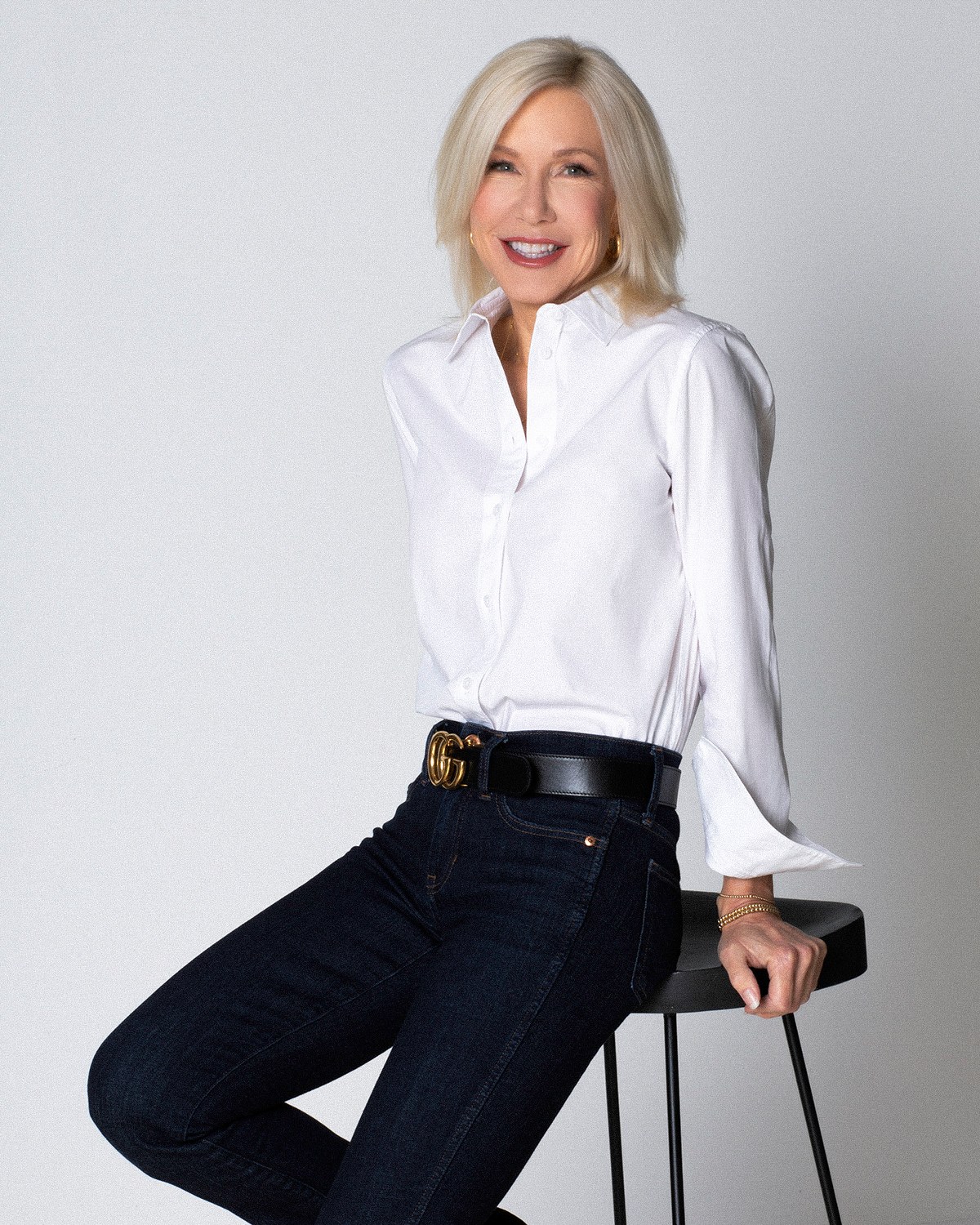
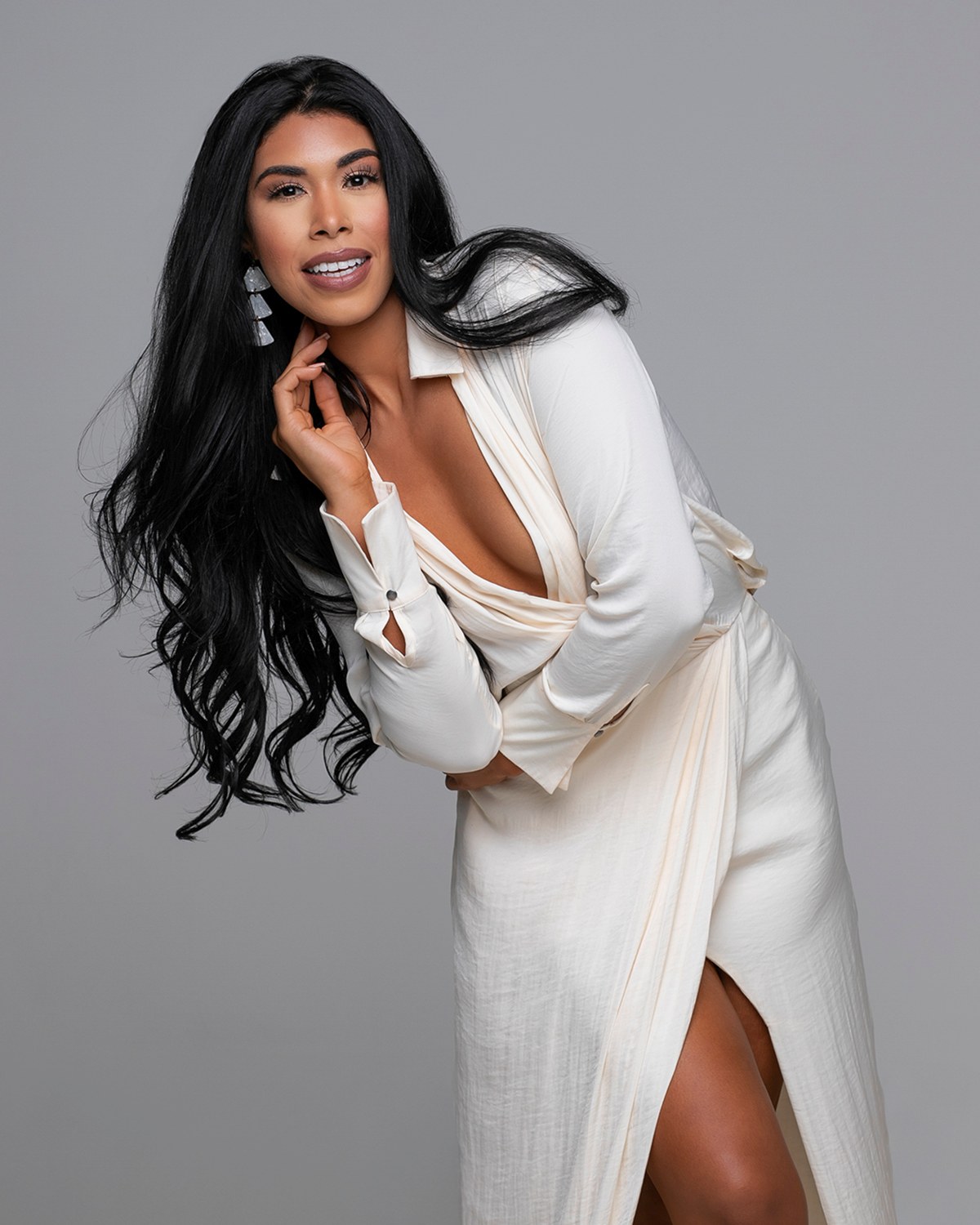
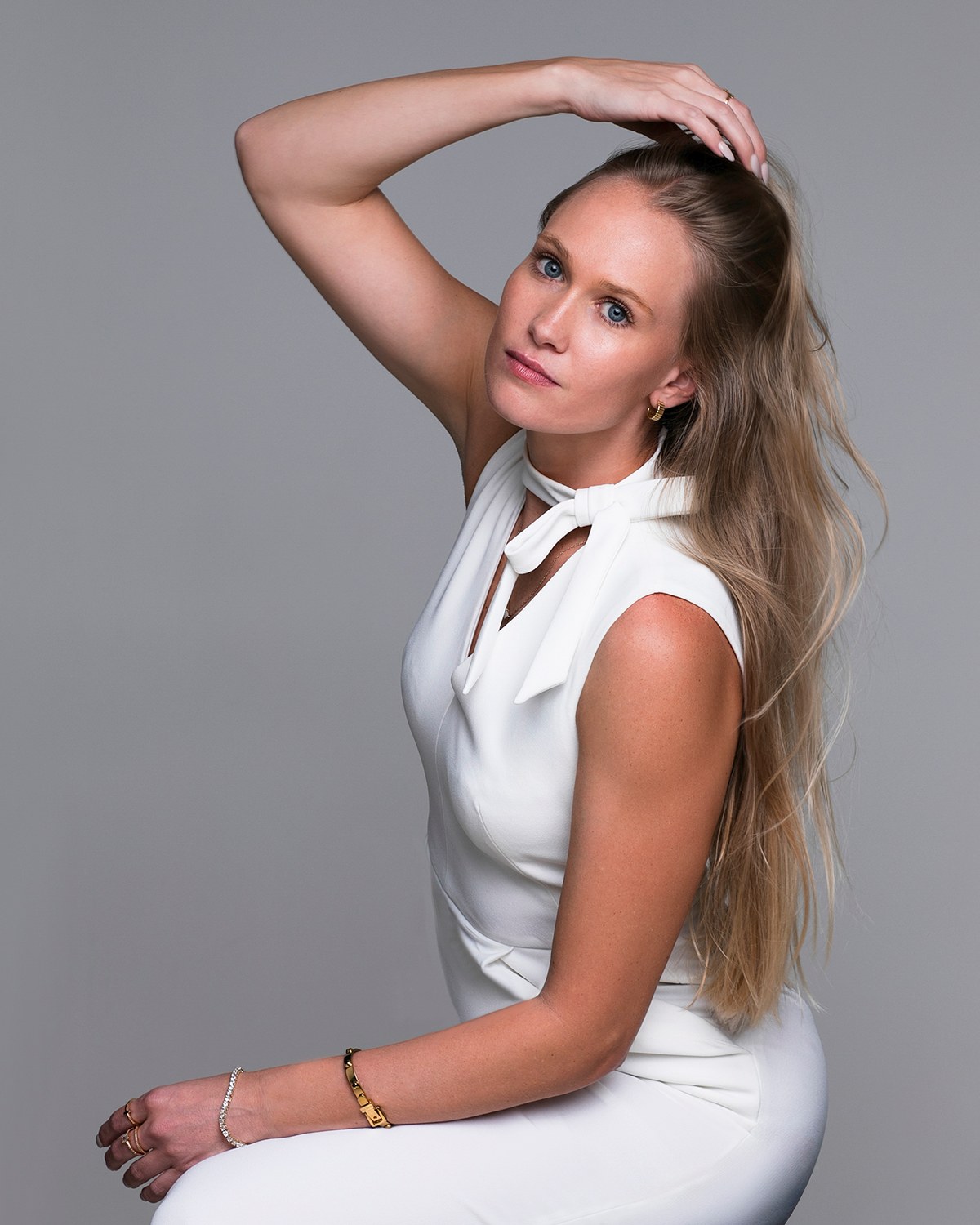
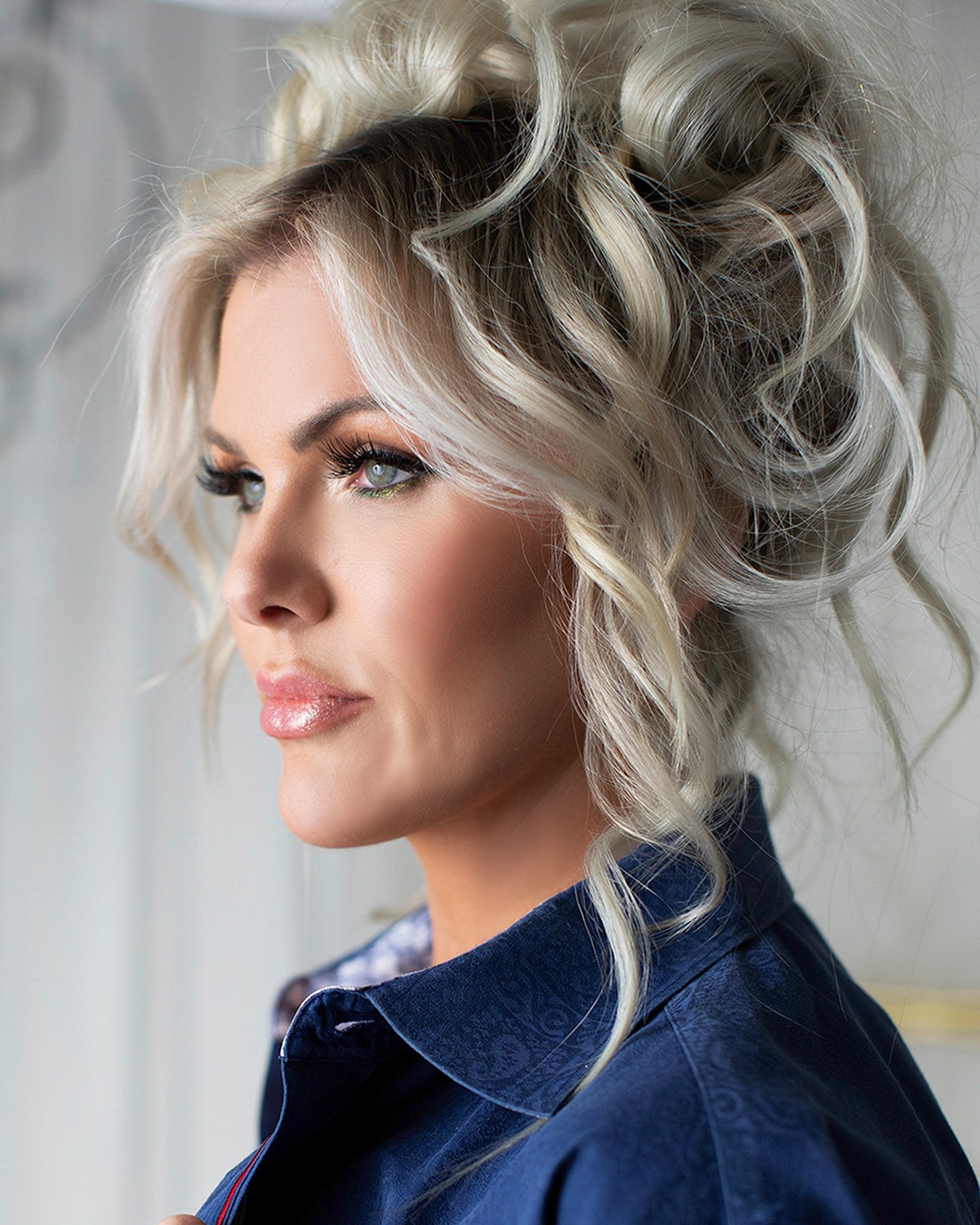
Your project images are lit, styled and composed within an inch of their lives. Then the About page arrives and there is a snapshot of you. The eye reads that gap instantly. The set of brand portraits I make in my private Naples studio is held to the same standard as the work you show, planned from your own palette and guided head to toe.

Designers are ruthless about every image except one. The projects get a photographer, a stylist, a schedule and a second opinion. The portrait of the designer gets whatever exists. It is understandable, since you are busy and you are not the subject, but on the page it is the only frame that has been left alone, and a prospective client who is judging your eye is looking at it. What a brand session fixes is that mismatch: bringing the person up to the level of the work, so the About page stops being the weak link in a portfolio you have curated with care.
For most professions a brand portrait is about credibility. Yours is about aesthetics, which is a harder brief. A portrait of you has to survive being seen next to your own project photography, which means it has to be considered in the same way, not merely well exposed. If the general idea is new to you, my guide to personal brand photography covers what a session includes and how the images get used.
You compose rooms for a living and will still freeze when the camera turns around. I direct the angle, the hands, the weight and the expression through every frame, which is what guided posing means in practice.
The plan comes from your own colors and materials, agreed together before the shoot, and the sitting itself moves through several backdrops and wardrobe changes so the set has range without wandering away from your aesthetic.
Images are hand retouched and delivered within the week in a private, password-protected gallery, sized for the site, for a submission and for print, so the files are ready before the next deadline arrives.
Your interiors stay with whoever shoots them. What I make is the one image on the page that is of you, and it has to hold its own beside theirs. That does not mean imitating an interior photograph. It means applying the same discipline: intentional light, a composition with a reason, restraint about what is in frame, and nothing accidental in the background.
In practice, the portrait usually needs to be quieter than people expect. Your projects are the loud part of the page, so a portrait that competes with them makes the whole layout feel crowded. A calm background, a considered wardrobe, one clear idea per frame, and the work keeps the attention it earned while the person finally looks like they belong there.
Most designers can describe their aesthetic in about four words, and those four words are what I plan the session from. Pared back and tonal, or layered and saturated, or something in between: it changes the backdrop, the wardrobe tones, the depth of the shadows and how much contrast the images carry. A portrait made without asking that question tends to look like a portrait of anyone.
Link me the portfolio and send a few images you would put in front of a new client. Add the fonts and colors your brand uses, and tell me which page the portrait will sit on, so I can see what it has to live next to. From there we plan your looks together, and my guides on how to prepare and what to wear fill in the practical parts, including which fabrics behave under studio light and which read as noise.
The About page is only the beginning. A submission asks for a portrait of the designer at print resolution, usually vertical. A presentation deck opens with you before it reaches the plans. A trade profile crops you to a square. A talk or a panel wants something wide. Publishing an image made for one of those into all of them is what makes a designer's presence online look thinner than the practice actually is.
So the sitting is planned to produce a set of genuinely different frames: a formal one, a working one, a wide one with clean space where a headline can sit, a tighter one that survives being shrunk. The website imagery beyond the portrait, the wider set of pictures a designer's site needs, is a separate conversation with its own page, but the portraits are the part everything else gets built around.
Sessions happen in my private studio at 5400 Yahl Street in Naples, unhurried and with no audience. Designers make unusual subjects because you already know what good light looks like, which cuts both ways: you understand exactly what I am doing, and you are harder to satisfy. I would rather have that. Tell me when something is off, and I will keep directing until the frame is right, because you will be looking at this image for a long time.
Designers drive in from Naples, Bonita Springs, Estero, Fort Myers, Marco Island and across Southwest Florida. The same gap shows up for realtors, whose listing photography is often far better than any picture of the agent, and the remedy is the same: plan the portrait as carefully as everything else on the page. Professional stylists can be arranged for hair and makeup before the shoot, for an added fee, if you would rather arrive and think about nothing.
Show me the work and tell me the four words you would use to describe it, and I will plan a portrait that belongs on the same page. Pricing is personal in the same way the plan is, so it is a conversation rather than a number on a page. Call (239) 319-6171 and we can plan the looks from your own palette.
Book a Session Call (239) 319-6171Tell me a little about what you have in mind and I will be in touch personally. Pricing is personal, so the best way to plan is a quick call.
Share a few details and Annie will be in touch personally.