Portfolio
Headshots Boudoir Personal Brand
More
Guides Investment Guided Posing About Book a Session
Home  /  Guides  /  AI Headshots vs a Real Session
Career

AI headshots and a real session, compared.

You upload some pictures, wait a while, and get back a pile of polished portraits of someone who looks a great deal like you. It is fast and it costs little, and whether that is enough deserves a straight answer rather than a defensive one. Here is what the two things actually are, and where each one is the right call.

By Annie Watson · Naples, Florida · Updated September 2026
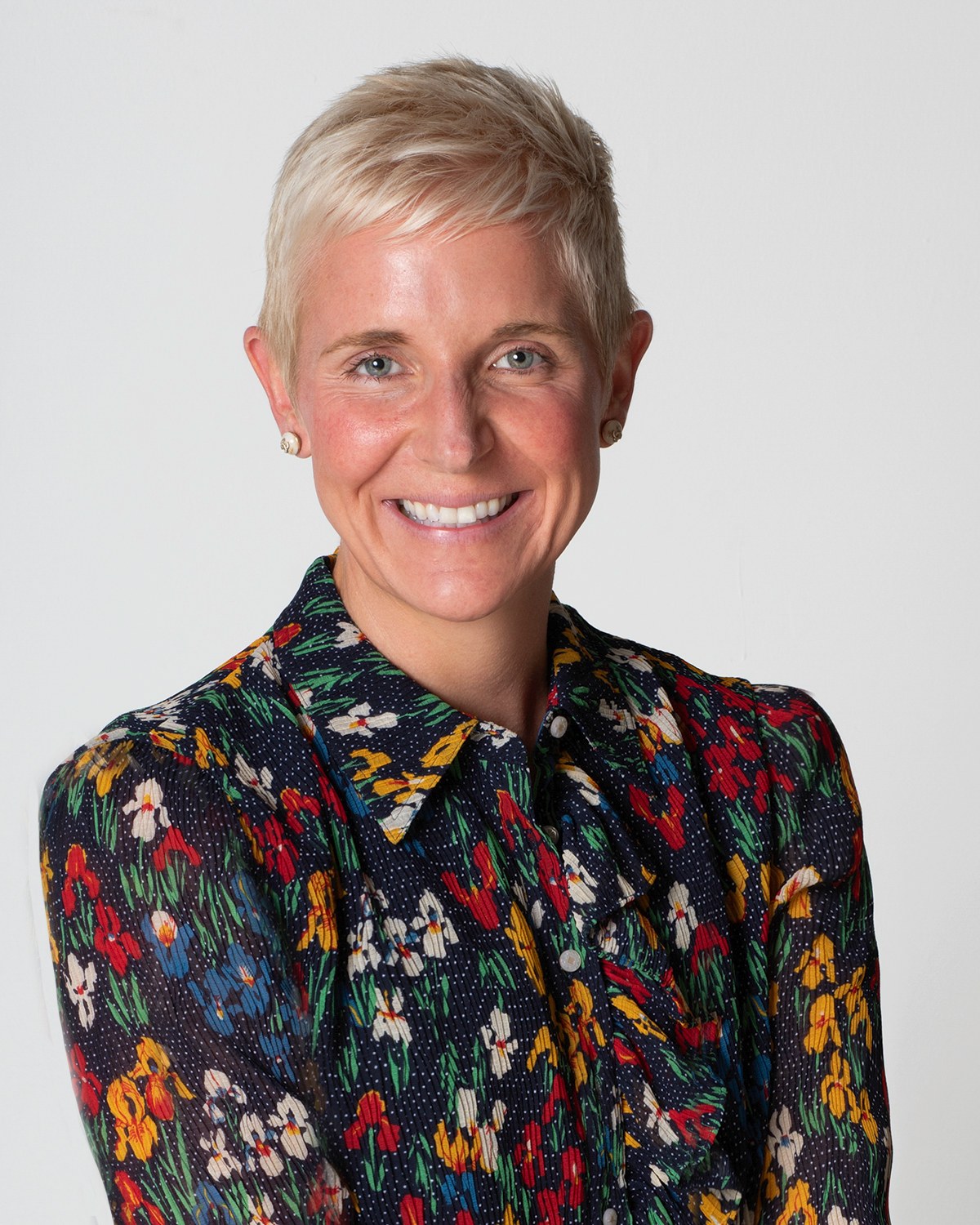
Woman with short blonde hair in a floral shirt, laughing, gray backdrop, photographed by Annie Watson in her Naples studio
The Short Answer

A generated headshot is a new image drawn by a model that has learned what human faces look like in general, then nudged toward yours by a handful of uploads. That is why it is quick, plentiful and inexpensive, and it is also why the result tends to land near you rather than on you.

A photograph is a record of a real moment in light someone chose, which makes it a different kind of object: it can be printed large, cropped again, matched to other frames from the same sitting, and stood behind. Where the picture is a placeholder and nobody is deciding anything about you, generated images are enough. Where its job is to make a stranger trust you before you speak, take the photograph.

What a model is actually doing to your face.

A generative model is not editing your photograph. It has been trained on an enormous number of images paired with descriptions, from which it learns the regularities: what a face tends to look like, how a jacket folds, what studio light does to a cheekbone. Then it is given a few pictures of you, and its output is pulled part of the way toward your features. What comes back is a drawing of a plausible person who resembles you.

Nothing in that process is a record of you. No lens was pointed at your face, and no light fell on your skin at a particular angle on a particular day. That is a technical complaint rather than a moral one, and almost everything else here follows from it.

Nearly you is a harder problem than not you.

You know a face by exact relationships rather than by a list of features: the distance from brow to eye, the asymmetry that makes one side of your smile arrive first, the way your nose sits against your cheek from three-quarters on. Change any of that slightly and a face is still a face, but it is no longer quite yours.

A model is built to produce what is likely, and likely faces sit near the middle of everything it has been shown. Averages are smoother, more symmetrical and more regular than any individual, so generated faces drift toward a beautiful, unremarkable middle. What goes missing are the small irregularities that make you identifiable, often the ones the people who like you would name first.

That produces a specific failure. Someone who knows you says the picture is lovely and something about it is off. Someone who does not know you feels a small unease and has nowhere to put it, so they attach it to you rather than to the image. On a profile whose whole premise is that a stranger should trust you, that is a poor thing to be carrying.

Where the seams show, and why they show there.

The visible failures are not random. They cluster in one place, and knowing why lets you check any image in seconds.

A model is very good at texture, because texture is forgiving: skin, hair, fabric weave and soft background all have countless correct-looking versions. It is weaker at structure, which is governed by rules and has one correct version and many plausible ones. So look at the parts of a picture that obey rules:

  • Hands and fingers, where bones have a fixed count and joints bend one way.
  • Ears, teeth and hairlines, which have a specific construction and tend to blur into approximations.
  • Glasses: an arm that vanishes into the hair, a frame that changes thickness across the face, a lens that fails to bend what is behind it.
  • Collars, lapels and plackets, where two halves have to belong to the same garment and button in a straight line.
  • Jewelry and small hardware, where a pair should match and often does not.
  • Light that does not agree with itself: a key light on the face coming from one side while the shadow on the backdrop falls the other way.

There is a size effect on top of that. Plausible texture is convincing small and dissolves as it grows, because no real detail was ever recorded underneath it. A generated portrait that looks fine as a profile circle can fall apart the moment someone wants it across a page, which is exactly what a press and media kit eventually asks of your files.

What it cannot know, because it was not there.

Set the artifacts aside, because they will improve. The deeper limit is information that does not exist anywhere in the system.

The model works from photographs you already had, which are usually the photographs you did not like. It cannot know that your left side is the open one, that your smile arrives a beat after you are asked for it, that your shoulders climb when you concentrate, or that your glasses catch a highlight unless the light sits lower than you would expect.

Those are not facts about your appearance. They are facts about you in front of a camera, and the only way to get them is for someone to stand there and watch. That is what guided posing is: small live corrections, a quarter inch of chin, a shoulder turned, a breath let out, held until the moment arrives. A model can produce a face doing an expression. It cannot produce the frame where the effort drops out of it, because that only happens in a room, with someone waiting for it. The phone-photo version of the same argument is in why professional work beats a phone photo.

Retouching and generating are not the same act.

This is the distinction that gets deliberately blurred, and it is worth holding onto.

Retouching starts from a real frame and takes things away: a stray hair across the mouth, a temporary blemish, a piece of lint, a distracting bright edge behind your head. Done by hand, it subtracts distractions so what remains is the moment that already happened.

Generation starts from nothing and invents what should be there. Between the two sits a middle that is growing fast: an enhancement pass that redraws the face while calling itself a fix. That is generation wearing the costume of a retouch, and it brings back the near-you problem in a smaller dose.

The test is simple. Could you point at the original frame and say honestly that this is the same moment with the distractions removed? If the answer needs you to explain what the software added, it is not retouching. What finishing does and does not include is set out in retouching, explained.

What a generated set cannot do next.

The comparison people run is between one generated image and one photograph. The real difference shows up months later, when you need something else.

  • There is no sitting to go back to. No unused frames, no alternate expression, no slightly wider version of the same moment, because the moment never existed.
  • It does not extend. A wide frame with space beside you, a print-size file, a looser crop for a bio: each has to be generated again, and the new set will not quite match the old one.
  • It does not match other people. A company page needs everyone in consistent light, on consistent backgrounds, cropped alike, and separately generated portraits drift apart in exactly the ways a grid makes obvious.
  • It cannot be enlarged truthfully for anything that gets printed.
  • It cannot be confirmed. If a publication asks you to state that the image is an unaltered photograph of you, there is no answer that is both comfortable and true.

That matters most when photographs are suddenly needed everywhere at once, which is usually the moment something good has happened: a promotion or a new role sends the same face to an internal page, an announcement, a profile and a partner's site, and they all have to match.

Where a generated image is genuinely enough.

It would be dishonest to argue this only one way, so here are the cases where I think generated images are a reasonable choice.

A placeholder in an internal directory while you wait to have the real thing made. An avatar on an internal deck or a scheduling tool. A hobby account or a side project, where nobody is deciding anything about you. A private experiment, to see whether a warmer or more formal register suits you before you plan a sitting. And the situation nobody plans for, when being photographed is not possible right now and a considered image beats an empty circle.

The advantages are real and worth stating plainly. It is fast, it costs very little, it produces many options at once, and it asks nothing of you on a day when you may have nothing to give.

The technology also improves, and the artifacts listed above belong to a moment rather than to a law. Two things do not improve, because they are not defects to be fixed: the model was not there, and there is no sitting to return to. Any comparison worth making rests on those, not on whether the fingers came out right.

One question that settles which one you need.

Ask what this picture has to survive.

If nobody will meet you, nothing will be printed, and no decision is riding on it, use the quickest thing available and spend your attention elsewhere. That is a sound answer and I would give it to a friend.

If a stranger is going to look at this image while deciding whether to hire you, retain you, refer you or put money behind you, and will then meet you and compare, the picture needs to be a photograph. The same goes for anything printed, anything that has to match a colleague's portrait, and anything a publication will ask you to stand behind. If you are job hunting, the neighboring question is whether a resume should carry a photo at all, answered in should a resume in the US carry a photo.

A real sitting works not because a camera beats software, but because a person is watching you, adjusting the light and the angle, waiting for the frame where you look like yourself on a good day, then finishing it by hand. The whole of how that works is in professional headshots, and if you would rather judge photographers than technologies, how to choose a photographer gives you the questions to ask anyone, me included. When you want the sitting itself, that is what headshots are for.
Key Takeaways
  • A generated headshot is a new image drawn from what faces look like in general and pulled toward yours, not a record of you, and everything else follows from that.
  • Averages are smoother than individuals, so generated faces lose the small irregularities that make you recognizable, which produces a picture that is nearly you rather than you.
  • Failures cluster where structure has rules: hands, ears, teeth, glasses, collars, buttons, patterns and lettering, plus light that does not agree with itself.
  • A generated set cannot be extended, matched to colleagues, cropped again from an original, or confirmed as an unaltered photograph of you.
  • Where nobody is deciding anything about you, generated images are a fair choice; where a stranger will decide and then meet you, take the photograph.
Next Step

The frame that looks like you on a good day.

The part no model can supply is a real frame at the end of it: one that can be printed large, cropped again later, matched to a colleague's portrait and stood behind. If you are weighing the fast option against a sitting, call me at (239) 319-6171 or send the form and I will tell you honestly which one your picture calls for.

Book a Session Call (239) 319-6171
Put It to Work

Sessions this guide points to.

Good to Know

Questions, answered.

Can people really tell the difference?
Often, and not always consciously. What registers first is usually not a glitch but a smoothness: skin without real texture, symmetry a little too clean, a background with no particular place in it. Then someone looks closer and finds the collar, the glasses or the hands. The larger the image runs, and the longer someone spends with it, the more likely it is to give itself away.
I already have a generated photo on my profile. Should I take it down?
It depends on what that profile is doing. If it is decorative and nobody makes decisions from it, leave it alone. If people meet you after seeing it, or it is where new clients form a first impression, replace it when you reasonably can. In the meantime an honest phone photo taken by a friend near a window is a better placeholder, because it is at least the correct face.
Is it dishonest to use one?
Not automatically. On a personal account, or as a stopgap, it is a practical choice and nobody is misled about anything that matters. It edges toward dishonesty when the image is doing work that depends on being a truthful likeness: a bio, a press kit, a profile where someone is deciding whether to trust you. A simple test is whether you would be comfortable saying how the picture was made if you were asked.
Can I keep my real photo and have software improve it instead?
Careful with that word. Adjusting exposure, color and contrast, and removing a distraction by hand, all keep the original moment intact. A pass that redraws your features, reshapes your face or replaces your clothing has produced a new image. Ask what was subtracted and what was invented, and you always know which side of the line you are on.
Will this argument disappear as the technology improves?
The visible artifacts will, and I would not build a case on them. What will not change is that a generated image is not a record of a moment, so it cannot be extended, matched, enlarged truthfully or confirmed, and it cannot hold the version of your face that only appears when someone is directing you and waiting for it.
Book Your Session

Your best headshot is one session away.

Tell me a little about what you have in mind and I will be in touch personally. Pricing is personal, so the best way to plan is a quick call.

Studio
5400 Yahl St, Naples FL

Prefer to talk? Call (239) 319-6171. I respond personally.