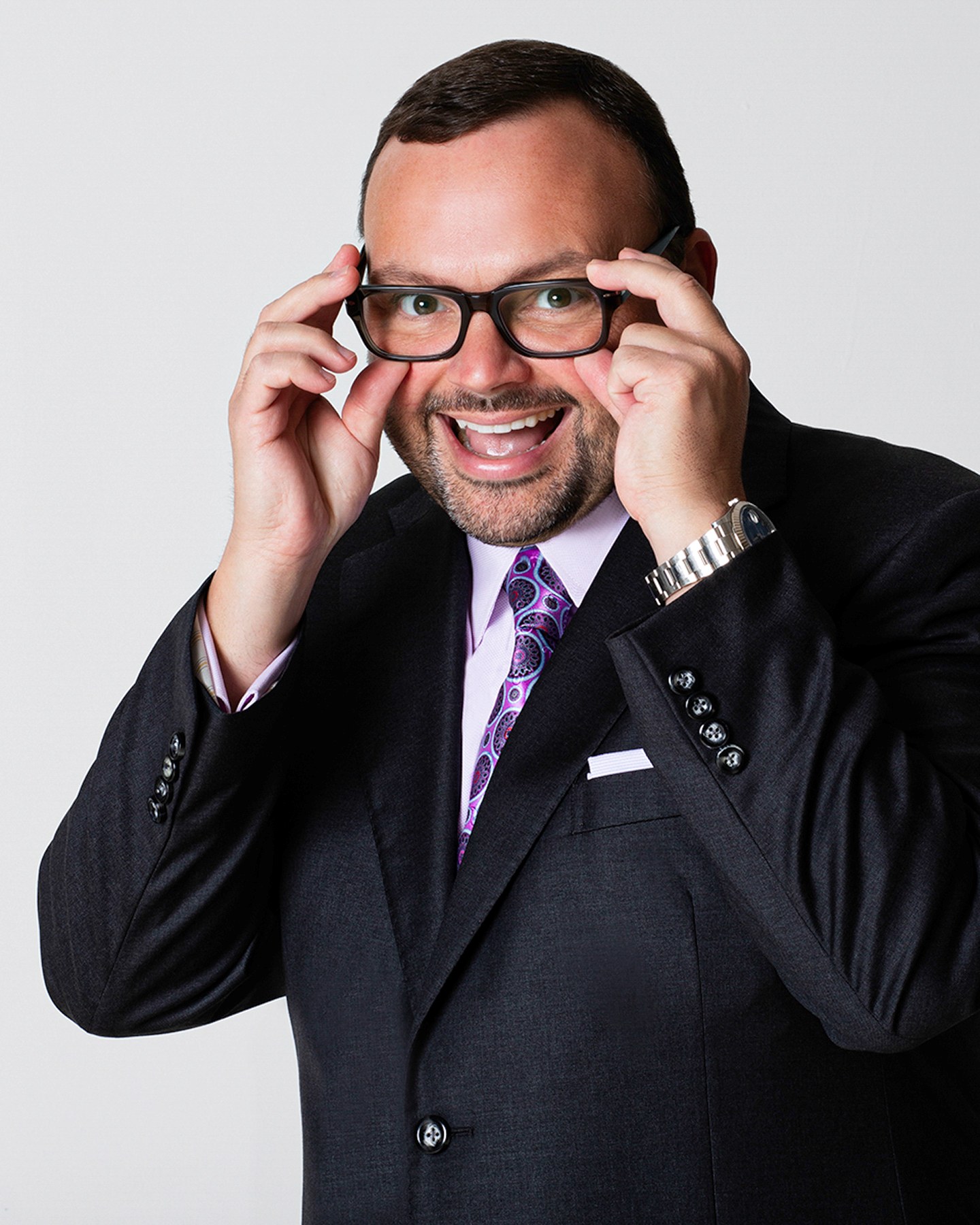
A promotion changes the sentence under your name, and the picture above it is suddenly being read by people who were not looking before. Direct reports, a board, clients who inherited you, a room at a conference. The old photograph is not bad. It was simply made for a different audience, and that audience has moved on.

When your title changes, the photograph attached to it is doing a different job, so it usually needs to change too. The shift is rarely about formality alone. A photograph made for a role you performed becomes a photograph for a role you now represent, which tends to mean a slightly wider frame, a quieter background, a steadier posture and a wardrobe register one notch up from where you were.
Get it made before the announcement rather than after, so the news and the picture arrive together, and match whatever the destination page already looks like before you decide anything else.
Think about who was actually looking at your photograph in your old role. Probably peers, probably recruiters, probably a handful of clients who already knew you. The picture had to say competent and approachable, and it did.
Now think about who is looking at it this week. People who report to you and are working out what kind of leader they have. A client who did not choose you and is deciding whether to stay. Somebody vetting you for a panel. A colleague at a company you have just joined, scrolling the team page to put a face to a name they will meet on a call.
None of those readers know your history. They have a sentence and a picture, and they will use both. That is the whole argument for a new photograph, and it is why a promotion is one of the strongest reasons to replace one. The complete guide to professional headshots covers the mechanics of a sitting; this page covers only what the new title asks of it.
The change from an individual photograph to a leadership photograph is mostly made of small craft decisions, and they are worth naming so you can ask for them:
One notch is the whole instruction. The failure mode of a promotion photograph is overcorrection, where somebody who has always been warm and direct turns up looking severe because the title felt like it demanded it. You are still the person the promotion was given to. If you want the fully formal end of that scale, executive headshots is the register to look at, and it is a deliberate choice rather than an automatic one.
The natural instinct is to wait until the news is public and then think about a picture. That order costs you the moment the picture is worth the most. An announcement is the single time the largest number of people will deliberately go looking at your face, and if the new one is not ready, they see the old one.
Working backwards is simple. The announcement has a date. The gallery lands within the week after the sitting, so plan the sitting comfortably ahead of that date and you will have files in hand when the internal note goes out, when the profile is updated and when the company page is rebuilt.
If the move is confidential until it is not, that is fine. A sitting is private, there is no audience, and the gallery you receive is private and password-protected. Nothing about being photographed announces anything: you decide when the new picture goes up.
A new employer usually has a page waiting for you, and it has rules whether or not anybody has written them down. Open it before you shoot and read the photographs already there as a specification: the background, where the frame cuts, the shape they are displayed in, whether the eyes line up across the row. How to read a page that way, and what to do when the set is inconsistent, is worked through in headshot styles by industry.
What is specific to a first month is the asking. Find the person who maintains that page and ask what they need before you plan anything: a preferred shape, a background, a file size, sometimes a template nobody outside the team has seen. They are rarely asked, so the question lands well, and sending a file that drops straight into the grid is a small and memorable competence.
There is a timing trap here too. If the page is being rebuilt around a new hire or a new leadership row, your photograph is either in that pass or it waits for the next one, so ask when the rebuild happens and work to that date rather than to your own. If the whole set is being re-photographed together, team headshots for companies covers how a matched group is planned so that everybody belongs to the same set.
Not every new role is a rung up. A lateral move into a different industry can demand more of a photograph than a promotion does, because the visual habits of the new field may be nothing like the ones you left. Look at how the field presents itself before you assume your current picture travels, and headshot styles by industry lays out what you will commonly see.
Going independent is the biggest shift of all. There is no company page carrying you any more, so the photograph stops being one tile in a grid and becomes the front of the whole operation. It needs to work at profile size, at banner size, on a bio page and in print, which is a library rather than a single frame.
And if the new role is one you are still hunting for rather than one you have been handed, the timing question inverts. Headshots for job seekers covers that case, where the photograph goes up before anything has been announced at all.
A title change tends to generate asks you never received before, and they arrive quickly with nothing attached to explain what is wanted. The person building a panel slide wants one thing, the editor of an internal newsletter wants another, an association updating its member listing wants a third, and every one of them assumes you already have it.
Being asked for a picture is the good news. Not having the right shape of it is a small, avoidable friction that repeats. The fix is not to keep going back for another picture. It is to decide, while the sitting is still being planned, which shapes you are likely to be asked for.
A guest slot on a show is now a real possibility too, and it comes with its own formats: podcast cover and guest photos covers the square, the horizontal frame and the copy space a host's template expects. The profile itself is usually first through the door, and LinkedIn headshots is the version most people update on announcement day.
The last step is the one that gets abandoned halfway. Old photographs live in more places than you remember, and they resurface exactly when you would rather they did not, usually pulled into a program or an article by somebody who searched for you and took the first result.
Make one list and clear it in a single sitting at your desk: the public profile, the company bio, any directory or association listing, your own site, your email signature, the slide at the front of your deck, and any speaker page from a previous year. It takes less time than you expect and it is the difference between one current face and a trail of former ones.
Keep the files. They are useful later. Then leave the picture alone until something genuinely changes: when a headshot refresh is due sets out the triggers so you are not thinking about it again for no reason, and the headshot sessions page shows what the range looks like.
If you know roughly when the news lands, work backwards from it: the gallery arrives within the week, so there is room to plan the looks properly rather than rushing one. Tell me the title you are stepping into and how far up you want the register moved, and we can build the sitting around that. Call (239) 319-6171, or send the form and I will get back to you personally.
Book a Session Call (239) 319-6171Tell me a little about what you have in mind and I will be in touch personally. Pricing is personal, so the best way to plan is a quick call.
Share a few details and Annie will be in touch personally.