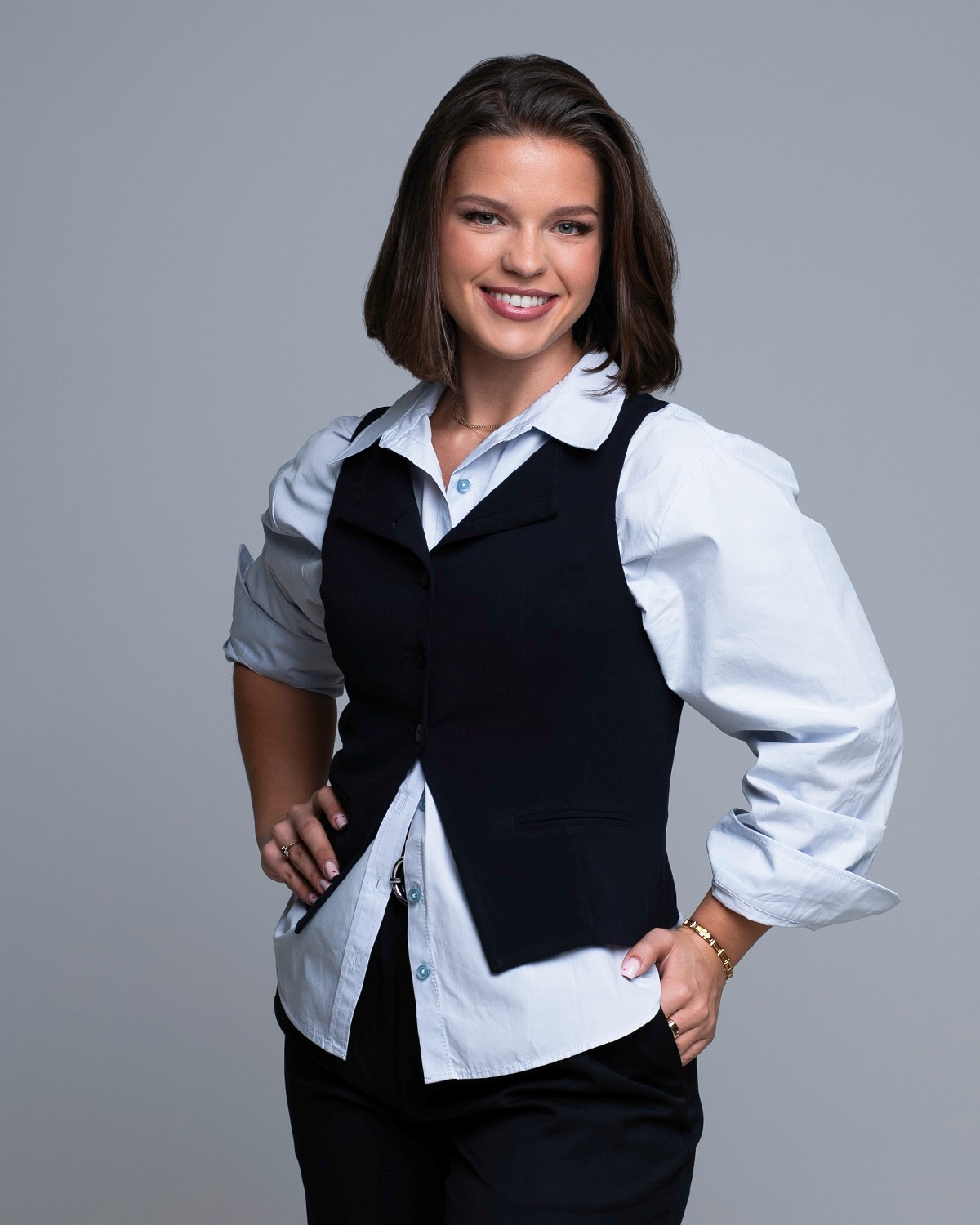
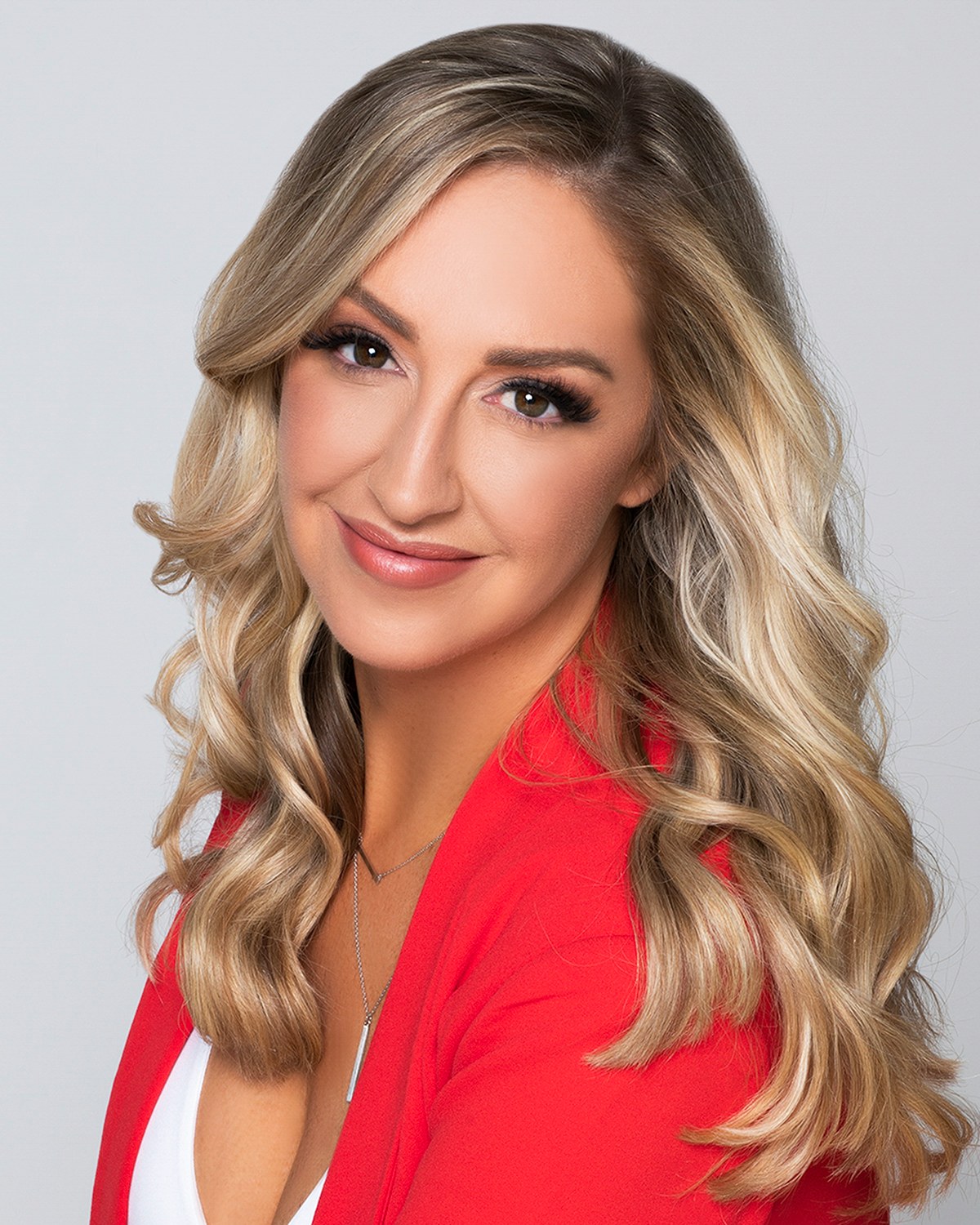
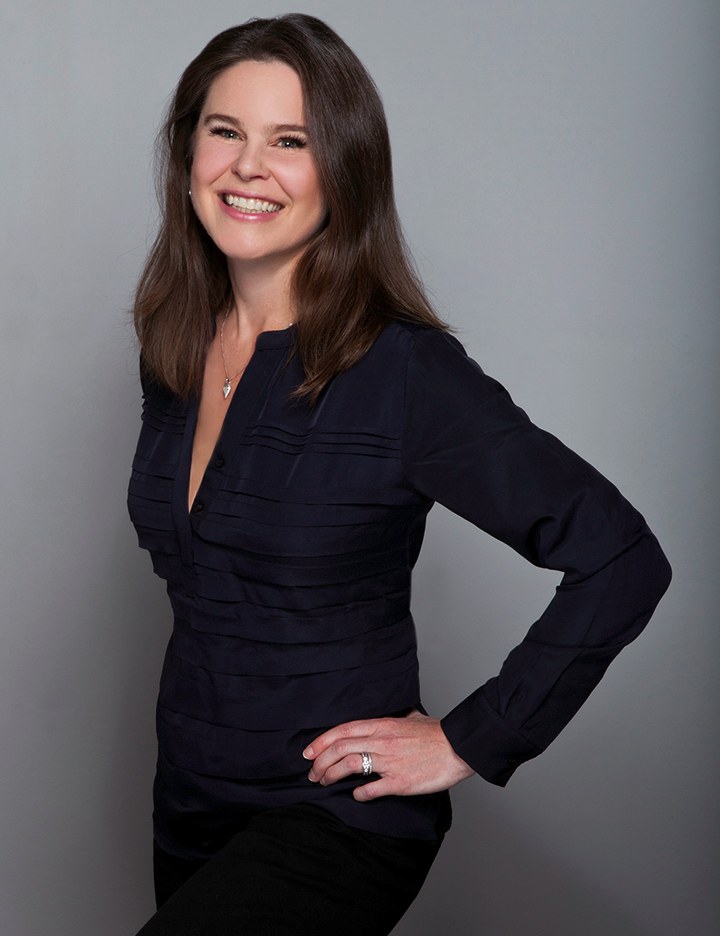
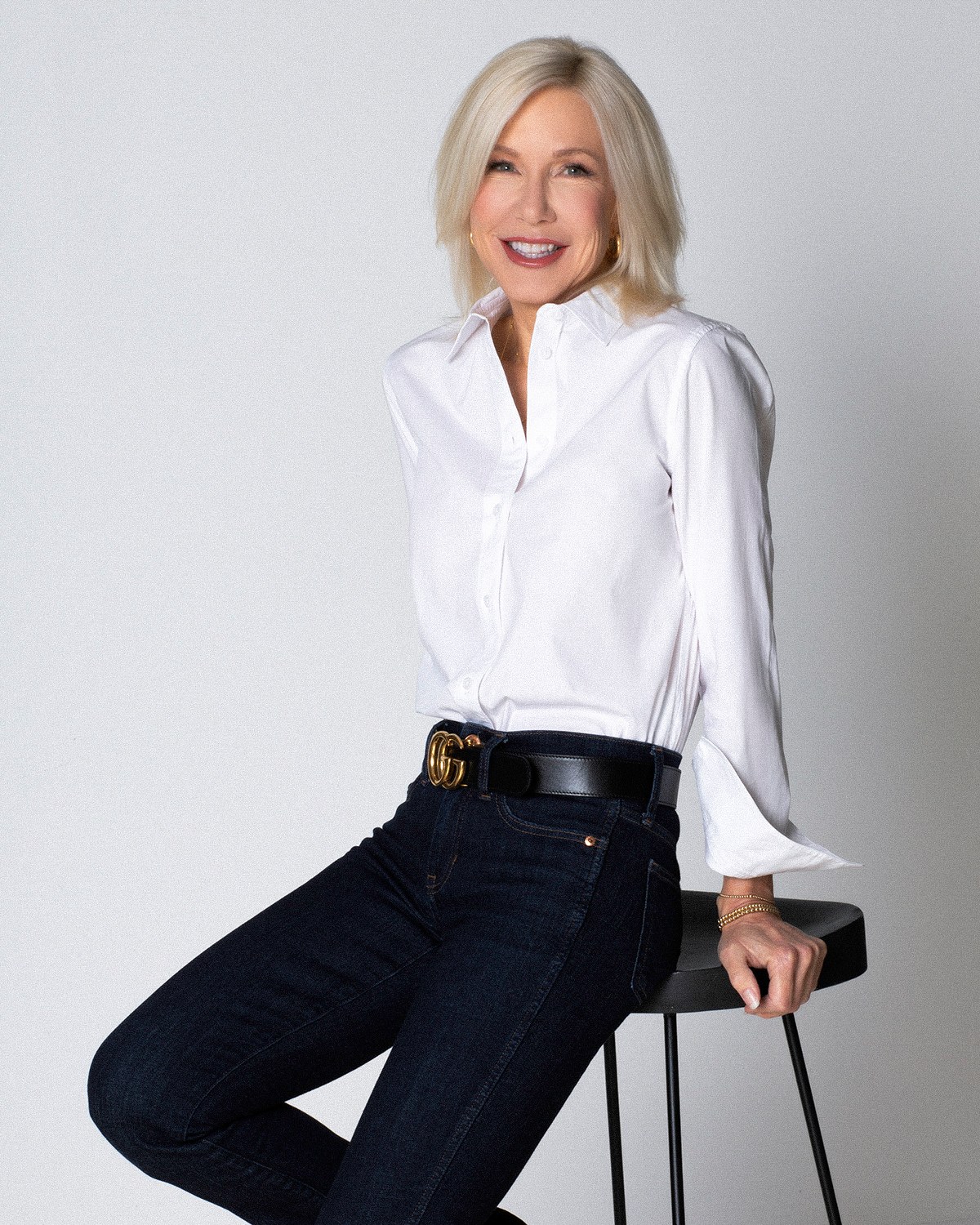
A broker's picture turns up beside a listing, on a roster of colleagues, at the front of a presentation and at the bottom of every introduction you send. It has to look considered in all four places and shout in none of them. That set gets built in my private Naples studio, agreed beforehand and called out frame by frame.

There is a particular way a broker's photograph goes wrong, and it is not that the picture looks careless. It is that it looks like it is trying. A portrait that reaches, dramatic light, a hard jaw, a background doing something clever, reads as sales, and sales is the one impression you cannot afford while somebody is quietly deciding whether to deal with you or with the person in the next row of the roster.
So the work is mostly removal. A background with no pattern in it. Wardrobe with nothing competing for attention. Light with one clear direction. An expression that stops well short of a pitch. Restraint is harder to photograph than flash, because there is nothing to hide behind: it comes down to posture, the set of the shoulders, and where the light falls on a face.
The single portrait has a page of its own, and if that is genuinely all you need, headshots for yacht brokers covers it. What this page argues is the set: the roster frame, the presentation frame and the introduction frame, why each one is shaped differently, and how the three stay consistent when your listings, your firm or your title change.
I call the posture, the shoulders, the chin and the eyes as we work, so nothing is left to you to invent. Direction is what makes restraint possible in the first place: an unforced face is built out of small physical adjustments, not out of being told to relax.
A jacket and an open collar cover most of what you need. We plan them together before you arrive and shoot both in one sitting against several backdrops, so the formal frame and the easier one come out of the same visit and genuinely match.
Every image you get is retouched by hand. The gallery is private and password protected, it arrives within the week, and the frames come cropped for a roster square, a presentation page and print, so nothing has to be stretched to fit where it lands.
Almost everything that makes a portrait feel considered is a subtraction. A plain background instead of a busy one. A jacket with no hardware on it. Hands doing nothing in particular rather than folded into a pose. One light source with a clear direction instead of three fighting each other. Every element you remove hands more of the frame back to your face, and your face is the only part of this that is actually yours.
The same goes for expression. A broad smile is a fine thing and it belongs in the set, but the frame that ends up doing the most work is usually the quieter one: level eyes, the mouth barely engaged, shoulders down and back. It reads as somebody who is not working very hard to be liked. That is a difficult thing to fake and a straightforward thing to direct, which is the entire reason it is worth doing in front of a photographer rather than a phone. The wider argument for building a library instead of a photo is in my guide to personal brand photography.
The roster frame is the constrained one. It is square or close to it, cropped tight, and it sits in a grid beside your colleagues, which means the tone of the background and the height of the crop matter far more than anything clever. If your firm has a standard, bring it and I will shoot to it, so your square does not visibly break the row it sits in.
The presentation frame is the opposite. Wider, standing or seated, with quiet space to one side where a name, a title or a line of type can go. It runs at the front of a listing presentation or a proposal, and a tight head crop always looks thin there. The third is the introduction frame, the one that travels: a signature block, a profile, an attachment, a document forwarded to somebody who has not met you. That one should look like you on an ordinary working day, because it is usually the first version of you anyone sees. My guide to building a shot list sets those out as rows you can fill in before we speak.
Two looks cover the ground: a jacket, and a crisp open collar. Solid colors hold up better than pattern, which flickers and fights the eye once a picture is shown small. Keep the shirt darker than your face, because attention goes to the brightest thing in the frame and it should be you. A collar that sits properly does more for a portrait than almost anything else you can bring, and a soft one that has given up will show at any size.
Anything with a maker's mark on it, a watch, a lapel pin, a pair of sunglasses on a collar, dates a picture faster than a haircut does, so leave those out of the frames you intend to keep using. Bring the shirt on a hanger rather than wearing it in the car, because a seat belt leaves a crease across the chest that turns up in every frame, and there is room to change between looks once you are here.
Brokers move, firms rebrand, and a roster page slowly fills with photographs made in different places under different light. The fix is to shoot new people into the existing look rather than starting over: the same background tone, the same crop, the same lighting pattern. That is simple to hold on to when the frames come from one studio and close to impossible when each person was photographed wherever they happened to be. Somebody joining later comes in and is photographed to match, and your own set gets refreshed the same way when your title or your firm changes.
The room itself is a private studio in North Naples, off Pine Ridge Road: several backdrops, space to change between looks, nobody watching while you work. Clients drive over from Marco Island, Bonita Springs, Estero and Fort Myers. The restraint argument serves other work where trust is the product, attorneys most of all, and it inverts neatly for contractors, where looking too polished is the risk instead. All of it sits under my personal brand sessions.
Those two, plus the one you attach to an introduction, are the whole starting set. Bring a jacket and an open collar, tell me whether your firm has a background standard to match, and the plan is a short conversation. What it costs comes out of that same conversation, so it begins with a call to (239) 319-6171 or a note through the form, and I will come back to you myself.
Book a Session Call (239) 319-6171Tell me a little about what you have in mind and I will be in touch personally. Pricing is personal, so the best way to plan is a quick call.
Share a few details and Annie will be in touch personally.