Portfolio
Headshots Boudoir Personal Brand
More
Guides Investment Guided Posing About Book a Session
Home  /  Guides  /  How to Pose for Portraits Over 40
Posing

Posing a face that has some history.

A portrait after forty is trying to do exactly what a portrait at any age is trying to do: look like you, on a good day, lit and angled by somebody paying attention. What changes is the emphasis, not the aim. The neck earns more attention, posture has had longer to set, and the expression carries more of the frame than it used to.

By Annie Watson · Naples, Florida · Updated September 2026
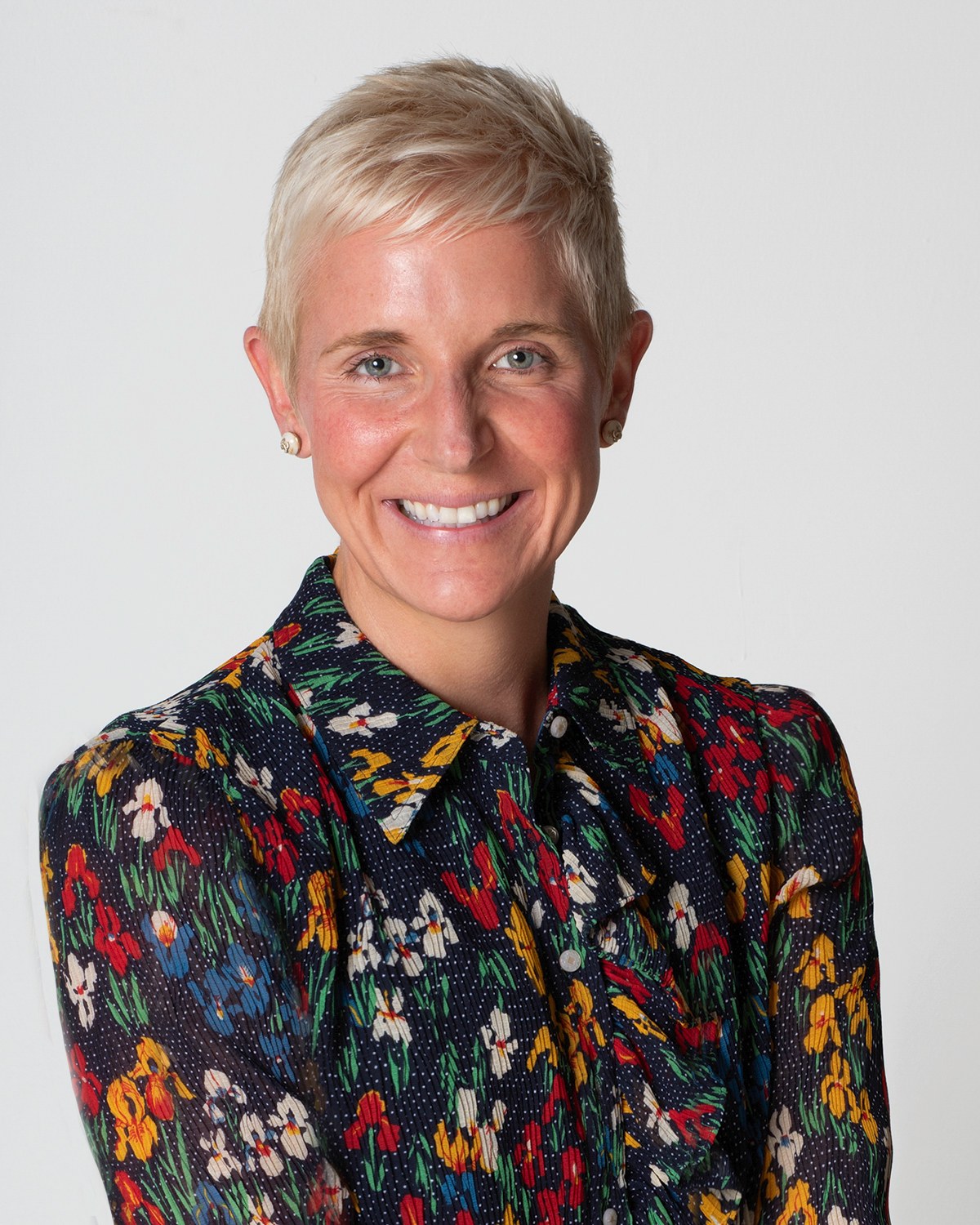
Woman with short blonde hair in a floral shirt, laughing, gray backdrop, photographed by Annie Watson in her Naples studio
The Short Answer

To pose for a portrait after forty, work the neck and jaw geometry deliberately, undo the forward-head posture most of us collect, and let the expression carry the frame. Push your forehead toward the lens and bring your chin down a fraction. Lengthen through the spine and drop the shoulders back and down. Ask for a camera at or slightly above your eye line.

Everything else is the same craft that applies at twenty five: angle the body, settle the weight, give the hands a job, breathe out before the frame. The difference is that direction earns more here, because the mechanics that get skipped in a younger face are the ones doing visible work in this one.

Emphasis, not concealment.

It is worth naming the assumption buried in most advice about this, because it shapes how people arrive at a session. The assumption is that a portrait after forty is a damage-limitation exercise, and that a good photographer is one who successfully subtracts something.

That is a poor description of the job and it produces poor pictures. A portrait built around hiding reads as guarded, because the person in it is being careful. What actually works is a portrait built around structure: a face with more definition in it, photographed so the definition is an asset rather than an accident of the light.

So the posing changes are practical, not defensive. A little more attention to the neck, because the geometry there does more work now. A little more attention to posture, because posture habits accumulate. And considerably more attention to expression, because a face with lines in it broadcasts far more information than a smooth one, and that is an advantage as soon as somebody is directing it. The whole mechanical baseline, feet to eyebrows, is in how to pose for photos, and none of it stops applying.

The four things that genuinely shift.

Here is the honest list. Nothing on it is a problem to be solved before you can be photographed well.

  • Skin holds light differently. Texture reads more, which means the angle of the light and the angle of your face matter more than they used to, and both are the photographer's decisions rather than yours.
  • The neck and jaw want geometry. The forward-and-down chin move stops being an optional refinement and becomes the first thing to get right in the frame.
  • Posture has had time to set. Years of screens and desks pull the head forward and round the shoulders, and that shape photographs as fatigue whether or not you feel tired.
  • Expression carries more. Lines around the eyes and mouth mean a real expression reads as unmistakably real, and a manufactured one reads as unmistakably manufactured. There is less middle ground than there used to be.

Notice what is not on that list: any change to the underlying method. Turn, weight, hands, chin, breath, expression, in that order. The order is the same at any age. What shifts is how much each step is worth.

Neck geometry, done honestly.

The single most useful adjustment is also the one that feels most peculiar. Push your forehead toward the camera as if you were leaning in to read something behind the lens, then bring your chin down a fraction. Forward, then down. It feels like sticking your neck out and it looks nothing like that from where the camera is standing.

What it does is straightforward and worth understanding plainly, because the honest version is more reassuring than the marketing version. Extending the head forward puts tension in the line from chin to collarbone, so the skin there is taut rather than compressed, and the jaw separates cleanly from the neck instead of merging into it. That is geometry. It is not a claim about your face, and it works because of where the camera is, not because anything about you has changed.

Two things undo it instantly. Lifting the chin, which is the natural instinct and hands the camera the whole underside of the jaw. And a low camera, which is the same mistake made by the equipment instead of by you. Ask for a lens at your eye line or slightly above it, and the whole adjustment gets easier. The full mechanics, including how far is too far, are in jawline and chin posing.

Undoing the shrink.

There is a shape a body settles into over time, and a camera is merciless about it. The head drifts forward of the shoulders. The upper back rounds. The shoulders roll in and creep toward the ears. The chest closes and the whole silhouette gets a little smaller and a little apologetic.

None of that is inevitable in a photograph, because it is a position rather than a condition, and positions can be changed in about four seconds. Roll your shoulders up toward your ears once, hold, then let them fall, and leave them wherever they land. Lengthen through the crown of your head as if a string were pulling it, without letting the ribs flare forward. Then, only then, bring the head forward and the chin down, so the forward move comes from a long neck instead of a collapsed one.

The trap is overcorrecting into a military stance, which photographs as bracing. What you want is length without rigidity: joints unlocked, breath moving, shoulders low. Nerves put every one of those back where they were within a few frames, which is why it gets repeated out loud rather than said once. How posture, openness and tension are read by a viewer is the subject of body language on camera.

The expression that reads earned.

This is where the advantage is, and almost nobody arrives expecting to hear that.

A face with some history in it produces expressions with more information in them. A small, closed smile reads as considered rather than shy. An engaged, slightly narrowed eye reads as somebody who has been paying attention for a while. That is a specific quality younger faces have to work much harder to imitate, and it is why a portrait at this age can carry weight that a smooth face cannot.

The mechanics do not change with age, and the full order of them is in how to pose for photos: the breath first, the eyes before the mouth, the mouth last if at all. A wide smile is one option among several, not the default, and the choice between an open one and a composed one belongs to the picture's purpose, argued properly in smiling versus serious headshots.

One caution that is specific to this reader. There is a habit of over-smiling to compensate, of pushing the expression bigger to prove you are approachable. It backfires, because a forced smile stretches everything and reads as effort in exactly the face that is most articulate about effort. Less is genuinely more here, and the smaller version holds up longer through a run of frames.

Seated frames, hands, and camera height.

Seated portraits are worth asking for at any age, and they do something particular here. Sitting brings the hands naturally into frame, changes the energy from presented to considered, and lets the upper body be built rather than merely held.

The mechanics matter more than usual, because sinking backward collapses the shape you just spent a minute building. Keep the weight forward of your hips, hinge from there rather than from the shoulders, and let your face travel toward the lens. Elbows stay off the ribs. Forearms rest low and lightly.

Hands deserve one specific note. People become self-conscious about their hands somewhere in this decade and start hiding them, which never works, because a hidden hand is a visible decision. Better to place them well: fingers softly curved rather than flat, the narrow edge turned toward the lens rather than the back, wrists unbroken, and something to hold when there is anything to hold.

And ask about camera height, because it does more here than any pose. A lens slightly above your eye line lengthens the neck line and puts the light where it does the least arguing. A lens below it does the reverse to everybody, at every age.
What none of this is promising.

It matters to say the limits out loud, because this subject attracts language that oversells.

Posing changes what the camera reads, not what your body is. Angle, weight, light and expression decide how a three-dimensional person flattens into two dimensions, and they can make an enormous difference to a photograph. They cannot and do not subtract age from the person in it. Delivered images are retouched by hand, the way a print is finished, and that is where it stops.

The other thing worth saying plainly: nothing needs fixing first. There is no threshold of haircut, weight, skin or rest that you are expected to reach in order to qualify for a good portrait, and waiting for one mostly produces a stretch of years with no pictures in it. What you wear does change which poses work, and that is a genuine planning question rather than a hurdle, handled in what to wear for portraits over forty.

The reason to book a portrait now is the same as it has always been. Your headshots should look like the person who walks into the meeting this year, and a personal brand library should look like the person doing the work now, not the one in a picture taken back when the haircut was different.

Key Takeaways
  • Posing after forty is about emphasis and structure, not concealment, and a portrait built around hiding reads as guarded.
  • The forward-and-down chin move stops being optional here, because it is what separates the jawline from the neck.
  • Ask for a camera at or slightly above your eye line, since a low lens undoes every other adjustment you make.
  • Undo the forward head and rounded shoulders first, then lengthen, so the chin move comes from a long neck.
  • Let expression stay small and genuine; over-smiling to seem approachable backfires in a face that reads effort clearly.
  • Posing changes what the camera reads and nothing else, and none of it is asking you to look younger than you are.
Next Step

Book it for the face you have now.

If your current picture is older than your current job, the fix is a sitting where the neck, the posture and the expression are handled for you, one instruction at a time, by somebody watching the frame instead of the mirror. Planning and pricing are personal, so call me at (239) 319-6171 or send the form and tell me what the photos are for.

Book a Session Call (239) 319-6171
Put It to Work

Sessions this guide points to.

Good to Know

Questions, answered.

Will you smooth out my lines in the retouching?
Retouching happens by hand, and it stays deliberately light. Lines are part of what makes a face recognizable, and a portrait with them erased tends to read as slightly synthetic even to people who cannot say why. If one particular line worries you, say so before we start, because where the light comes from and where your face is angled decide far more about it than any editing does.
Is softer light better for an older face?
Softer light reduces the shadow that texture casts, so it is often the kinder starting point, but harder light shaped carefully gives a face structure and drama that soft light cannot. It is not a rule so much as a decision that follows the portrait's purpose. That decision is mine to make, and it is made alongside the angle of your face, since the two only work as a pair.
My hands look older than my face. What do I do with them?
Place them rather than hide them. Turn the narrow edge toward the camera instead of the back, keep the fingers softly curved rather than flat, and keep them lower in the frame than your face so they are never the closest thing to the lens. Distance does most of the work: anything nearer the camera photographs larger, so a hand resting low reads exactly as a hand and no more.
Should I wait until I have made a few changes first?
The threshold has a habit of moving, and the years spent waiting for it are years with no pictures in them. There is no standard of haircut, weight, skin or rest you have to reach before a portrait will work, because a portrait is judged on light, angle, posture and expression, and all four of those are mine to handle rather than yours to prepare for. The only preparation that changes the result is deciding what the pictures are for.
I dislike photographs of myself more than I used to. Does that change anything?
It changes how the session is run, not whether it works. Almost everyone dislikes their own picture, partly because a mirror shows you reversed and moving while a photograph shows you still and un-reversed. What helps is being given something to do continuously, so your attention points outward rather than at yourself, and being told plainly when something is working instead of being left to guess.
Book Your Session

Your best headshot is one session away.

Tell me a little about what you have in mind and I will be in touch personally. Pricing is personal, so the best way to plan is a quick call.

Studio
5400 Yahl St, Naples FL

Prefer to talk? Call (239) 319-6171. I respond personally.