The default a lot of men bring to a camera is the stiff-soldier stance: square shoulders, arms locked, chin jammed forward like a photo for a badge. It is not wrong exactly. It is just one setting, and there is a whole range past it. Here is how to use it.

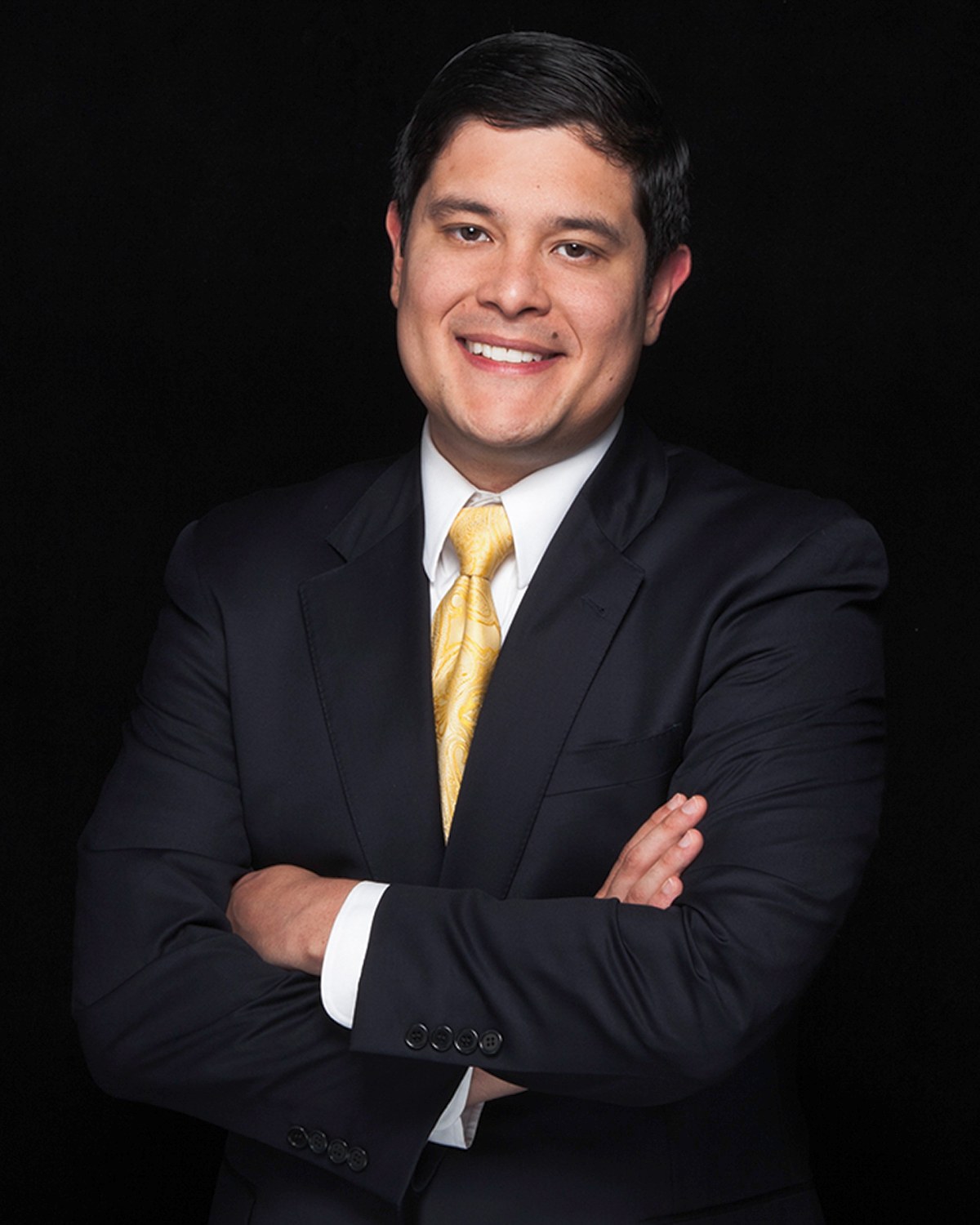
Men's headshots most often go wrong in one of two directions: too square and stiff, arms locked at the sides like standing at attention, or overcorrected into something too casual to read as professional. The fix sits between those, with a slight turn off square, weight on the back foot, and a hand or two given something specific to do instead of hanging still.
The chin rule is the same for everyone: forward and down, never up. What differs for a lot of men is the starting stance, since a square, feet-together default is far more common, and the correction is a small rotation of the shoulders and hips rather than a smaller adjustment. A jacket, if one is worn, gets one button fastened, and hands get a pocket, a lapel edge or a forearm to hold rather than nothing at all.
Ask a man to stand for a photo with no other instruction and a common result is feet together, shoulders square, arms straight at the sides, the stance of someone waiting to be measured for a suit rather than photographed for a website. It is not incorrect so much as it is one setting on a dial that has several others, and it is rarely the most flattering one.
The correction is the same mechanic that works for anyone, laid out in full in how to pose for any photo, just starting from a stance that tends to be squarer to begin with. Turn the feet and hips slightly off square, shift weight onto the back foot, and let the shoulders follow the turn rather than staying locked forward. The change reads as less braced and more at ease, without asking for anything that feels unfamiliar or overly soft.
How far to turn depends on the person and the job of the photo. A corporate or legal headshot can sit closer to square, since a little more formality suits the context; a personal brand or creative headshot can take a deeper turn and a more relaxed weight shift. Neither is more correct. They are simply built for different jobs.
The forward-and-down chin adjustment applies to every face, but it tends to matter more visibly on men's headshots for a straightforward reason: a raised chin exposes the underside of the jaw, and that angle is unforgiving on any amount of jaw or neck softness, which shows up differently depending on build. Bringing the forehead slightly toward the camera and the chin down a fraction tightens that line regardless of the starting shape of the jaw.
The other place this shows up specifically for men is facial hair. A beard or heavier stubble reads its cleanest and most intentional-looking with the chin at a level, slightly down position, since it lets the light define the shape of the jaw rather than casting a shadow up underneath it from a raised angle. A raised chin with a beard tends to look unkempt even when the grooming underneath it is careful.
Practice the same way anyone would: small movements in a mirror, watching for the point where the jawline separates cleanly from the neck without tipping into an exaggerated forward push.
Left without instruction, hands on a men's headshot tend to land in one of two places: arms crossed, or hands jammed flat into pockets with the shoulders hunching to follow. Both come from the same place, not knowing what else to do, and both work against a headshot more often than they work for it.
Whichever position is chosen, the same rule applies as anywhere else: keep a gap of daylight between the elbow and the ribs. Arms pressed flat against the torso widen the whole frame regardless of build, and it is the first thing worth checking before the shutter fires.
If a jacket or blazer is part of the outfit, one adjustment does more than any other: fasten the middle button, or the top button on a two-button jacket, and nothing else. A fully buttoned jacket pulls tight across the chest and looks restrictive in a still photograph even on a well-fitted garment. A jacket left entirely open shows too much of the shirt underneath and loses the structure the jacket was there to provide.
One button, fastened, with the jacket otherwise settled by a small shrug of the shoulders after sitting or standing, gives the cleanest line in nearly every case. Seated, the front of the jacket can be left open even if it will be closed for standing frames, since a buttoned jacket seated tends to pull and crease across the lap in a way that reads poorly.
This is a wardrobe decision as much as a posing one, and it is worth deciding before the sitting rather than mid-session, since it changes how the shoulders and stance should sit underneath it.
Expression on a men's headshot often narrows to one of two settings: an unmoving serious look, or a wide, almost startled smile that overcorrects for feeling awkward about the first one. Both read as effort rather than ease, and there is a wide middle ground worth using instead.
The same eye-first approach works here as anywhere: keep the mouth soft and slightly open rather than pressed shut, and let warmth show in a slight tightening around the lower eyelids rather than trying to manufacture it with the mouth alone. For a more corporate or legal context, that quiet warmth paired with a level, composed mouth reads as credible without looking cold. For a more approachable context, the same eye engagement paired with a relaxed half smile covers most of what a personal brand or website photo needs.
The fix for the stiff-soldier default specifically is almost never more effort. It is less: less locked posture, less held breath, less determination to look serious. Breathing out and resetting the face between frames does more than any instruction about the mouth.
Most of this is aimed at a single, still frame for a profile or a website, which is where every headshots session starts. If part of your plan is content for social platforms rather than one static photo, the posing shifts toward movement and candid-feeling frames, covered separately in poses for social media, since a still-frame stance and a scroll-friendly one are not solving the same problem.
The stance, the chin, the hands and the button are four small adjustments, and none of them is yours to remember. I call each one from behind the camera as we go, whether the frame is headed for a company profile or an executive headshot, and we build a range, not one held pose. Call (239) 319-6171 or send the form and tell me where the photo has to work.
Book a Session Call (239) 319-6171Tell me a little about what you have in mind and I will be in touch personally. Pricing is personal, so the best way to plan is a quick call.
Share a few details and Annie will be in touch personally.