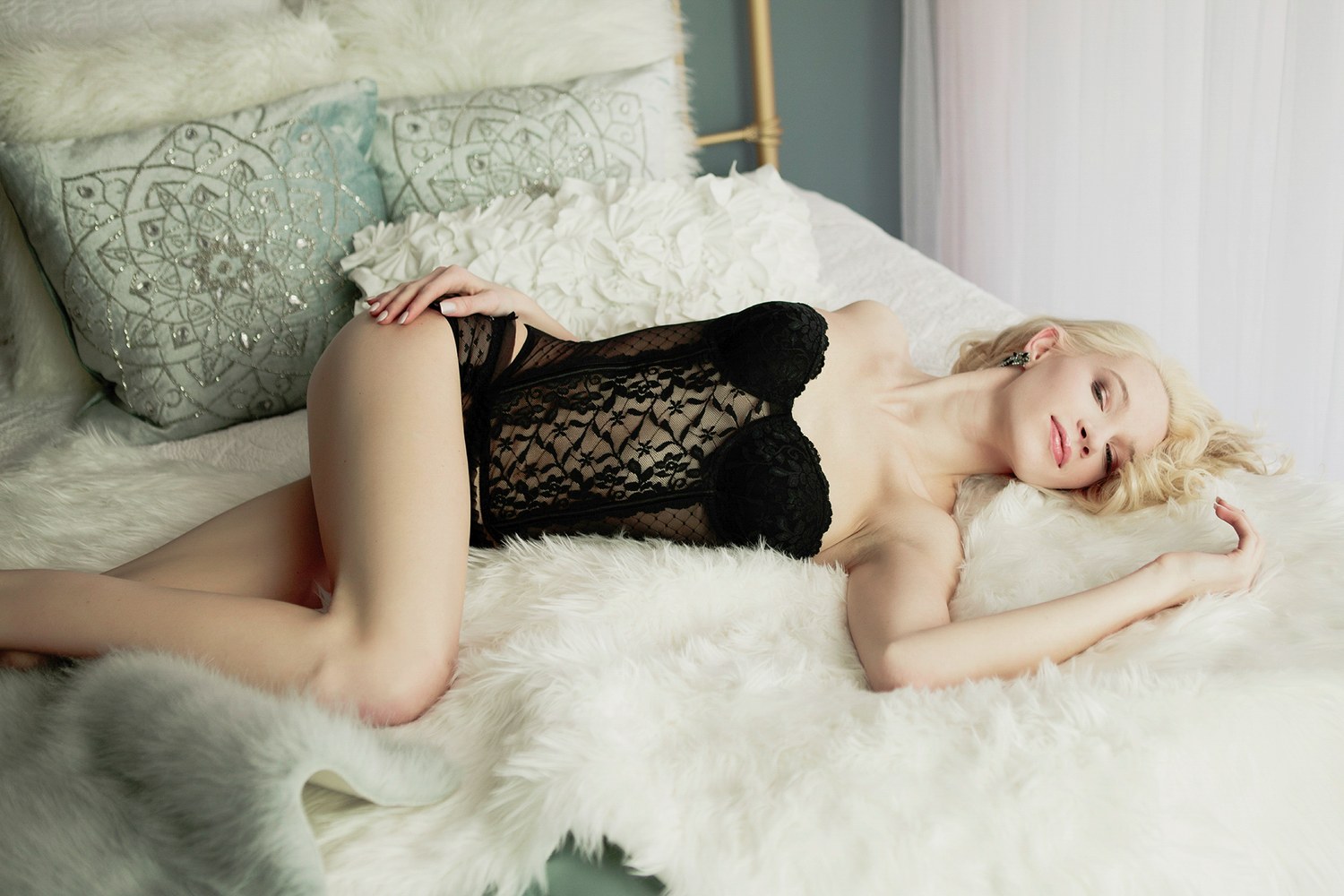
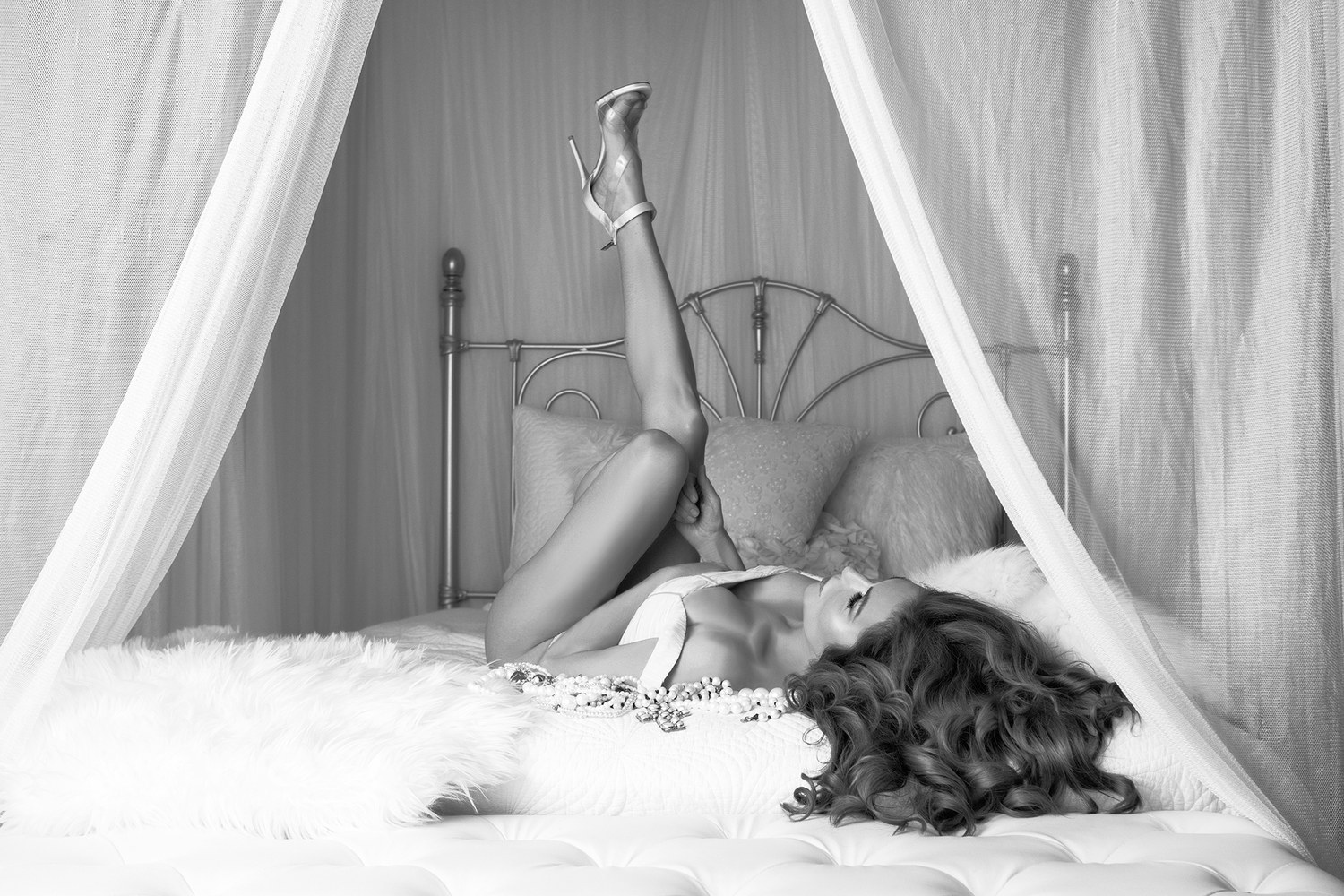
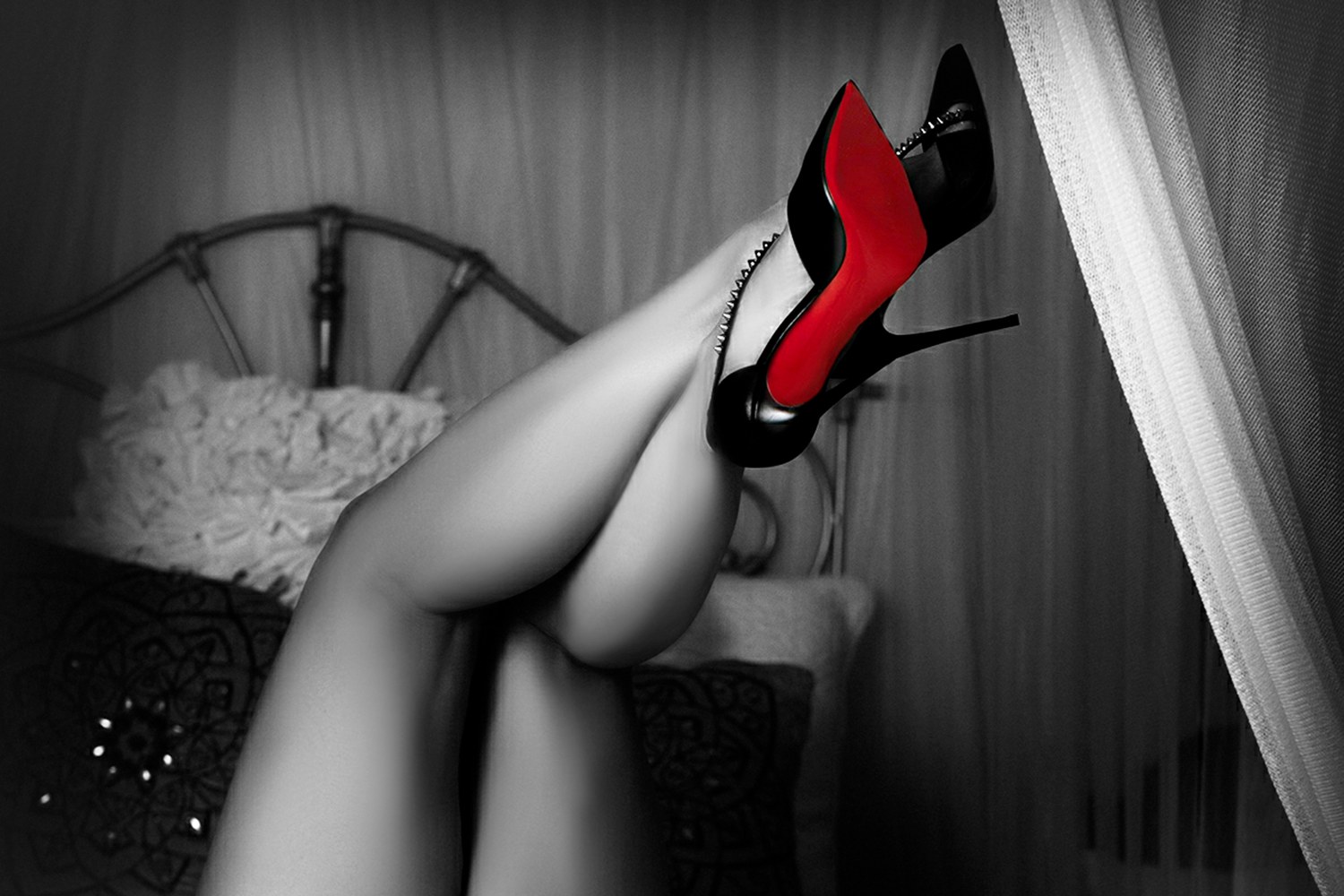
Some people do not want an occasion or a surprise. They want a photograph: black and white, lit hard, more shape than detail, good enough to print large and live with for a long time. That is a different kind of session, guided exactly the same way but built around the picture instead of the date.

The other occasion pages on this site have a recipient and a deadline. This one needs neither. The brief is the image itself: how the light falls, what stays in shadow, how a line reads against a plain ground, whether the frame would still be interesting if you did not know the person in it. You are still the subject, it is still tasteful and still entirely yours, but the question I am asking in the room shifts. It stops being does this look like you at your best and becomes is this a good photograph.
Fine art work, black and white included, is already part of my published gallery. It is not an upgrade and it is not something added at the end. It is a direction chosen before we start, so that the light, the pace and the edit are all built for it. If you want the general procedure of a session first, what to bring and what happens in what order, that is in my complete boudoir guide. This page is about what changes when a print is the destination.
Fine art does not mean you are left alone to emote. I set every angle and adjust in small increments, because a strong picture usually comes down to a few degrees of chin, hand and weight that nobody can find from the inside.
We plan the looks together beforehand, then build a few genuinely distinct setups in one sitting: different light, different backdrop, different treatment, so the edit has real choices in it rather than one idea with variations.
Retouching is done by hand, which matters more in this work than anywhere else, and the finished images arrive within the week in a private, password-protected gallery you can download from.
It is a decision, not a filter applied at the end. Monochrome removes two things at once. It removes the information that dates a picture, and it removes most of what competes for attention inside the frame. What is left is tone, shape, light and expression, which is a much smaller set of variables and a much harder set to get right. That difficulty is the reason a good black-and-white portrait keeps working long after a color one has started to look like a particular year.
The phrase itself is worth pinning down, because it gets used loosely. Here it means the photograph is made to stand on its own: composed rather than captured, printed rather than posted, and judged by whether it holds up on a wall rather than by whether it flatters at a glance. Those two goals overlap more often than not. They are still not the same goal, and the session runs differently depending on which one you actually want.
It also has to be decided before we shoot rather than after. Shooting for black and white changes the light I build, how hard I let the shadow go and how much contrast I hold in the frame. Converting a color file later is a different process with a different result, and it usually announces itself. If this is the direction you want, say so on the planning call and the whole session gets designed around it.
The equipment is the same and the guidance is the same. Everything else shifts a little.
None of that makes the session harder for you. It makes it slower, and slower is the pleasant part.
The reason to work this way is the object at the end. A photograph that is going to hang has to survive being looked at repeatedly, in daylight, by you, for years. That is a far higher bar than an image that gets one scroll and a thumb. It rules out anything gimmicky and it rewards restraint, which is why fine art frames are so often the most covered ones in a set.
A wall is not the only destination either. An album that lives in a drawer and gets opened twice a year is a perfectly legitimate home for a piece of art, and nothing about how it is photographed changes. Only the size and the binding do.
Turning the file into that object is its own decision. Custom albums, fine prints and gallery canvases are available, and what makes sense depends entirely on the frame, the crop and where it is going, so I keep that conversation on my investment page rather than guessing at it here.
It is worth saying plainly that none of this belongs on LinkedIn or a company page. A professional headshot is a different job with different rules, and it lives on a different part of this site. This work is for a wall, an album, or a gallery only you hold the password to.
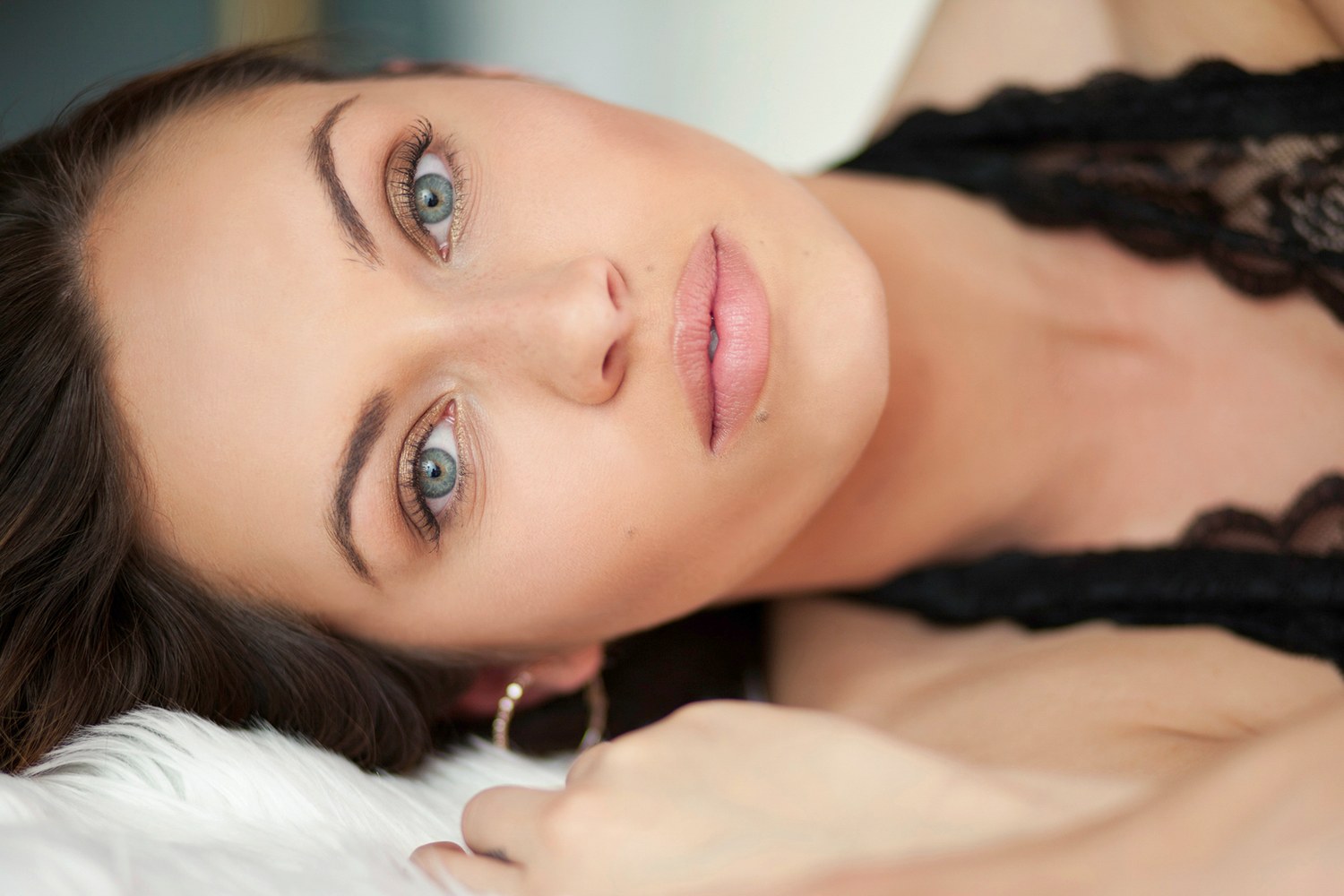
Fine art is sometimes read as a polite word for more revealing. It is not, and in practice the opposite is closer to true. The interest in these pictures is carried by light and form, so how covered you are is simply one more compositional choice, and it is yours. You set it on the planning call before anything is booked, and I compose to it rather than past it.
The retouching question matters more here, because black and white is unforgiving and it is easy to assume that means heavy correction. It does not. The approach is the same as everywhere else on this site: done by hand, and held to the line I describe in my note on retouching. The photograph still has to be of you, or the whole exercise has no point.
If you do want an occasion attached after all, this same artistic direction can be pointed at a bridal album, which has its own page because the timing works completely differently. And all of it happens in one place: my private studio in North Naples, off Pine Ridge Road, with multiple backdrops, no audience and nothing about the pace that feels hurried, a drive people make from across Southwest Florida. Before you call, look at the black and white work in the boudoir gallery; if that is the direction you mean, we are already halfway to a plan.
This one starts from the finished picture: the wall, the size, whether it lives in an album or on its own, and whether it is black and white. Say that out loud and the session more or less designs itself. Pricing follows what gets made, so the next step is a quick call to (239) 319-6171 or a note through the form.
Book a Session Call (239) 319-6171Tell me a little about what you have in mind and I will be in touch personally. Pricing is personal, so the best way to plan is a quick call.
Share a few details and Annie will be in touch personally.