Portfolio
Headshots Boudoir Personal Brand
More
Guides Investment Guided Posing About Book a Session
Home  /  Guides  /  Professional Makeup vs Doing Your Own for a Photoshoot
Prep

Professional makeup, or your own hand.

This is a real decision with two good answers, and the right one depends on the session, not on how good you are at makeup. Here is what changes under studio light, who genuinely gains from booking somebody, when doing it yourself is the better call, and exactly how the arrangement works here.

By Annie Watson · Naples, Florida · Updated September 2026
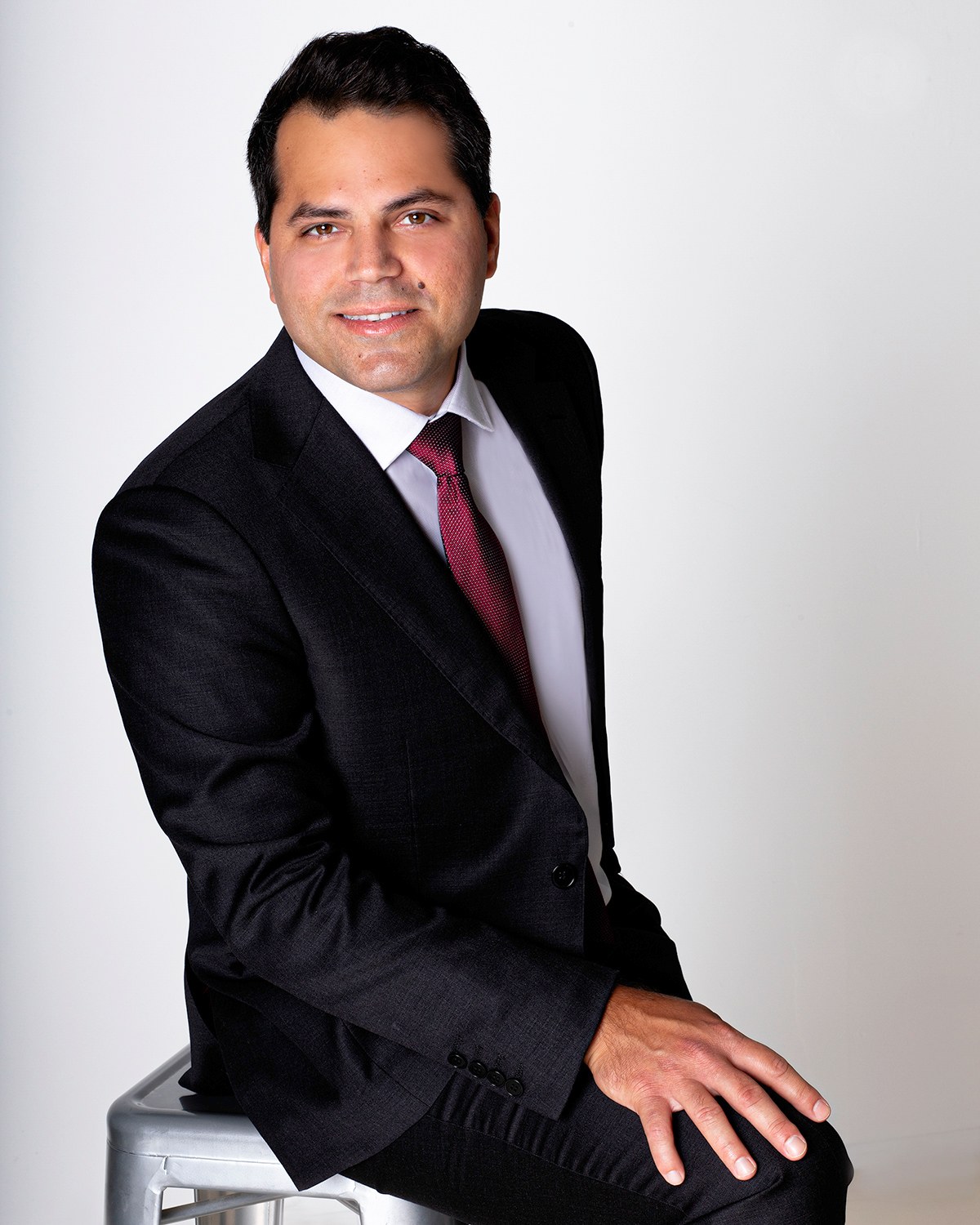
Man in a dark suit and burgundy tie, seated and smiling, white backdrop, photographed by Annie Watson in her Naples studio
The Short Answer

Neither option is automatically right. Professional makeup done by somebody who works for cameras is worth it when the photographs have a high-stakes job to do, when you are shooting several looks, when you rarely wear makeup, or when handing the decision to somebody else would settle your nerves.

Doing your own is the better answer when you already know your face, when looking exactly like your everyday self is the point, or when a stranger's version of you on an important morning is a risk you would rather not take. If you would like it handled, I work with several professional stylists who can be arranged for hair and makeup before the shoot, for an added fee. It is never included and it is never assumed.

What a camera changes about makeup.

The reason this is a question at all is that studio light is unlike any light you get ready in. It is bright, it is directional, and it is completely indifferent to what your bathroom mirror told you. Two things happen as a result, and they pull in opposite directions.

First, light flattens. Definition that reads clearly across a room can disappear in a photograph, so the level of makeup that looks like plenty in a mirror can read as almost nothing in a frame. Second, light finds shine. Anything reflective, whether that is a dewy finish, a heavy highlighter or simply skin that has been moisturized minutes earlier, comes back as a bright patch rather than a glow.

So the camera wants slightly more definition and noticeably less shine than daily life does. That is the entire technical problem in two sentences, and it is the thing a makeup artist who works for cameras has internalized and most of us have not. The specifics of how to solve it, the products and the placement, belong to makeup that photographs well rather than to this page, which is only about choosing.

One more thing that is easy to miss: it is not only your face. The same light finds skin everywhere, which is why avoiding sunburn before a session is a real part of preparing rather than a footnote.

What somebody who works for cameras does differently.

The useful distinction is not professional against amateur. It is makeup built for a room against makeup built for a lens. A great many people are excellent at the first and have never had to think about the second, and the skills genuinely diverge.

  • They build in layers that hold, because a face has to hold up across a whole sitting rather than across a walk to a restaurant.
  • They control shine deliberately, mattifying where light will land hardest and leaving texture where a photograph needs it.
  • They build definition slightly past what looks normal in person, knowing the camera will take some of it back.
  • They work to the crop. What matters in a headshot is the eyes, the brows and the mouth, because that is what a portrait is mostly made of.
  • They think about how a face will hold across several looks rather than how it looks at the start.

None of that is magic and none of it is out of reach if you like doing your own makeup and are willing to adjust. It is simply a set of habits built around a specific problem. What you are buying, when you book somebody, is that they have already solved it many times and you have not had to.

Who gains most from booking someone.

Rather than a general recommendation, here are the situations where I would lean toward it.

The photographs have a serious job

If the images are going in front of people deciding whether to work with you, the margin between good and very good is worth paying for. Professional headshots that will sit on a profile for a long time are the clearest case, because they get looked at far more often than you would guess and they are doing quiet work every time.

You rarely wear makeup

This is the strongest argument of all. If makeup is not part of your normal life, the week of a portrait is a terrible time to learn what your face does under studio light, and the risk of overdoing it out of nerves is real. Somebody else's steady hand solves it and you do not have to develop an opinion.

You want more than one look

A face that is going to hold across several changes of clothing benefits from being built for the distance. A face applied in a rush is the one that needs attention before the second look.

The morning itself feels like a lot

For a boudoir session in particular, handing one decision to somebody else before you arrive can matter more than anything technical on this page. That is a perfectly good reason on its own and it needs no further justification.

When your own hand is the better call.

The case for doing it yourself is stronger than it usually gets credit for, and it comes down to one word: recognition.

You know your face. You know which side of your mouth sits higher, what your skin does under stress, which shade actually matches your jaw and neck and which one looks fine only in your own bathroom. That knowledge is worth a great deal, and somebody meeting you for the first time has to work it out on the spot.

There is also the recognition problem in the other direction. A portrait has to survive meeting you. If the version of you in the photograph was assembled by somebody else on a morning when you were nervous, and it does not look like the person who walks into a meeting, the picture has quietly failed at its job however beautiful it is. That is worth more weight than any technical question about product. Where this decision sits in the rest of the run-up is in how to prepare for a photoshoot, which puts it on the calendar with the rest.

And there is the practical case. Doing your own means one fewer moving part on the day and no chance of arriving with a face you are quietly unhappy with and cannot fix.

Doing it yourself, done properly.

If you land on the DIY side, the decision is only half made. The other half is executing it like a decision rather than like an ordinary morning.

  • Keep to what you already know how to do. A portrait morning is not the moment for a technique you have only watched somebody else perform.
  • Do it in the best light in your house, and give yourself twice the time you think it will take.
  • Nothing you have never worn. A new lipstick on a portrait morning is a risk with no upside.
  • Say on the planning call which way you have gone, since the day gets organized around the answer.

If your skin runs oily and shine is a recurring problem rather than an occasional one, that changes the plan more than anything else on this list, and the specifics live in prep for oily skin and shine.

One thing worth saying plainly, since it is the fear underneath the question: none of this determines whether your photographs are good. Light, angle and being directed frame by frame do vastly more work than makeup does, whoever applied it.

How the arrangement works here.

I want this to be unambiguous, because it is the kind of thing that causes an awkward moment if it is left vague. I work with several professional stylists who can be arranged for hair and makeup before the shoot, for an added fee. It is not part of a session by default and it is not assumed.

What that means in practice is that it gets decided in advance rather than raised on the way in, because arranging somebody takes planning. Say early which way you are leaning and it is handled from there. If you change your mind, say that early too.

Costs, like everything else, are personal and depend on what you are actually doing, which is why they are a phone conversation rather than a number on a page. The same is true of the session itself, and what a sitting does and does not come with is set out on the investment page.

If you are genuinely undecided, my honest advice is to choose based on how you want the morning to feel rather than on the makeup. Somebody who dreads doing their own face should hand it over. Somebody who finds getting ready calming should keep it.

The mistake both routes make.

There is one failure that is shared, and it is the only one I would actively warn about: arriving as a version of yourself you have never been before.

It happens to people doing their own makeup who decide a portrait deserves something dramatic, and it happens to people in a stylist's chair who are too polite to say that this is not what they usually look like. In both cases the result is a photograph of a stranger, and the strangeness is not something a finished image can be talked out of afterward.

The fix is the same in both directions and it is simply speaking up. If you are booking somebody, show them a picture of yourself on a day you liked how you looked, and say plainly where too much begins. If you are doing your own, run the whole look once before the day, so that the morning is a repeat of something rather than a first attempt at it.

Everything else is preference, and preference is allowed. What is not allowed to happen quietly is ending up with a face you did not choose.

Key Takeaways
  • Studio light wants a little more definition and considerably less shine than everyday makeup, which is the whole technical problem.
  • Book somebody when the photographs matter commercially, when you rarely wear makeup, when there are several looks, or when handing over a decision would settle you.
  • Do your own when looking exactly like yourself is the point, when you know your face well, or when one fewer appointment makes the morning calmer.
  • Whichever you choose, wear nothing you have never worn before, and settle it early enough that the morning is a repeat rather than an experiment.
  • Professional stylists can be arranged for hair and makeup before the shoot, for an added fee, and it is decided in advance rather than on the day.
  • The shared mistake is arriving as a version of yourself you have never been, and the fix in both directions is saying so out loud.
Next Step

Decide this on the call.

This is one of the few preparation questions that is better settled early than late, because arranging a stylist takes planning and changing your mind at the last minute does not work. Tell me what the pictures are for and how you like to get ready, and the answer usually becomes obvious in about a minute. Call (239) 319-6171 or send the form.

Book a Session Call (239) 319-6171
Put It to Work

Sessions this guide points to.

Good to Know

Questions, answered.

Will my photos be noticeably better with professional makeup?
Sometimes, and less often than you would think. It helps most where somebody rarely wears makeup, where several looks have to hold, or where the photographs are doing serious work. It helps least where somebody already knows their own face well. What consistently matters more in every case is the light, the angle and being directed through every frame, none of which depends on who applied the foundation.
What should I tell a makeup artist before a portrait session?
Tell them it is for photographs under studio light, so they build for a lens rather than for a room. Tell them where the pictures are going, since a professional portrait and a personal one want different levels. Show them a photograph of yourself on a day you liked how you looked. And say your upper limit out loud, because an unspoken limit is the one that gets crossed.
Is there a look that always photographs badly?
Anything reflective is the reliable one. Dewy finishes, heavy highlighter and shimmer across the high points of the face all read as shine rather than glow under studio light, and they are the hardest thing to walk back. Very heavy contouring is the other, because a camera flattens and a strong contour ends up reading as a mark on the face rather than as shape.
I never wear makeup. Do I have to?
No. Plenty of good portraits are made of faces with nothing on them, and looking like yourself is the whole point of the exercise. If you would like a little help without it feeling like a costume, the least invasive version is a bit of definition on the brows and something on the lips. That alone does most of the work in a close crop, and it will still be recognizably you.
Can I do my hair myself and have makeup done, or the other way around?
That is a question for the planning call rather than one to settle from a page. The standing arrangement is this: I work with several professional stylists who can be arranged for hair and makeup before the shoot, for an added fee. Say what you would like handed over and what you would rather keep, and we will work out what is possible. The one constant is that it gets decided ahead of the day rather than in the moment.
What if I hate how it turns out?
Say so immediately, to whoever is holding the brush, in plain words. It is far easier to adjust something before a camera comes out than to have quiet reservations about it for the rest of the day. Nobody is offended by a specific request, and a vague one is the actual problem. Too heavy on the eyes, or too dark on the lip, is all it takes.
Book Your Session

Your best headshot is one session away.

Tell me a little about what you have in mind and I will be in touch personally. Pricing is personal, so the best way to plan is a quick call.

Studio
5400 Yahl St, Naples FL

Prefer to talk? Call (239) 319-6171. I respond personally.