A leadership portrait has a harder job than a headshot. It has to look like somebody worth following and somebody worth talking to, in the same frame, at the same instant. That combination is not a mood you summon. It is built out of angle, weight, hands and the muscles around the eyes, and every one of those can be directed.

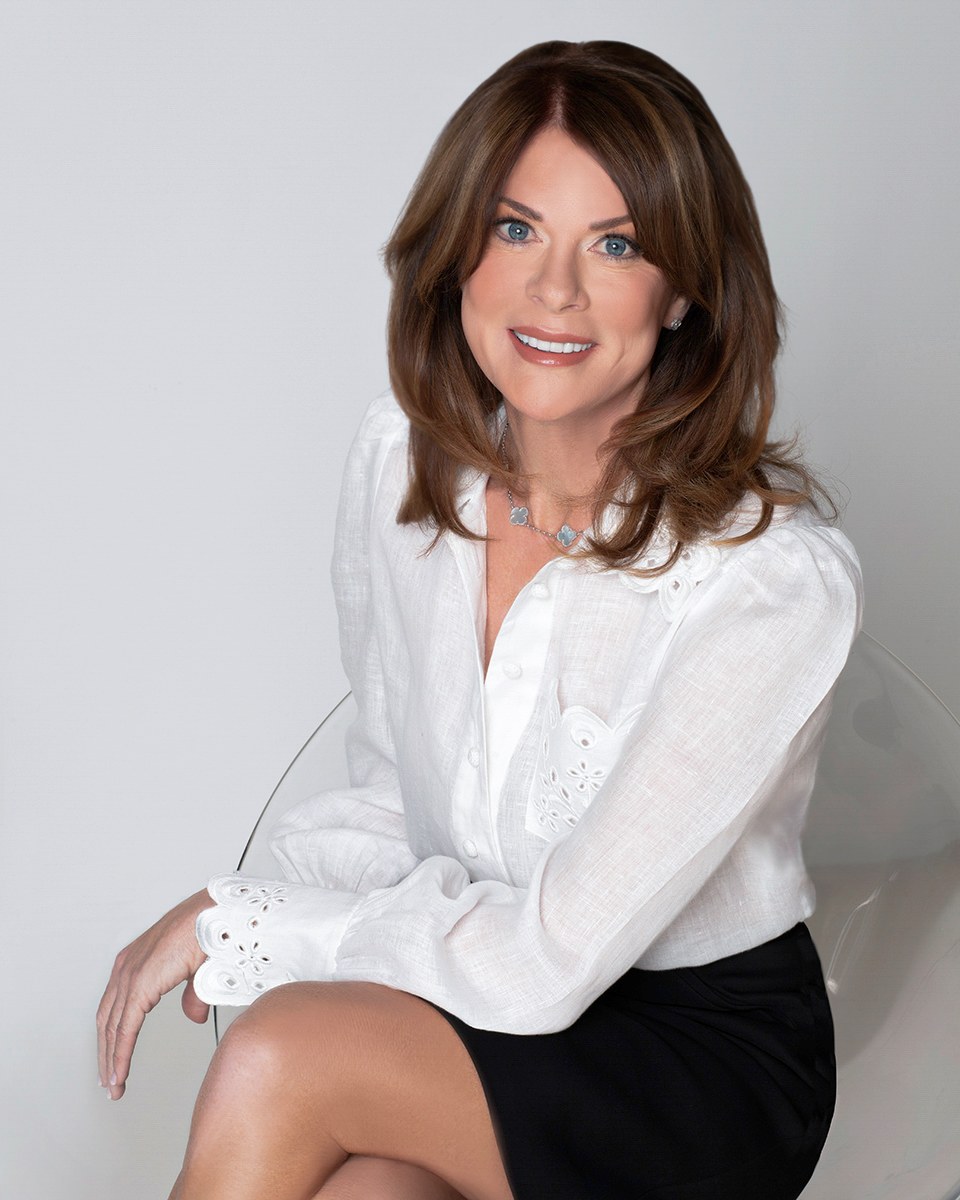
To pose for an executive portrait, stand or sit with your shoulders squared toward the camera and then turned only slightly, ten to twenty degrees rather than the usual forty five. Keep your weight settled and even rather than shifted into a hip. Lengthen your spine, drop your shoulders, and set the chin a fraction below level rather than lifted.
Then aim the expression somewhere between serious and warm: eyes engaged and slightly narrowed, jaw unclenched, mouth closed or barely open. Authority in a portrait comes from stillness and a level head. Warmth comes from the eyes. Getting both at once is the whole exercise.
Posing decisions get easier once you know the destinations, because a leadership portrait rarely lives in one place. The same sitting can end up on a leadership page beside your peers, in the front of a deck, beside a quoted line in an article, on a conference program, and cropped small next to your name in a listing. Some of those want a tight face. Some want your whole body and room beside you for words.
That range is why executive posing is planned rather than improvised. It also sets a constraint most people miss: a portrait meant to sit in a row of colleagues has to be posed in a way the others can be posed in too. A dramatic angle that only works for you breaks the row.
What the session itself covers, the looks and the delivery, belongs to the page on executive headshots. The general mechanics, feet upward, are in how to pose for photos. What I am adding here are the specific adjustments that turn a competent portrait into one that carries rank without looking like it is trying to.
The instinct in most portrait posing is to turn the body well away from the lens and bring the face back. It flatters, and for a leadership frame it goes too far. A strongly turned body reads as approachable and slightly deferential, which is charming in a brand portrait and wrong on a page where the point is that you are the one who decides.
So turn less. Ten to twenty degrees off the lens is enough to avoid the flat, braced look of a fully square stance while keeping both shoulders visibly present in the frame. The shoulder line stays wide. The head comes back level. You read as someone facing the room rather than easing out of it.
Weight is the second half of it. Shifting hard onto one hip creates a curve through the body that reads relaxed and slightly casual. For authority, keep the weight settled, with one foot a small step ahead and the knees soft but not deeply bent. The body should look planted rather than posed, which is a real distinction: planted is stillness with the joints unlocked, and posed is stillness with the joints held.
Then the chin, which is where an authority portrait most often goes wrong. The instinct at this level is to lift it. Lifting delivers the underside of the jaw straight to the lens and reads, at best, as imperious. Forward and down is the move, in small increments, and the reasons it works are in the guide to jawline and chin posing.
Seated portraits carry a different kind of weight. Standing says presence. Sitting says consideration, and it is often the better frame for a portrait that accompanies a long piece of writing or a bio somebody actually reads.
The general seated mechanics belong to how to pose for photos. What decides an authority frame is where the hinge comes from. Fold forward at the hips with the spine long, knees angled a little away while the torso comes back toward the camera, and you read as settled and attentive. Curl at the shoulders instead, or let your weight sink backward, and the same frame reads as sunken.
Bring your forearms forward and rest them on your thighs or lightly together, with your elbows away from your ribs so a strip of daylight stays visible on each side. One hand loosely holding the other reads as composed. Fingers laced tightly together reads as anxious, and steepled fingertips read as a stock photograph of a person having an idea. Keep the wrists soft and the fingers slightly separated.
A seated frame also lets you use height deliberately. A lens a touch above your eye line keeps the chin honest; a lens below it makes anybody look imposing in a way most leaders do not actually want.
It is the pose people ask for by name, and it is the pose most likely to be wrong for this particular portrait. Folded arms read as capable and slightly closed, which suits some roles and fights every role where the point is that people should come and talk to you.
If you do use it, the arms have to be folded low and loose, resting rather than clamped, with the shoulders deliberately dropped afterward, because the fold pulls them up on its own. The full case, including where it belongs and where it quietly costs you, sits in the guide to crossed arms in headshots.
My preference for a leadership frame is a lighter version of the same idea: one hand holding the opposite forearm, or a single hand slipped into a pocket with the thumb outside and the jacket held open. Both give the arms a job without the wall the full fold builds across your chest.
The expression is the part nobody can direct on themselves, and it is where most executive portraits fail in one of two directions. Too soft and the picture is pleasant and forgettable. Too hard and it reads as a person you would rather not interrupt.
The order it gets built in is the ordinary one. What is specific to a leadership frame is the jaw. A set jaw shows in the muscle just below the ear and photographs as impatience rather than resolve, so it has to be released before anything else is asked for, and it locks again the moment you concentrate on something.
This is also the answer to the question of whether to smile. In a leadership set the useful thing is to have both: a composed frame and a warmer one, made in the same look, so the picture can be matched to the page it lands on rather than forced to serve every page at once.
If you speak, your portrait has an extra job. Conference programs, panel listings and speaker pages want a face that promises something worth sitting through, and they often want a second image with room beside you for a headline and a session title.
The frames that work for that are the ones caught mid-something rather than at rest. A hand raised in the middle of an explanation. The head turned slightly as if answering a question from the side of the room. A mouth opened mid-sentence rather than sealed at the end of one. All of that is built in the studio, where a gesture can be repeated until it is right.
Two rules keep it from looking staged. Gestures have to be held below the collarbone and slightly off to one side, or a hand nearest the lens becomes the largest thing in the picture. And a mid-sentence expression only reads if the eyes are doing something too, which means actually talking rather than shaping a mouth.
Ask for a wider frame with quiet space on one side while you are already in the look. Space beside you is easy to shoot and impossible to add afterward, and a headline with nowhere to sit is the reason a good frame gets passed over.
Most leadership pages want more than a tight crop. A three-quarter frame, cut around the waist, is the most useful second image there is: it shows the jacket, the hands and the stance, which together carry a great deal of what people mean by presence.
Full length adds the whole line of the body and asks more of the pose, because the feet are now in the picture and a poorly placed foot undoes everything above it. Keep a small stagger, weight settled, front foot pointing roughly toward the lens, and hands doing something deliberate. Height changes the calculation as well: a taller frame photographs very differently at close range, and the adjustments for that are in posing for tall frames.
Finally, the row. If your portrait will sit beside a leadership team, consistency beats individual flair every time. Same background, same crop, same eye level, same amount of turn, so nobody in the row looks accidentally more important or less considered than the person next to them. Photographing people in sequence in one studio, in light that has not moved, is how that consistency actually happens. It is the same discipline behind every set of headshots I make, and it is far easier to build once than to reconcile later.
Nobody can watch their own jaw, their own shoulder line and their own eyebrows while also looking like the person in charge. That is the part I handle, frame by frame, in a private Naples studio with no audience in the room. Planning and pricing are personal, so call me at (239) 319-6171 or send the form.
Book a Session Call (239) 319-6171Tell me a little about what you have in mind and I will be in touch personally. Pricing is personal, so the best way to plan is a quick call.
Share a few details and Annie will be in touch personally.