Portfolio
Headshots Boudoir Personal Brand
More
Guides Investment Guided Posing About Book a Session
Home  /  Guides  /  Spray Tan Timing Before a Photoshoot
Prep

Spray tan timing before a photoshoot.

A spray tan is one of the few grooming choices that studio light will comment on directly. Color, evenness and timing all show up more clearly under strong, close light than they do in a bathroom mirror, so this is worth thinking through rather than deciding the morning of.

By Annie Watson · Naples, Florida · Updated September 2026
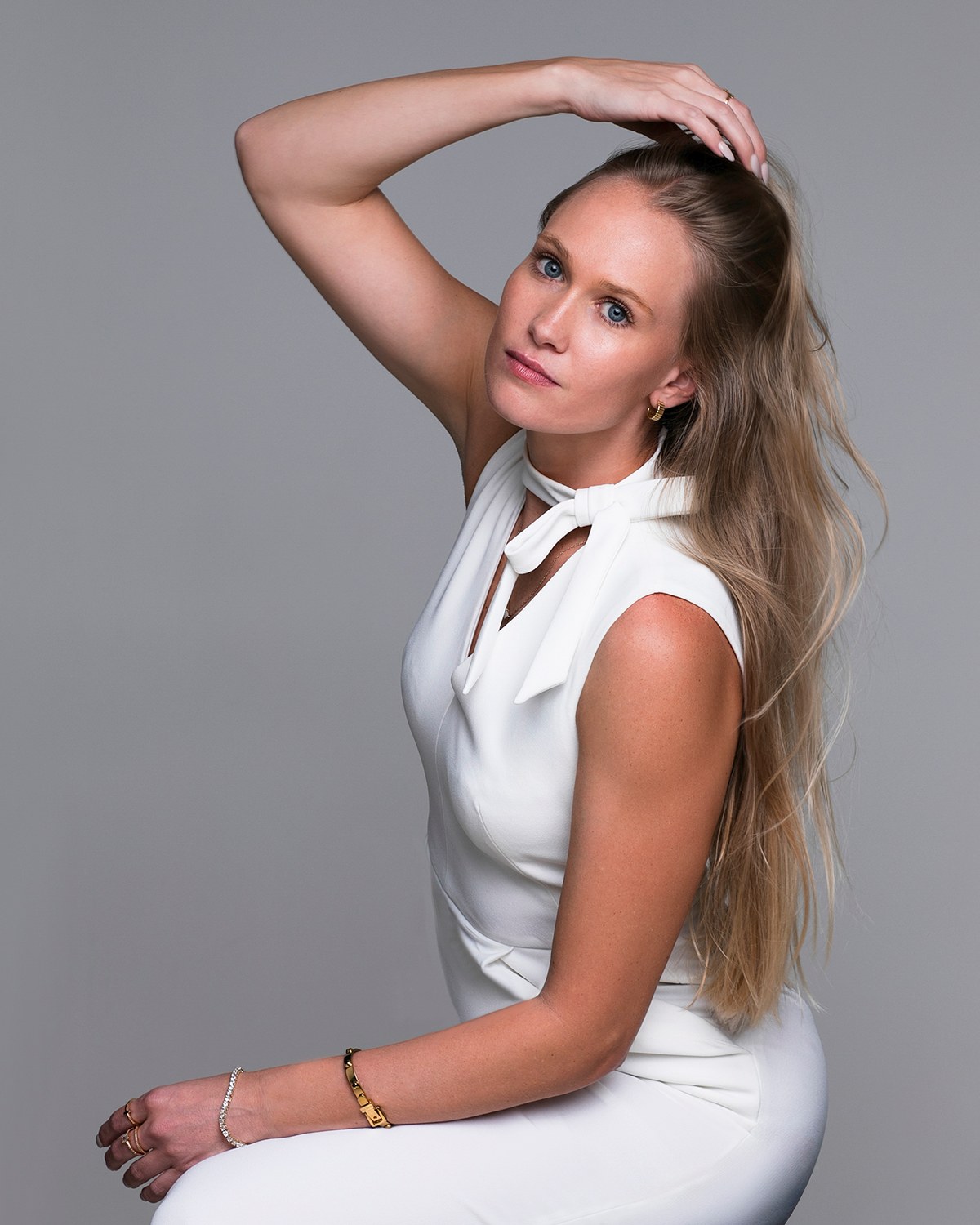
Woman with long blonde hair in a white sleeveless top, one hand in her hair, seated, gray backdrop, photographed by Annie Watson in her Naples studio
The Short Answer

If a spray tan is already part of your routine, many aestheticians suggest getting it a few days before a session, so any initial color has settled and evened out and the true shade is what shows up on camera. A first-time tan is a real risk in the week of a session, since unevenness, an orange undertone or streaking at the hands and hairline are hard to correct afterward. Ask your provider what timing they recommend for your skin.

If you are unsure, skipping the tan entirely is always a safe option. There is no requirement to arrive with more color than you naturally have, and nothing about a good portrait depends on it.

Studio light is honest about color.

Portrait lighting is set to render skin tone accurately. That is good news for your face and a hard test for a tan, because a tan is the one color on you that was applied rather than grown. A shade that looks fine under ordinary room lighting can read as noticeably orange, patchy or streaked once it is lit properly and enlarged on a screen.

This is not about the tan itself being a bad idea. A tan that has settled and was applied evenly can photograph beautifully. It is about the fact that any unevenness, a missed patch behind a knee, a darker crease at the wrist, a line at the hairline, becomes more visible under this kind of light than under nearly any other lighting you encounter day to day.

Timing: give it a few days to settle.

Many aestheticians suggest leaving a few days between a spray tan and the day it needs to look right, and a photoshoot is no different. The first day or so after a tan often carries a stronger initial color that softens and evens out as it develops fully and any excess washes off in the shower. Timing it a few days ahead means the color the camera sees is the settled version, not the fresh one.

What to steer clear of is the last-minute booking, the day before or the morning of, since there is no room left to notice unevenness and address it before the session. If a tan is already part of your regular routine, ask your provider what timing has worked best for your skin in the past, and use that as your guide rather than a fixed number of days.

The hands and the hairline.

Two spots cause more trouble than the rest of the body combined: the hands and the hairline. Hands are the harder of the two, because the skin there takes color unpredictably, and darkening at the knuckles or between the fingers is one of the more common tells of a spray tan under studio light.

The hairline is the other trouble spot, since a visible line where color meets untanned skin at the forehead or the ears reads clearly in a close crop. If a tan is part of your plan, ask your provider about technique for these two areas specifically, and consider a gentle exfoliation of the hands beforehand, following whatever your provider recommends, so color develops more evenly there than it otherwise would.

Light versus deep: why less is easier to work with.

A lighter, more natural-looking result is generally easier to work with under studio light than a deep, dramatic one. A subtle tan reads as simply a bit of color, which is close to how skin looks after time outdoors anyway. A very deep tan reads as a deliberate choice, and any unevenness in a deep tan is proportionally more visible than the same unevenness in a light one.

If you already have a tan level you trust and wear regularly, that familiarity is worth more than trying a deeper shade for the occasion. If you are choosing a level for the first time, ask your provider for a lighter option than you might otherwise pick, since it leaves more room for error and still photographs well.

The no-tan option.

There is no requirement to arrive with a tan at all, and skipping it is the lowest-risk choice by a wide margin. Studio light is even and consistent, it works with the skin tone you actually have, and guided posing does the rest of the work regardless of color. If you are debating whether to try a tan for the first time specifically for a session, that hesitation is worth listening to. A first attempt carries real uncertainty, and there is nothing to gain from introducing it right before a day that matters.

If skin tone evenness is the actual concern rather than color depth, that is a makeup and skincare question more than a tanning one, and it is covered separately in professional makeup versus doing your own and in the fuller skincare timeline before your photos.

Sunburn is a different problem entirely.

A spray tan and a sunburn are not the same conversation, even though both involve skin color before a session. A sunburn is irritation, and it can bring redness, sensitivity, peeling and an uneven surface that no amount of careful posing corrects on its own. If a spray tan is meant to add color evenly, a sunburn is the opposite: unpredictable and, more importantly, uncomfortable for you during the session itself.

If you have gotten more sun than usual in the days before a shoot, ask your dermatologist about calming the skin rather than trying to mask it, and give it real time to recover before you decide what to do about a tan on top of it. The fuller guide to managing sun exposure ahead of a session, particularly relevant in Florida, is avoiding sunburn before a session.

How much this matters depends on the frame.

How much any of this matters comes down to how much skin the frame contains, and that is not the same from one kind of session to the next. If you are also planning a multi-look personal brand session, the full sequence, including where a tan fits among everything else, is laid out in the prep checklist for a personal brand shoot. For headshots, where the crop is tighter and mostly above the shoulders, a tan matters less overall, since the hands and hairline concerns above are less prominent in that frame.

For a boudoir session, where more skin is visible in the frame, the hands-and-hairline guidance above matters even more, and the same rule holds: familiar and settled beats new and untested. Where the tan falls against the haircut, the nails and the wardrobe is laid out on how to prepare for a photoshoot.

Key Takeaways
  • Studio light shows unevenness in a spray tan more clearly than most everyday lighting does.
  • Many aestheticians suggest a spray tan a few days before a session, not the day before, so it has time to settle.
  • The hands and the hairline are the two spots most likely to show unevenness under studio light.
  • A lighter, more natural tan is generally easier to work with than a deep one, since any unevenness shows less.
  • Skipping a tan entirely is a safe, easy option, and nothing in a portrait depends on arriving with added color.
  • A sunburn is a different problem than a tan and needs its own recovery time, not a tan layered over it.
  • Ask your provider or dermatologist about timing and technique for your specific skin rather than following a fixed rule.
Next Step

Whatever your skin looks like, arrive as you.

Even studio light and guided posing work with whatever your skin looks like on the day, tanned or not. If you have questions about how color or texture will read in your particular session, mention it when we plan, and we will work it out together. Call (239) 319-6171 or send the form, and if a tan is part of your routine, say so on the call.

Book a Session Call (239) 319-6171
Put It to Work

Sessions this guide points to.

Good to Know

Questions, answered.

How many days before a session should I get a spray tan?
A few days out is the window most commonly suggested, rather than the day before, so the color has finished developing and any excess has washed off. The more useful answer, though, is your own history. If you tan regularly, the timing that has looked best on you before is better guidance than any general number, so ask your provider to work back from that.
Is it risky to try a spray tan for the first time before a photoshoot?
It carries more uncertainty than a tan you already trust, mainly because unevenness, an orange undertone or a visible line at the hairline are all things you cannot predict on skin that has never been tanned before. If you want to try it, doing so well ahead of the session, with plenty of time to see the result first, is the safer approach.
What if my hands look darker than the rest of me after a tan?
That is one of the more common places for a tan to develop unevenly. If it has already happened, resist scrubbing at it close to a session: irritated skin is a harder problem to photograph than uneven color, so ask your provider what they would do rather than improvising. Telling them what you saw also lets the next application account for it, and a lighter depth overall makes any unevenness less obvious.
Can I skip a spray tan entirely?
Yes, and it is the option with the least risk. There is no expectation that you arrive with more color than you naturally have. Guided posing and even studio light do the work regardless of whether a tan is part of the picture, and a portrait that looks like your actual skin tends to age better than one that does not.
I have a bit of a sunburn. Should I get a spray tan to cover it?
No. A tan applied over irritated or burned skin can develop unevenly and may be uncomfortable, and it does not address the underlying irritation. Ask your dermatologist about calming the skin first, and give it real time to recover before deciding what, if anything, to do about color for the session.
Does a spray tan matter for a headshot the way it does for other sessions?
Less, generally. A headshot crop keeps most of a tanned surface out of the picture entirely, so what is left is the face and the hairline. The catch is that the hairline is exactly where a rushed tan tends to show, so the timing still earns its place even when the coverage does not. For frames with more skin in them, everything above carries more weight.
Book Your Session

Your best headshot is one session away.

Tell me a little about what you have in mind and I will be in touch personally. Pricing is personal, so the best way to plan is a quick call.

Studio
5400 Yahl St, Naples FL

Prefer to talk? Call (239) 319-6171. I respond personally.